




Bluetooth suddenly disappearing or your Bluetooth devices not working is one of the most common Windows issues after a driver update, Windows Update, or an unexpected system change. In most cases, this doesn’t mean your hardware has failed. Instead, Windows has stopped detecting the Bluetooth adapter correctly due to a disabled service, corrupted driver, power management issue, or software conflict.
Based on Microsoft community discussions, Reddit threads, and our own troubleshooting experience, we’ve put together 8 effective fixes for the Bluetooth not working on Windows 11 issue.
Try these fixes:
You might not need to try them all; just work your way down until you find the one that suits you.
- Check the wireless switch
- Remove and re-pair your Bluetooth device
- Run the Windows 11 Bluetooth troubleshooter
- Restart the Bluetooth Support Service
- Update or roll back your Bluetooth driver
- Prevent Windows from turning off the Bluetooth adapter
- Change the Bluetooth device discovery setting
- Repair your system files
Fix 1: Check the wireless switch
Before diving into software, rule out the simplest cause. Many laptops from HP, Dell, Lenovo, ASUS, Acer, and MSI include either:
- A physical wireless switch that controls Wi-Fi and Bluetooth.
- A keyboard shortcut (such as Fn + F2, Fn + F3, Fn + F5, or Fn + F12) that enables or disables wireless features. The exact key combination varies by manufacturer.
If Bluetooth suddenly disappeared, you may have accidentally turned off the wireless adapter.
Make sure the physical wireless switch (if your laptop has one) is turned on, then press the appropriate Fn key combination to re-enable wireless connectivity.
Fix 2: Remove and re-pair your Bluetooth device
If Bluetooth is working but your headphones, keyboard, mouse, or speaker won’t connect, or they connect without audio, the pairing information may be corrupted. You can create a fresh Bluetooth connection by removing and pairing the device again.
- Press the Windows logo key and I on your keyboard to open Settings.
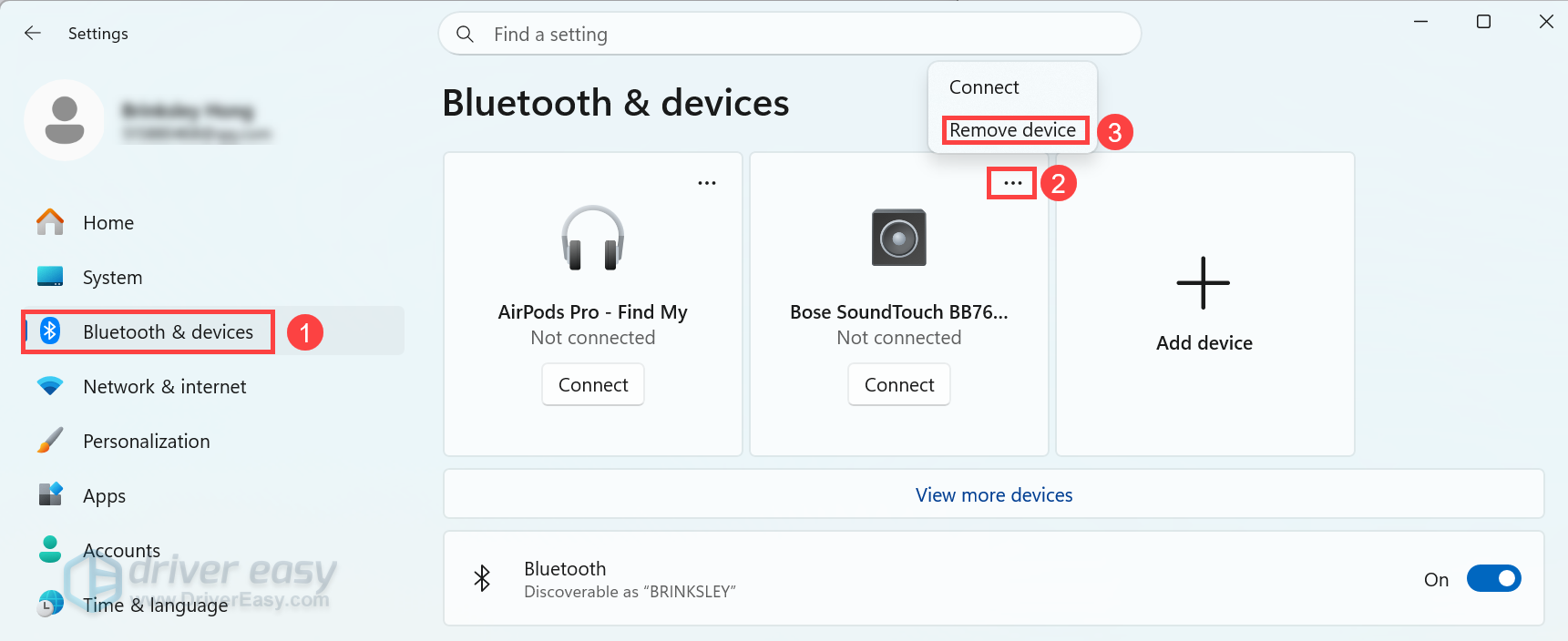
- Navigate to Bluetooth & devices. Locate the problematic Bluetooth device, click the three-dot menu (…) and select Remove device.
- Back in the Bluetooth & devices menu, click Add device.
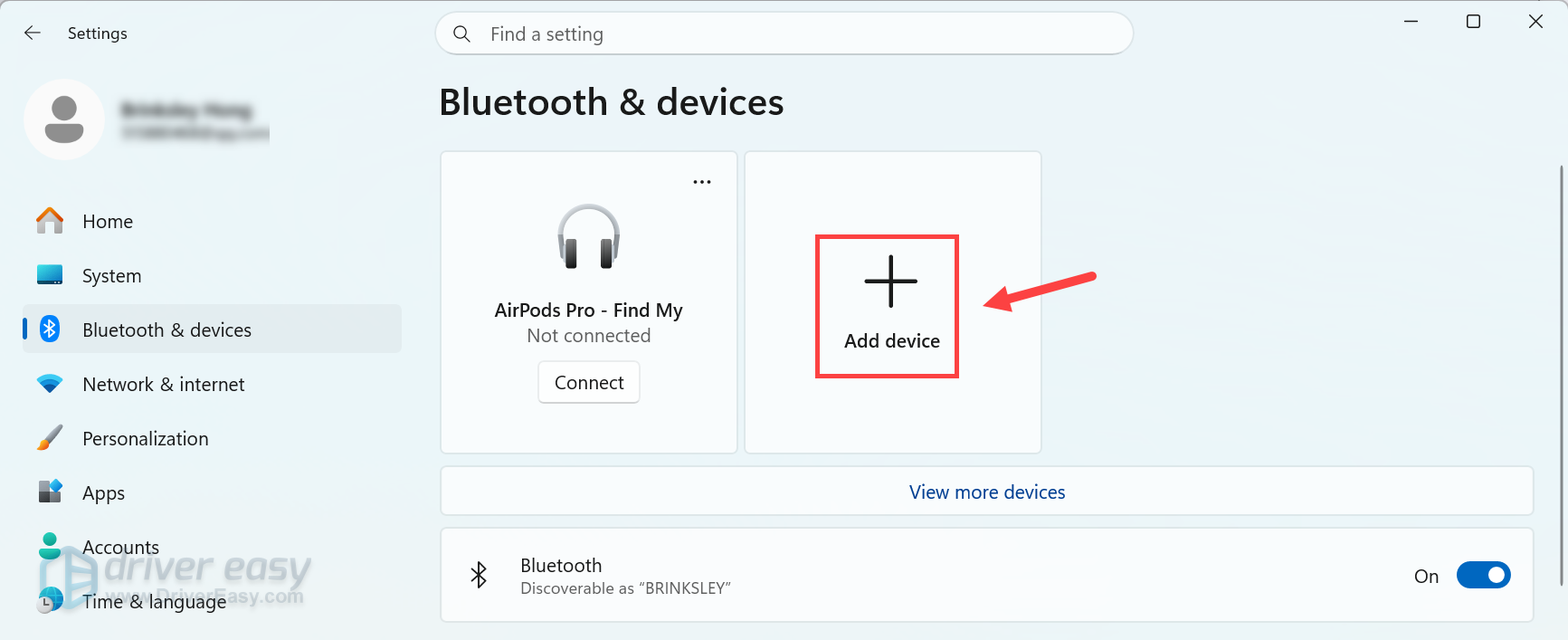
- Select Bluetooth.
- Put your Bluetooth device into pairing mode.
- Select it from the available devices list.
If your headphones connect but you still hear no sound:
- Right-click the speaker icon in the taskbar. Select Sound settings.
- Under Choose where to play sound, select your Bluetooth device as the default output.
Now test if your Bluetooth devices work as expected. If not, try the next method below.
Fix 3: Run the Windows 11 Bluetooth troubleshooter
Windows has built-in troubleshooters to fix some common errors and certain configuration issues. You can run the Bluetooth troubleshooter to fix the Windows 11 Bluetooth not working issue. Here’s how:
- Press the Windows logo key + I (i) key together to open Settings.
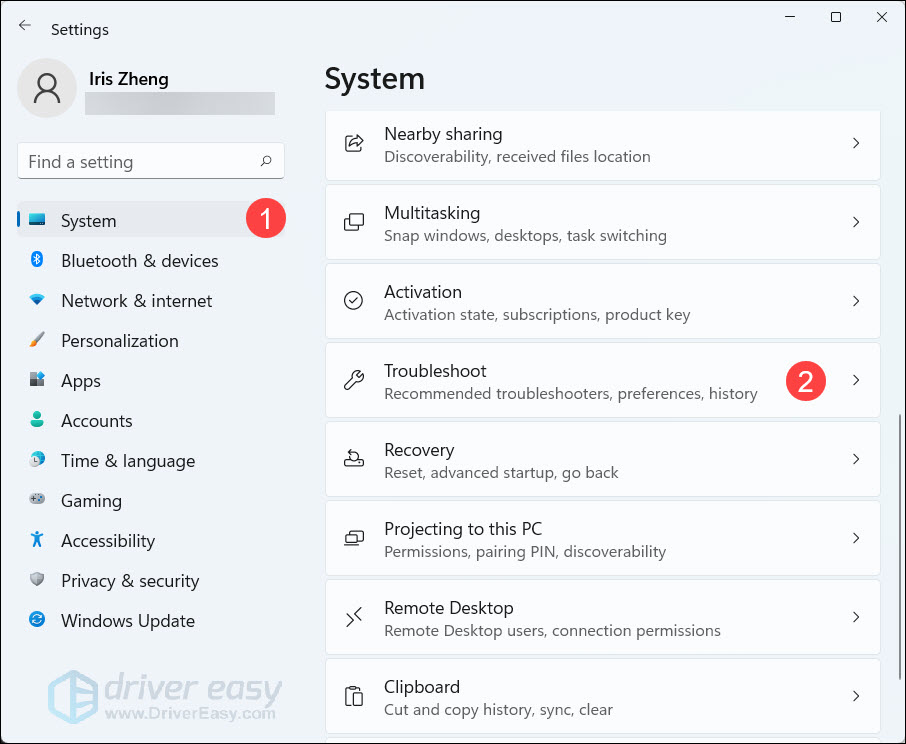
- Click System in the left panel. Then scroll down on the right panel and click Troubleshoot.
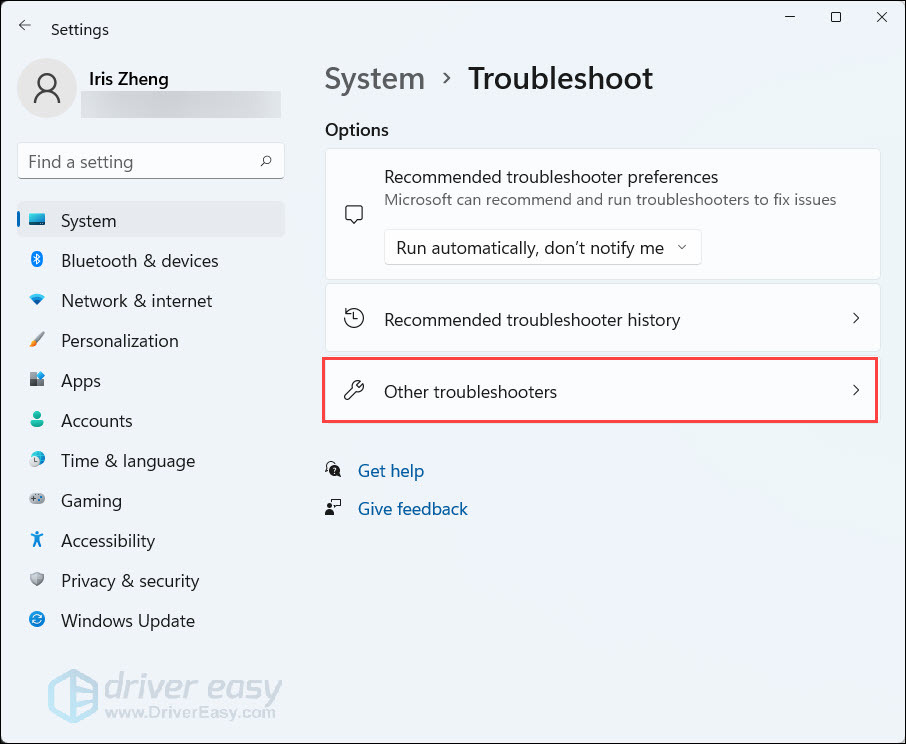
- Click Other troubleshooters.
- Find Bluetooth and click Run.
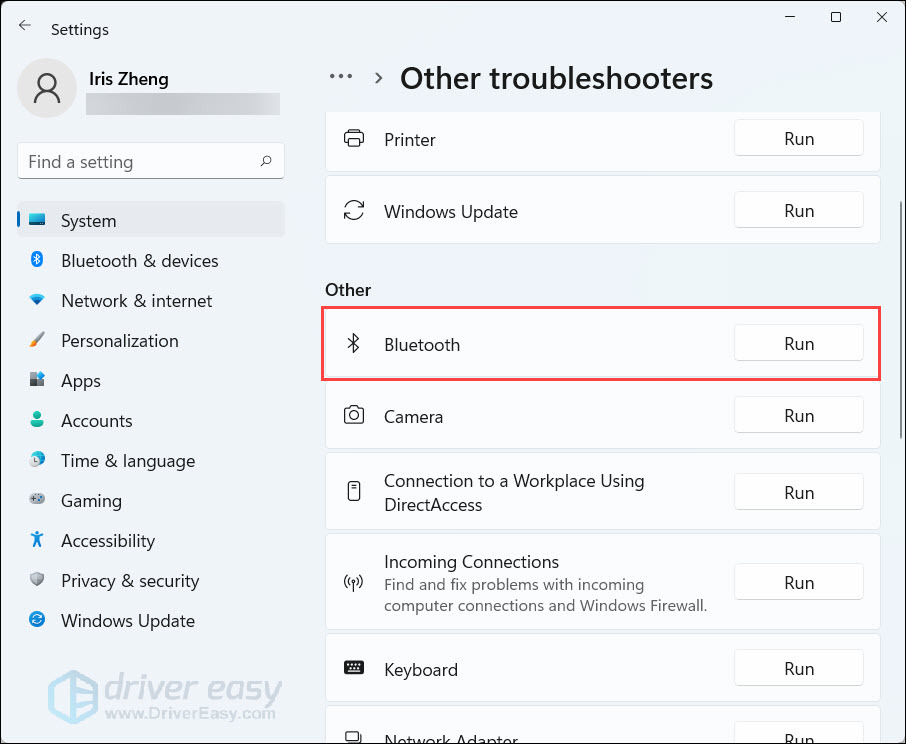
- The system will automatically run the troubleshooter to fix the problem. When the process is completed, Windows will let you know whether the problem is solved or not.
If the troubleshooter reports This device does not have Bluetooth capability, don’t assume your hardware has failed. This message often appears when Windows cannot communicate with the Bluetooth service or driver. Continue with the remaining fixes below.
Fix 4: Restart the Bluetooth Support service
If the Bluetooth Support Service is not working or is set to manual, you might encounter a Bluetooth not working issue. You can check if that’s the case for your PC by following the steps below.
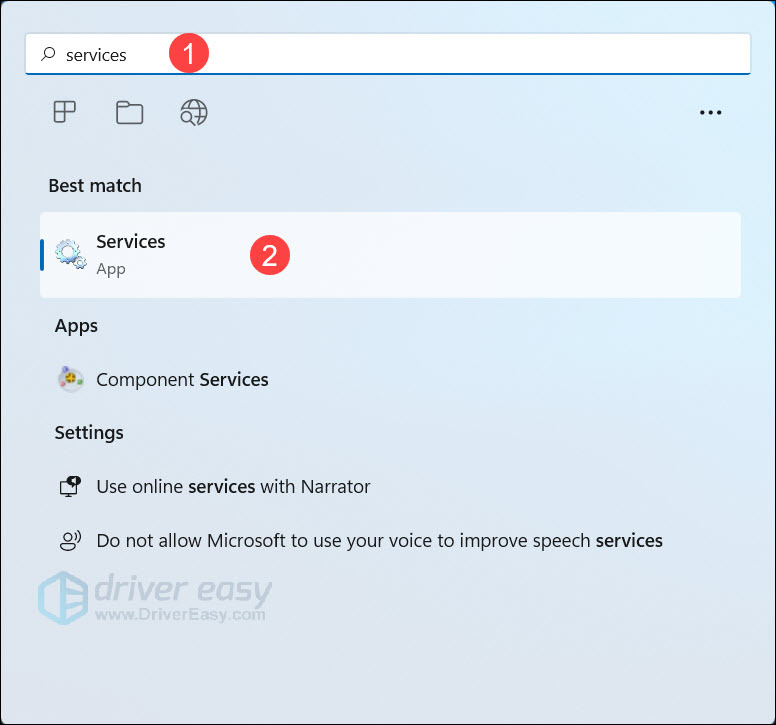
- Press the Windows logo key + S together. Type services in the search bar, then click the Services app.
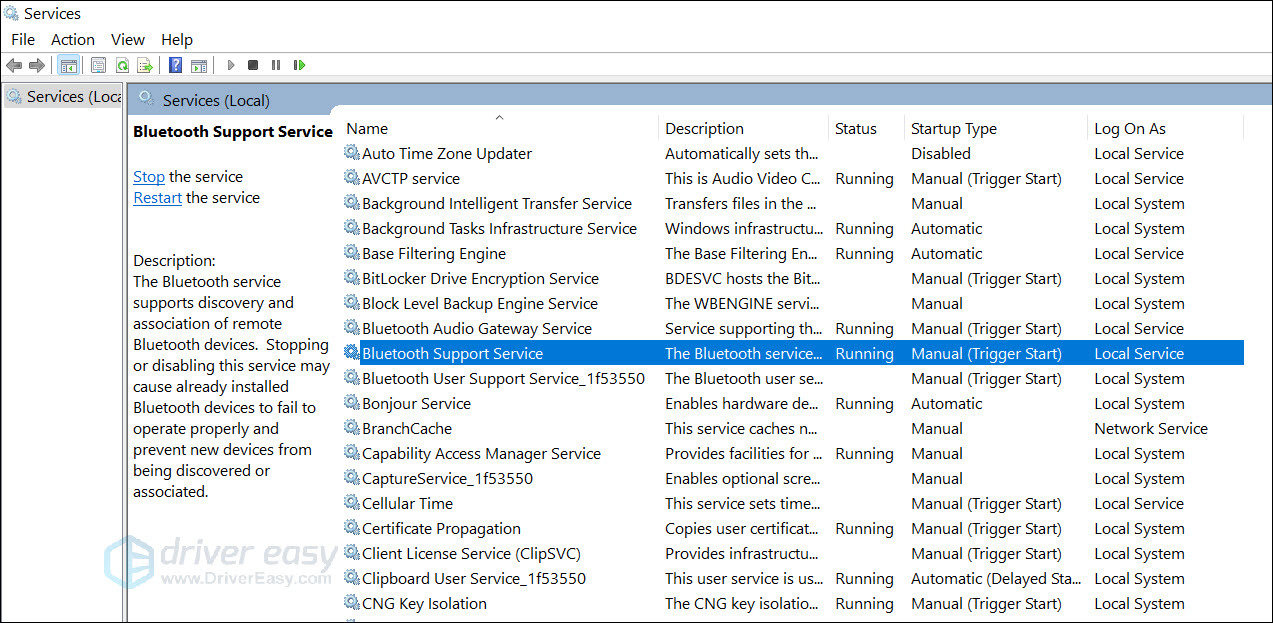
- Scroll down to find Bluetooth Support Service, then double-click it.
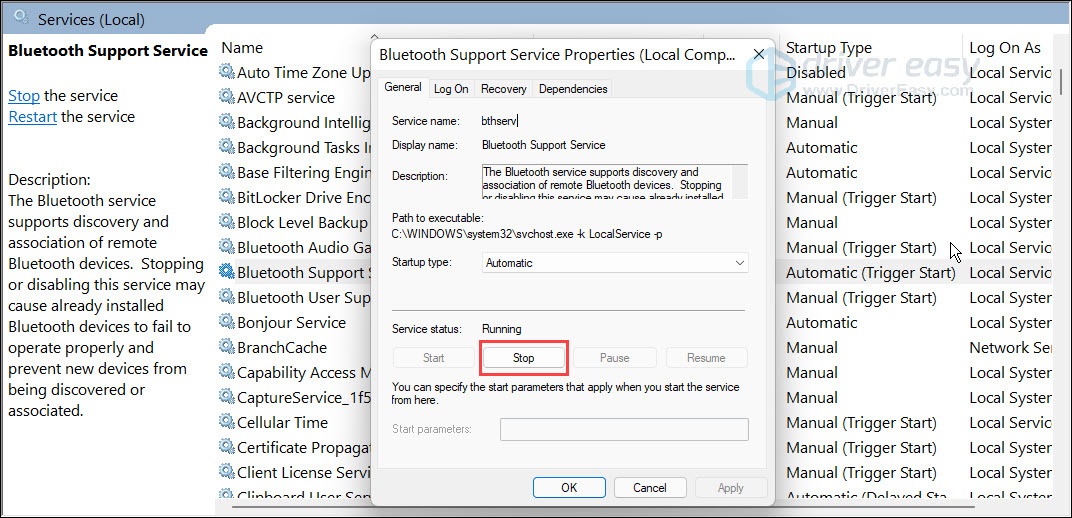
- In the pop-up window, go to the General tab. Click Stop under Service status. Then click Start next to it.
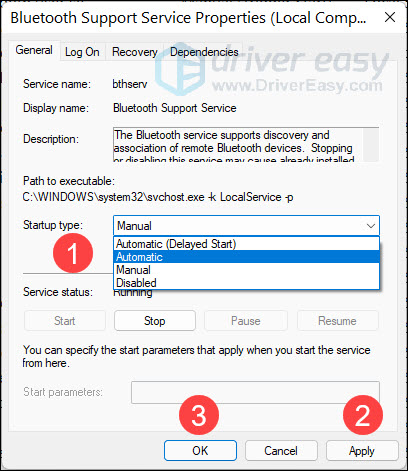
- Select Automatic in the Startup type drop-down menu. Then click Apply > OK.
The Bluetooth Support Service is running in normal terms and you should be able to pair your device and use it normally.
Fix 5: Update or roll back your Bluetooth driver
A corrupted or outdated Bluetooth driver is one of the leading causes of Bluetooth disappearing, refusing to connect, or failing after Windows Update. To make sure Bluetooth works smoothly on your Windows 11, it’s necessary to keep the Bluetooth driver up-to-date. However, if Bluetooth stopped working immediately after a Windows Update or driver update, rolling back to the previously installed driver often resolves the problem.
You can do it manually via the Windows Device Manager or automatically using a trusted driver updater.
Option 1: Update or roll back your Bluetooth driver manually
One of the easiest ways to update your Bluetooth driver is through Windows Device Manager. It’s a Windows utility that allows you to update and reinstall drivers for individual devices.
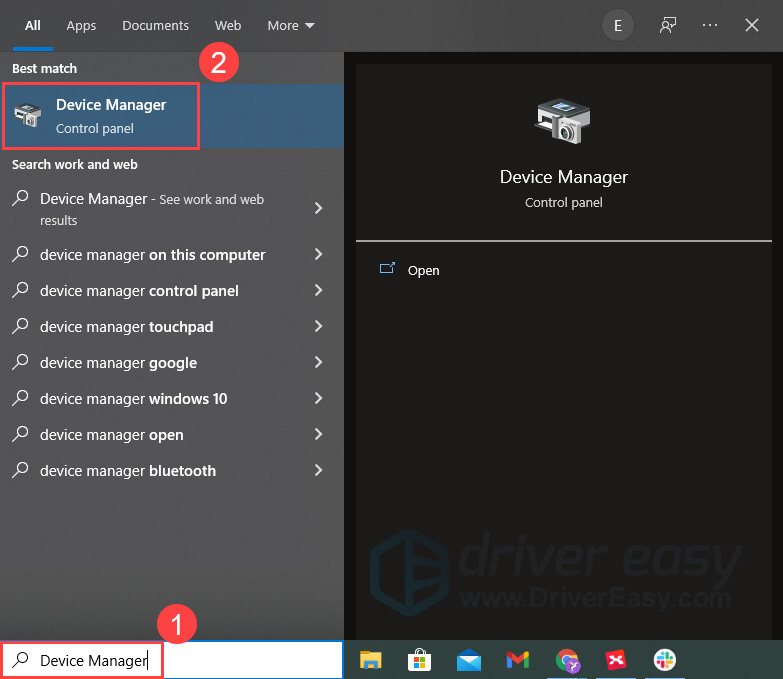
- Type Device Manager into the Windows search bar and open it.
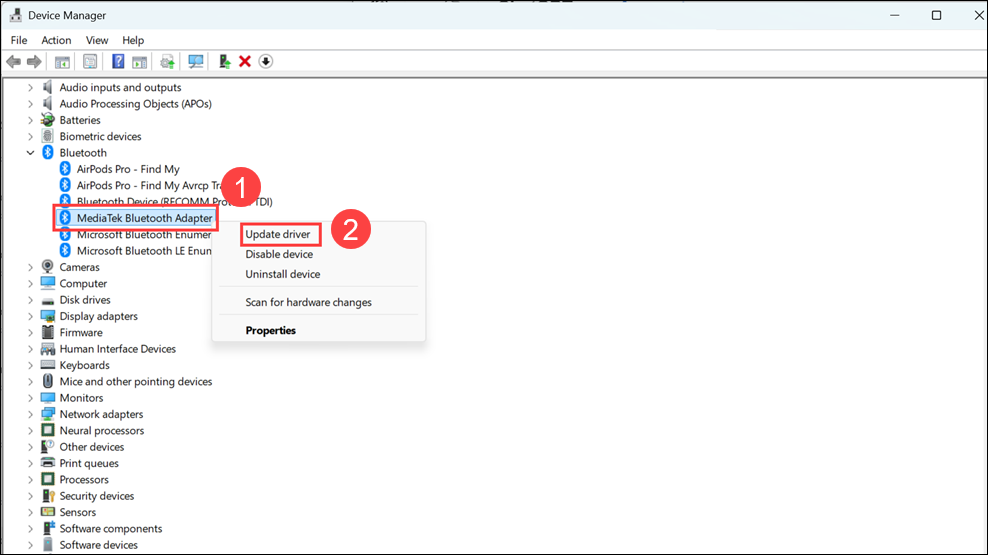
- Expand the Bluetooth category, right-click your Bluetooth adapter, and click Update driver.
- Choose Search automatically for drivers. If Windows finds a newer driver, follow the on-screen instructions to install it.
If you’re encountering audio problems, expand Sound, video and game controllers, right-click your primary audio device (such as Realtek(R) Audio or Intel Smart Sound Technology Audio Controller) and select Update driver.
Once done, restart your computer and test your Bluetooth. If Windows reports that the best driver is already installed but Bluetooth still isn’t working, it doesn’t necessarily mean you have the latest driver. Windows may not always provide the newest driver released by your PC or Bluetooth adapter manufacturer. In that case, you can
Option 2:Update or roll back your Bluetooth driver automatically (Recommended)
If you don’t have the time, patience, or computer skills to update your Bluetooth driver manually, you can, instead, do it automatically with Driver Easy. Driver Easy will automatically recognize your system and find the correct drivers for your exact device and your Windows version, and it will download and install them correctly. Besides the Bluetooth adapter driver, it can also detect related drivers – such as Bluetooth audio, chipset, USB, and wireless drivers – that may affect Bluetooth connectivity or audio performance.
- Download and install Driver Easy.
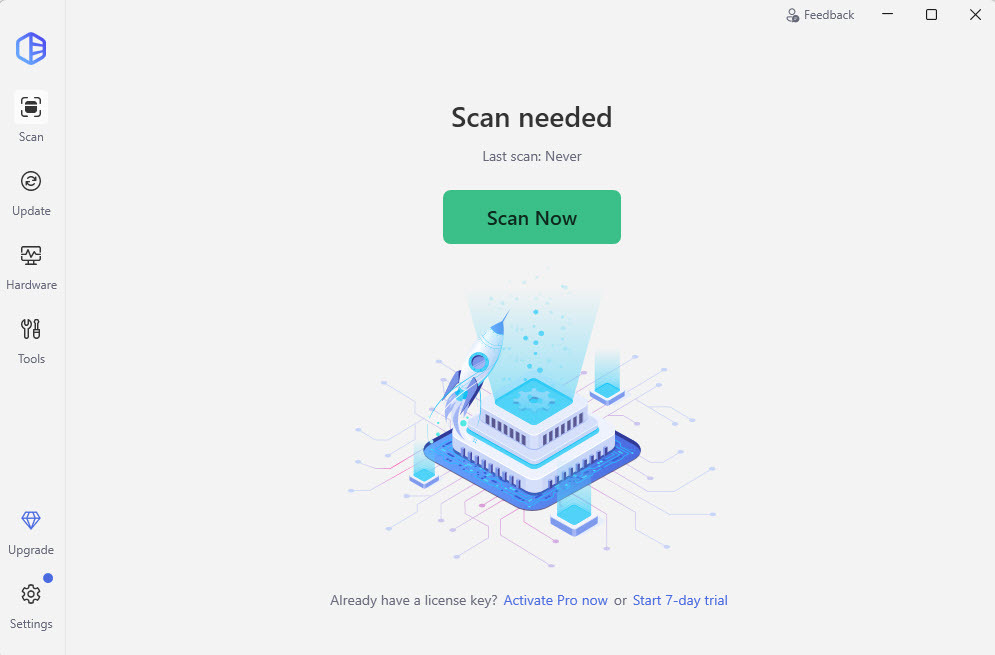
- Run Driver Easy and click the Scan Now button. Driver Easy will then scan your computer and detect any problem drivers.
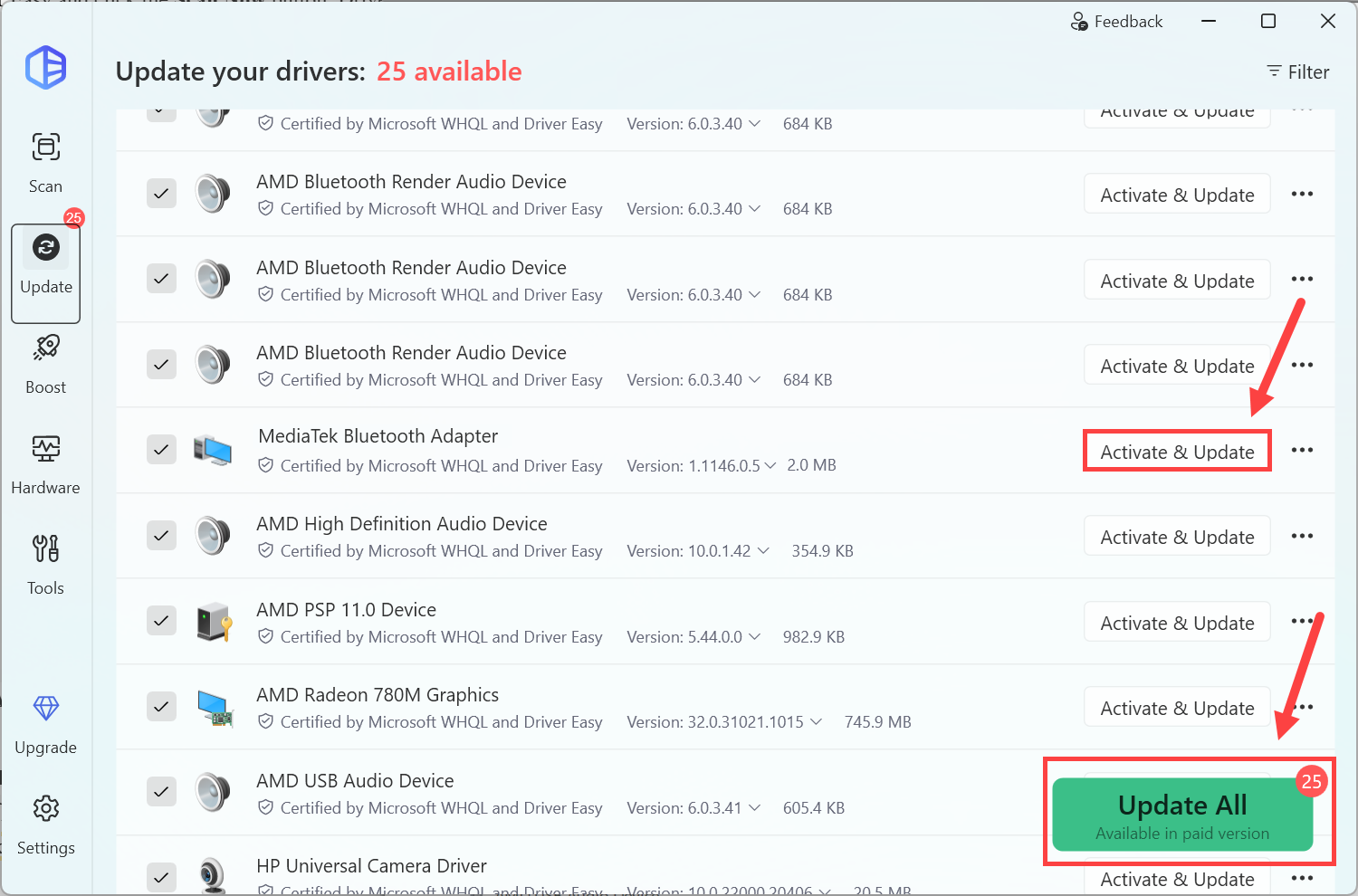
- Click the Activate & Update button next to the flagged Bluetooth device to automatically download and install the correct version of this driver. Or click Update All (recommended) to automatically download and install the correct version of all the drivers that are missing or out of date on your system.
For the best automatic driver update experience, we recommend upgrading to Driver Easy Pro version. It provides advanced features including high-speed driver downloads and installs and full technical support. If you’re not prepared to purchase the Pro version yet, you can try the 7-day trial to explore how this tool works. - After updating, restart your computer for the changes to take effect.
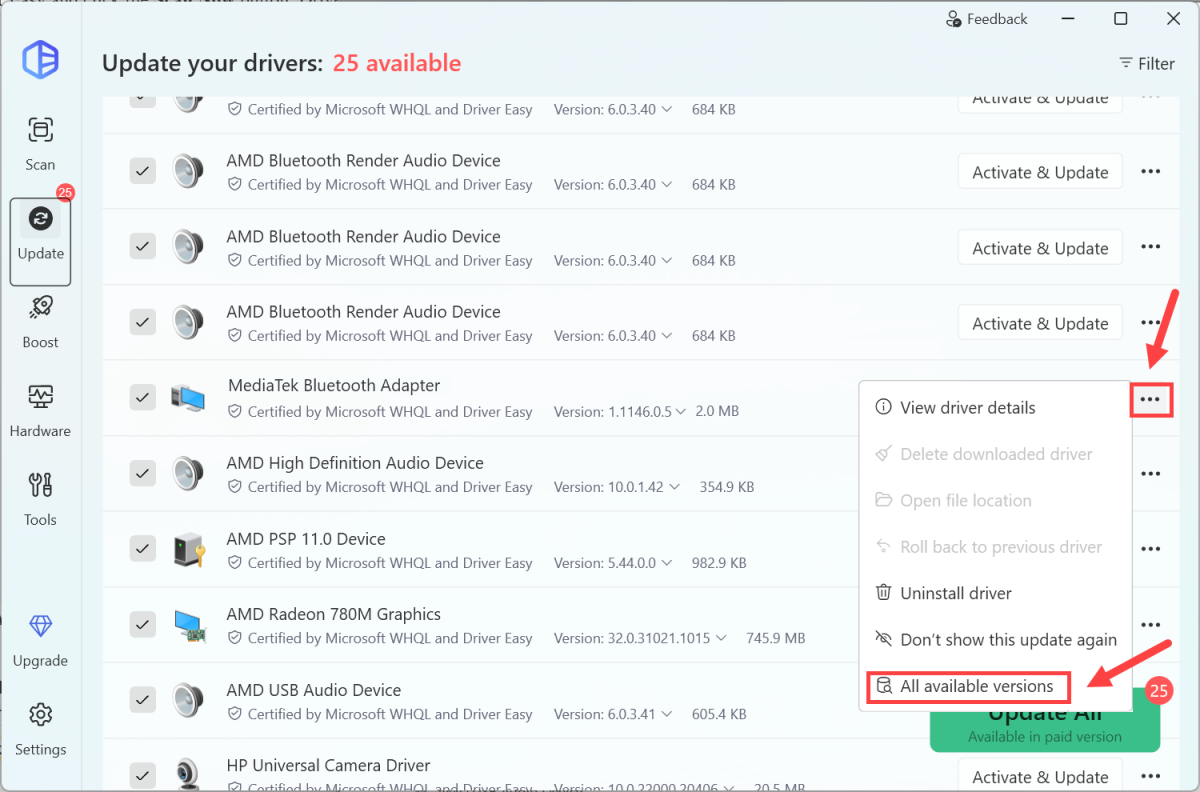
If updating the driver doesn’t solve your issue, you can also use Driver Easy to roll back the Bluetooth driver. Just click the three-dot button next to the Bluetooth driver and select All available versions. You can install a previous driver version to see if that solves the problem.
Fix 6: Prevent Windows from turning off the Bluetooth adapter
Windows may automatically disable Bluetooth to save power, particularly on laptops. If this happens repeatedly, Bluetooth may disconnect, disappear temporarily, or stop responding after sleep mode.
- Open Device Manager.
- Expand Bluetooth.
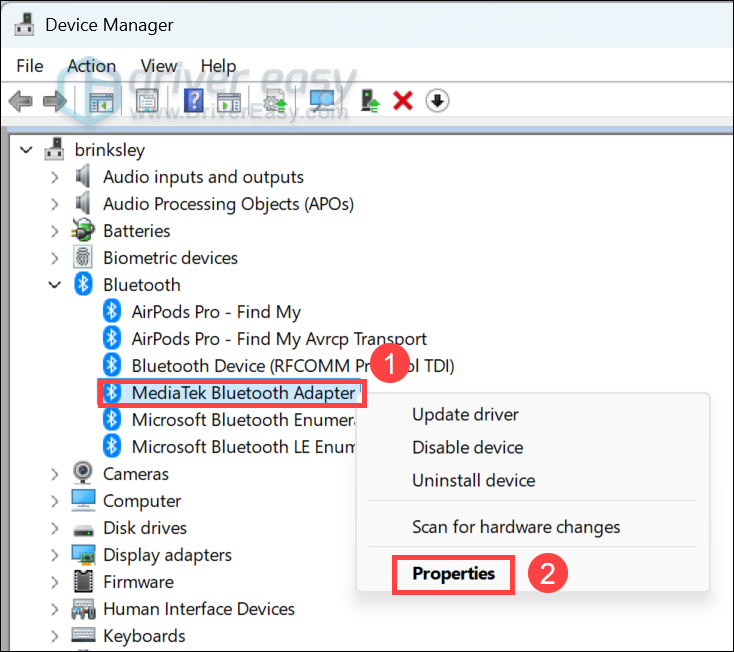
- Right-click your Bluetooth adapter and select Properties.
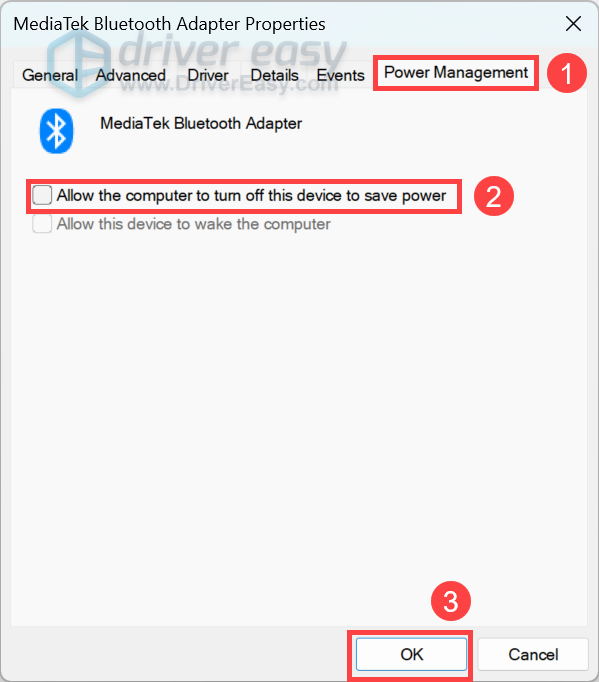
- Open the Power Management tab. Uncheck Allow the computer to turn off this device to save power, and click OK.
Restart your PC and check if your Bluetooth is stable now.
Fix 7: Change the Bluetooth discovery setting
If Windows can’t discover nearby Bluetooth devices, the discovery mode may be too restrictive. Several users have reported that changing the discovery setting resolved pairing issues.
- On your keyboard, press the Windows key and the I key together. Select Bluetooth & devices, then Devices.
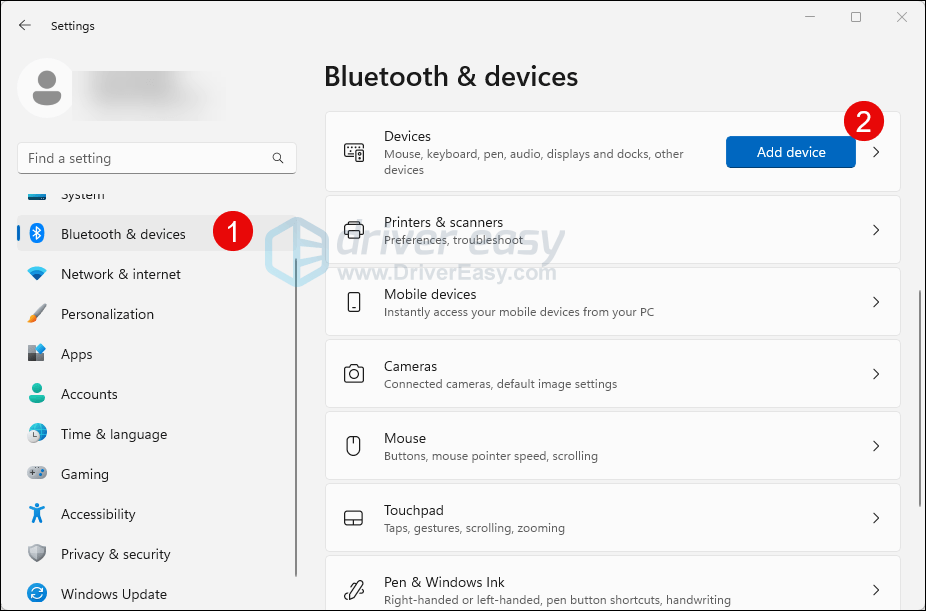
- Scroll down and change the Bluetooth devices discovery option to Advanced.
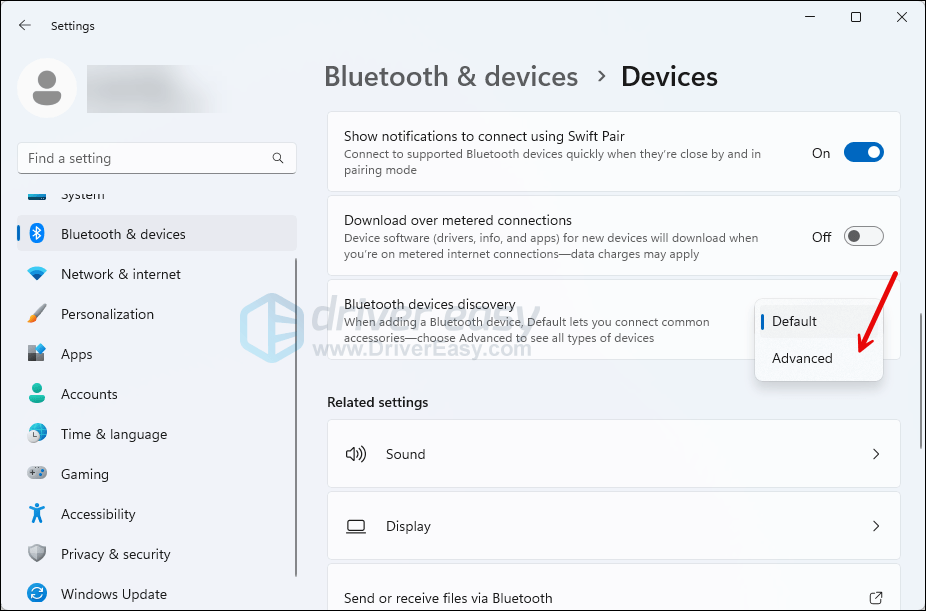
Try to see if your Bluetooth starts working properly. If the problem remains, please move on.
Fix 8: Repair system files
It’s possible that the Bluetooth not working issue is caused by a Windows system error. Corrupt, damaged, or missing system files can cause Windows issues. To check if this is the exact cause, you can either use the Windows built-in tool to run a basic check.
Microsoft’s built-in program, System File Checker (SFC), makes it easy for you to get your original system files back. It will restore any broken or missing system files that could be causing your PC issues.
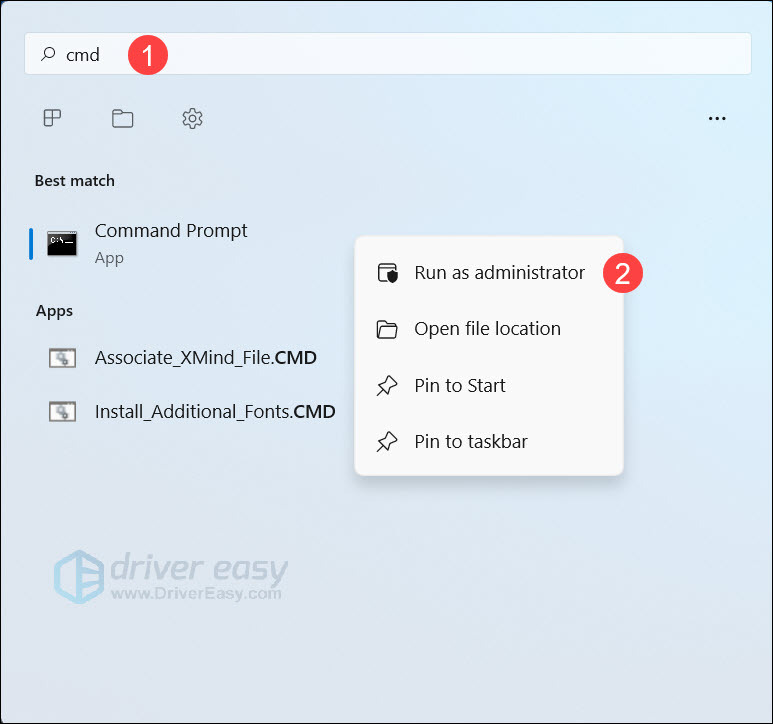
- Type cmd into your Windows search bar and then right-click on Command Prompt. Click Run as administrator. Click Yes to provide administrator permission.
- In the black Command Prompt window, type: sfc /scannow. Then press Enter on your keyboard.
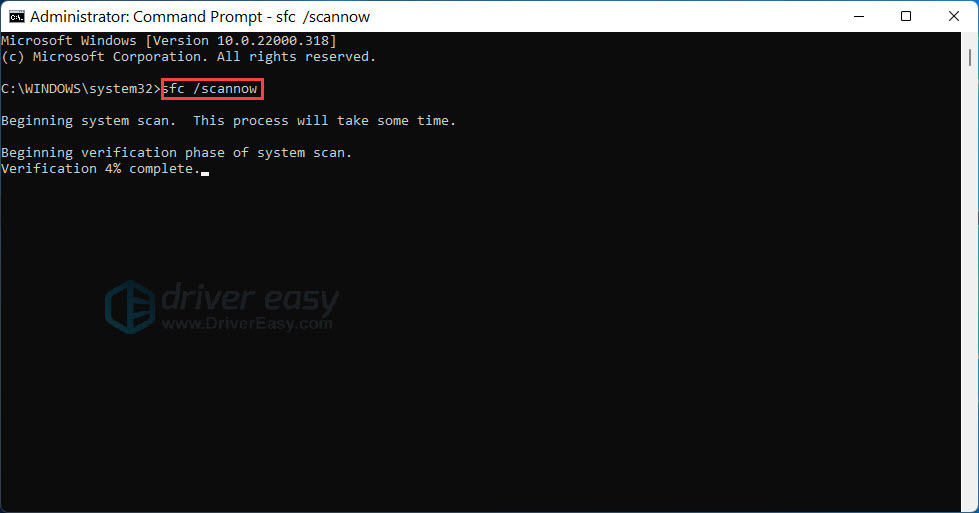
Windows will scan your system for corrupted files and attempt to fix any it finds. The results will display in this window, so please leave it open until the operation is complete.
By working through the fixes in order, most users can restore Bluetooth functionality without reinstalling Windows or replacing any hardware. If you’ve completed every step above and Bluetooth still doesn’t work, the issue may be hardware- or firmware-related. You can try installing the latest chipset driver from your PC manufacturer and updating the BIOS to see if that helps.

