


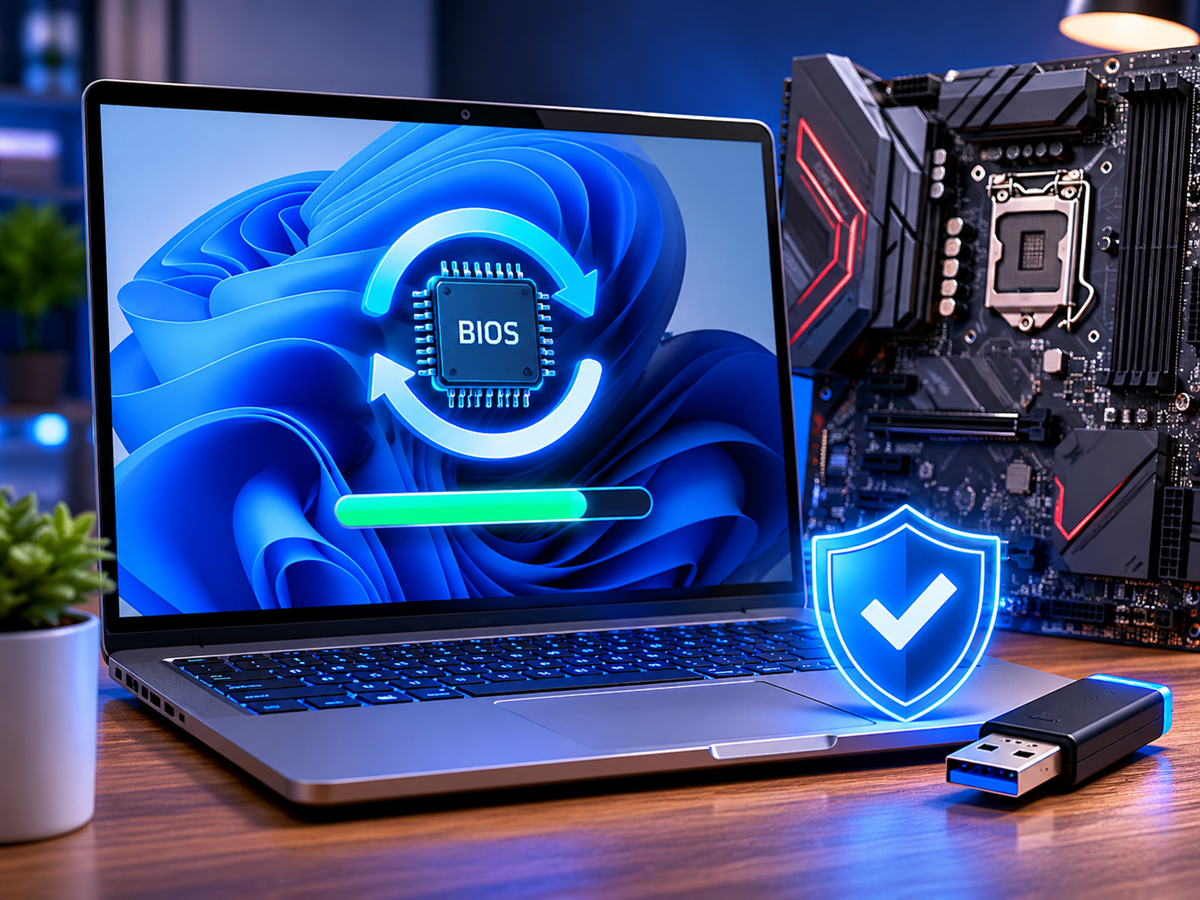

Many motherboard and computer manufacturers have made the BIOS updating process much easier nowadays, so updating the BIOS on Windows 11 is not as daunting as it seems. Before we actually do the BIOS update, you will first need to decide whether a BIOS update is really necessary for you. If you’ve decided that a BIOS update is what you need at this point, let’s move on and see the details on how to do it right.
When should you update your BIOS?
The first thing you should know is that a BIOS update generally doesn’t boost or unlock extra PC performance, but it can fix bugs related to specific hardware or add compatibility for new devices, which can be determined from the BIOS update release note. In other words, if your computer is working normally, and you just want to fix a certain software problem, a BIOS update is not recommended.
This is because if accidents like power loss or a crash happen during the BIOS update, your computer could be bricked. And if you’ve previously changed certain values in your BIOS, an update could reset such settings to the default, and therefore affect your system stability.
As such, unless you’re sure that the BIOS update released by your computer manufacturer can solve the specific problem you’re experiencing or when that new hardware support is required, don’t attempt to do a BIOS update.
When you’ve decided that a BIOS update is what you need, please move on to see how you can update the BIOS on Windows 11.
Before you update the BIOS on Windows 11
Before performing the BIOS update, take a few minutes to prepare your system.
1. Check your current BIOS version
To update the BIOS on Windows 11, you’ll first need to know your motherboard model and the current BIOS version (for comparison).
- Press the Windows Key + R to open the Run dialog box.
- Type msinfo32 and press Enter to launch System Information.
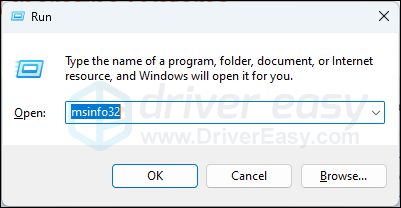
- In the System Summary tab, locate and note down the following entries:
System Model
BIOS Version/Date
BaseBoard Manufacturer
BaseBoard Product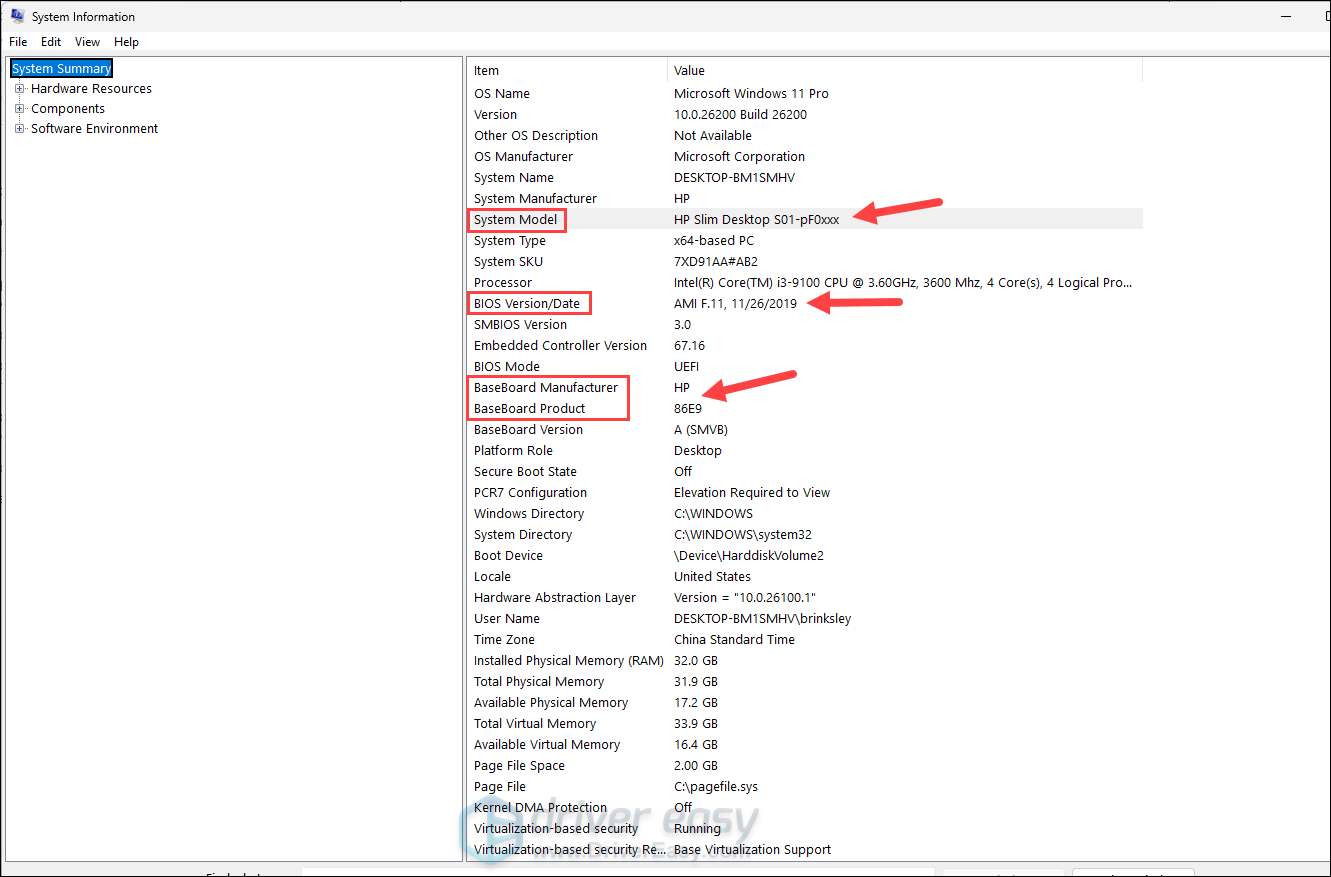
You’ll need this information to locate the correct BIOS update later.
2. Back up your BitLocker key
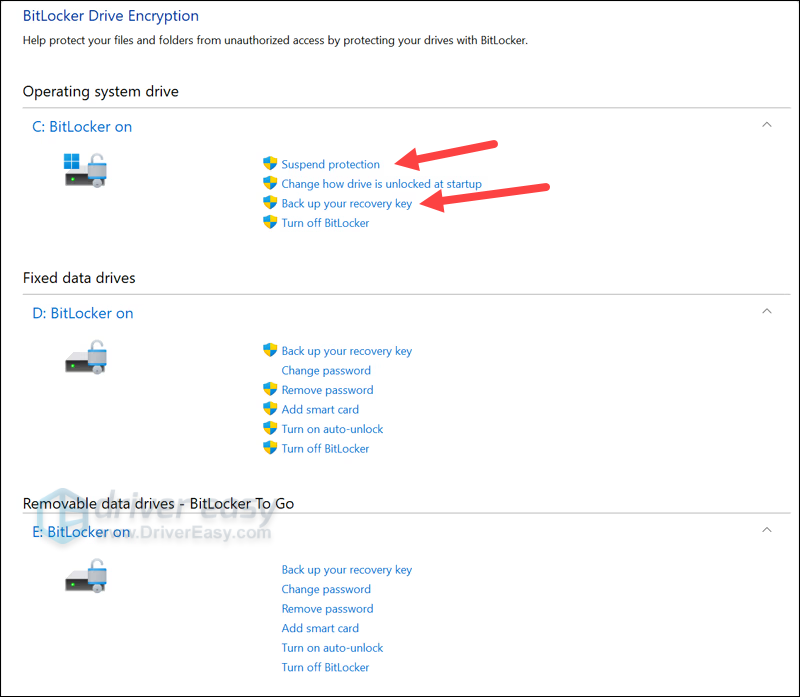
Modern Windows 11 computers often have BitLocker Encryption enabled by default. A BIOS update can change the TPM measurements used by BitLocker to verify system integrity. As a result, Windows may ask for your BitLocker recovery key after the update. Before proceeding, make sure you back up the BitLocker key or temporarily pause the protection.
- Type bitlocker into the Windows search bar and click Manage BitLocker.
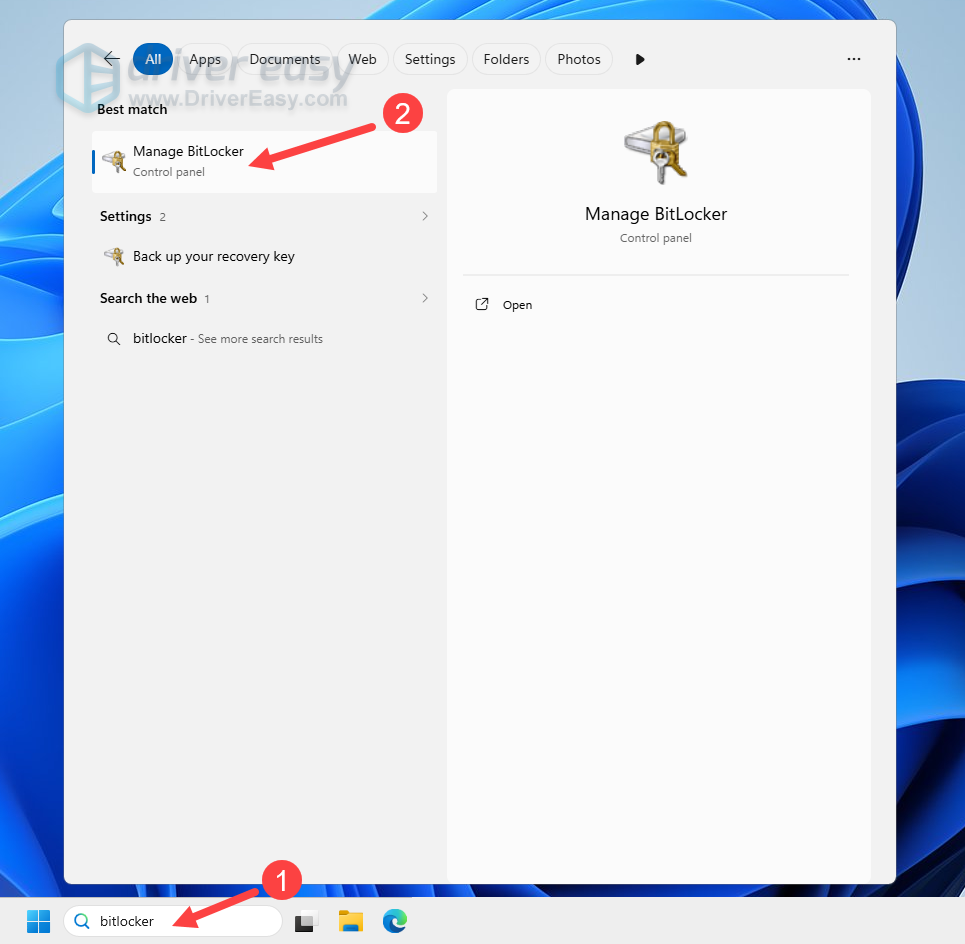
- Next to each drive, select Back up your recovery key. Alternatively, you can temporarily select Suspend protection before updating.
3. Ensure the power supply
If you are using a laptop, ensure it has at least 50% battery and remains connected to a power supply during the update. It’s also recommended not to update the BIOS during a storm or unstable power conditions to avoid sudden power outages.
3 methods to update BIOS on Windows 11
There are several ways to update the BIOS on Windows 11. For most users, Windows Update and the manufacturer’s BIOS update utility are the easiest options. If your computer currently doesn’t work, jump to Method 3 – you’ll need to download the BIOS file from another computer and install it via a USB flash drive to the original computer.
Method 1 – Check for Windows Update
The regular Windows Update often pushes BIOS or firmware updates directly. To check for the most recent update:
- On your keyboard, press the Windows logo key and I to open Settings.
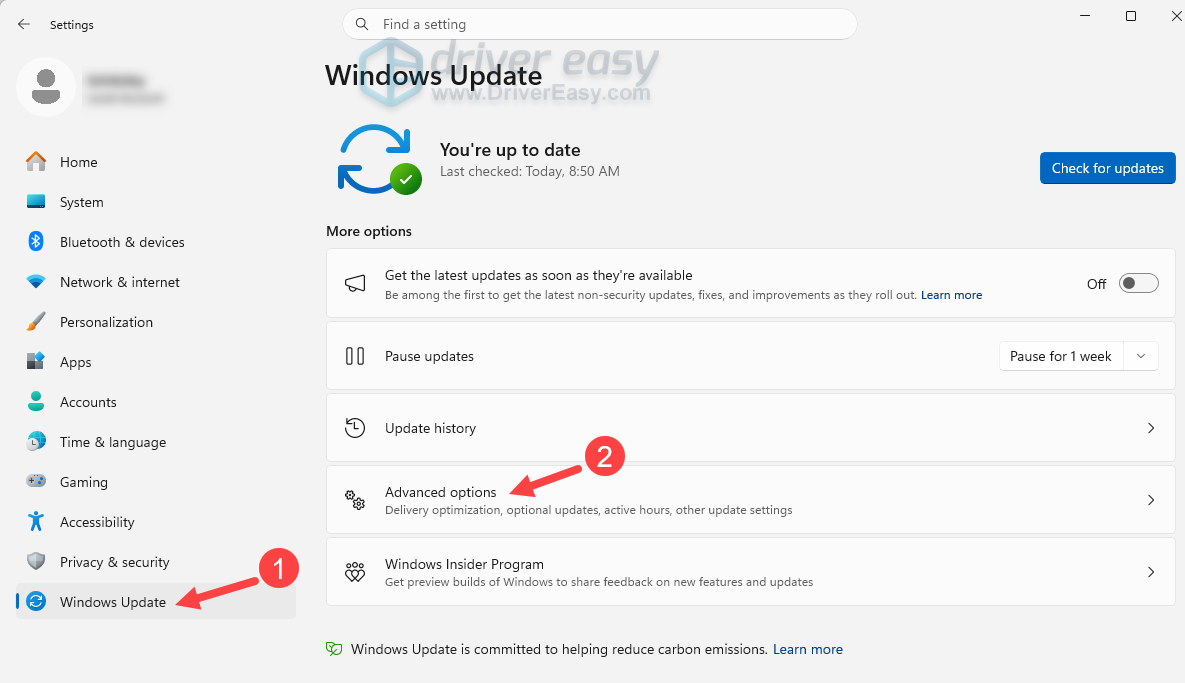
- Select Windows Update > Advanced Options.
- Click Optional updates.
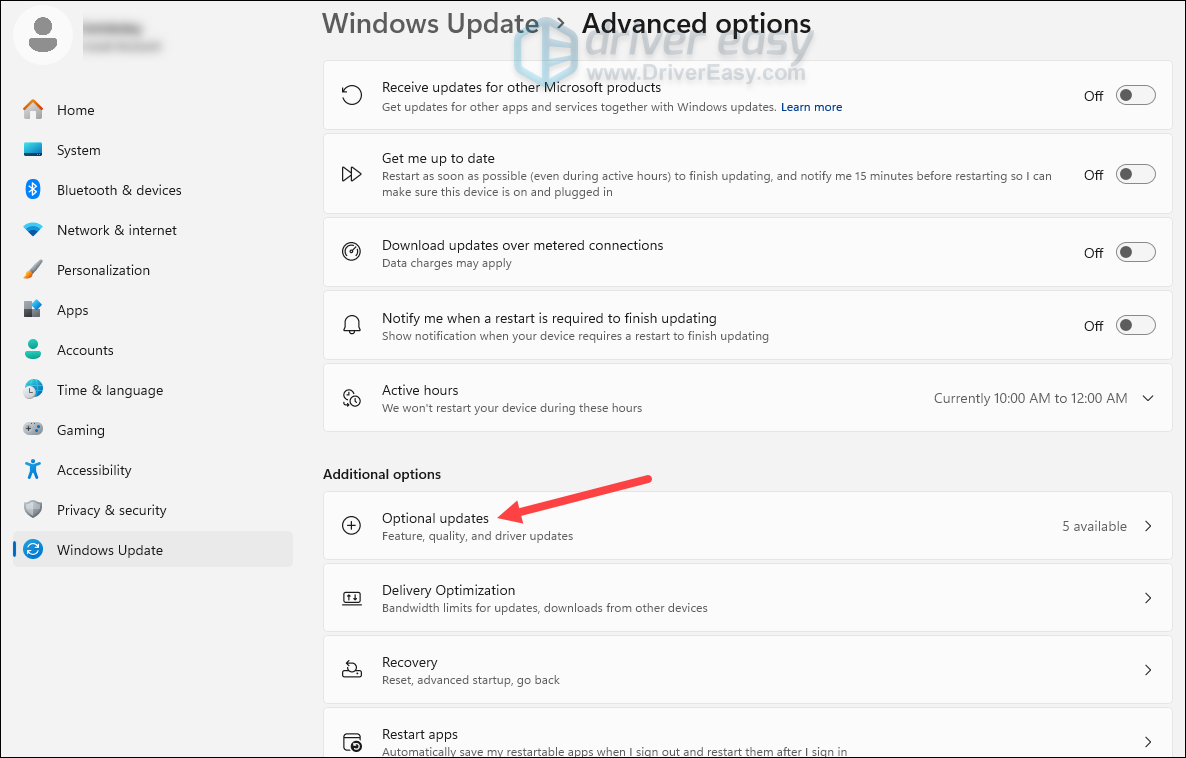
If a firmware update is available (the system firmware and BIOS are usually included), you can download and install it automatically. If not, continue to the next method. You can always download the latest BIOS directly from your PC or motherboard manufacturer’s support website.
Method 2 – Use the manufacturer’s BIOS update utility
Some manufacturers also offer a standalone BIOS/UEFI firmware update utility in the form of executable files that run directly within the Windows operating system.
Simply go to the Drivers and Software Download section on the manufacturer’s official support website.
Search for your exact computer or motherboard model, and download the latest BIOS version. Once done, double-click the executable file to run it, and follow the on-screen instructions to update the BIOS.
Method 3 – Use a USB Flash drive
If your Windows computer isn’t accessible, you can download the BIOS file from a second working computer and update it on this device.
- Go to the manufacturer’s official website and look for a section like Drivers and Software Download.
- Search for your model and download the latest BIOS file.
- Copy the file onto a FAT32-formatted USB flash drive.
- On the target computer for the BIOS update, insert the USB flash drive, start the computer, and enter BIOS/UEFI by repeatedly pressing the hotkeys. It may vary by brands:
Asus: F2
Dell: F2
HP: Esc or F10
Lenovo: F1 - Navigate to the flash tool (named EZ Flash on ASUS, M-Flash on MSI, or Q-Flash on Gigabyte). Select the BIOS file from your USB drive and confirm the update.
Wait patiently for the update to complete. It may take about 2 to 10 minutes to complete. During the process, the screen may go black, fans may speed up or stop temporarily, and the system may reboot multiple times. This is normal. Don’t interrupt the process.
Verify the update was successful
Once the system restarts and you are back on the Windows 11 desktop, press the Windows logo key + R, type msinfo32, and hit Enter. Check the BIOS Version/Date. If it matches the version number you just downloaded, your BIOS update was successful, and your system is fully optimized.
Updating BIOS on Windows 11 is usually straightforward when you use the correct update method and follow the manufacturer’s instructions carefully. If the methods don’t work or you encounter other problems during the update, feel free to leave a comment below.