



If you’re on Windows 11 or 10 and see this blue screen of death with the PAGE FAULT IN NONPAGED AREA error, you’re not alone. This is a Windows Blue Screen of Death (BSOD), which usually means that Windows referenced invalid system memory. In this post, we’ll show you how to fix the issue quickly.
How to fix the Page Fault In Nonpaged Area error?
Here are 5 solutions you can try. You may not have to try them all; just work from the top down until you find the one that works.
- Update or roll back device drivers
- Temporarily disable any third-party antivirus applications
- Run a disk check and memory test
- Check the paging file settings
- Perform a system restore
Before you start: if your computer cannot start
If Windows starts normally, you can skip this section and continue with Fix 1.
If your PC keeps showing the PAGE_FAULT_IN_NONPAGED_AREA blue screen during startup, try entering Safe Mode before performing the following steps. Safe Mode starts Windows with only a limited set of files, drivers, and services, which can help you troubleshoot problems caused by third-party software or drivers.
- First, enter the Windows Recovery Environment (WinRE) when booting your computer. Different computer brands use specific keys:
– ASUS: While the computer isn’t powered on yet, press and hold the F9 key, then press the Power button. If F9 doesn’t work, use F12.
– HP: Repeatedly tap F11 during boot.
– Acer: Press Alt and F10 at the same time after powering on your computer.
– Dell: Tap F12 repeatedly during boot.
– Lenovo: Press F11 repeatedly during boot.
– MSI: Press F3 repeatedly during the boot process. - Go to Troubleshoot > Advanced options > Startup Settings > Restart.
- Press 4 or F4 to enter Safe Mode.
Once you’re in Safe Mode, try the solutions below.
1. Update or roll back device drivers
Think of device drivers as translators between Windows and your hardware (like your graphics card or network adapter). If an outdated driver gives Windows wrong directions to a memory location, or gets into a conflict with a background program like game anti-cheat software, Windows may crash and trigger a blue screen error.
If the problem started after you updated a driver, you can simply roll it back in Windows Device Manager:
- Right-click the Start button and select Device Manager.
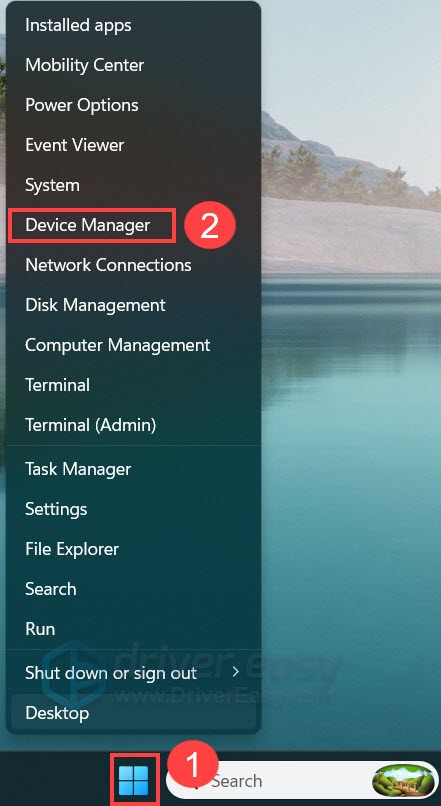
- Find the device whose driver was recently updated. Right-click the device and select Properties.
- Go to the Driver tab and click Roll Back Driver if it’s available.
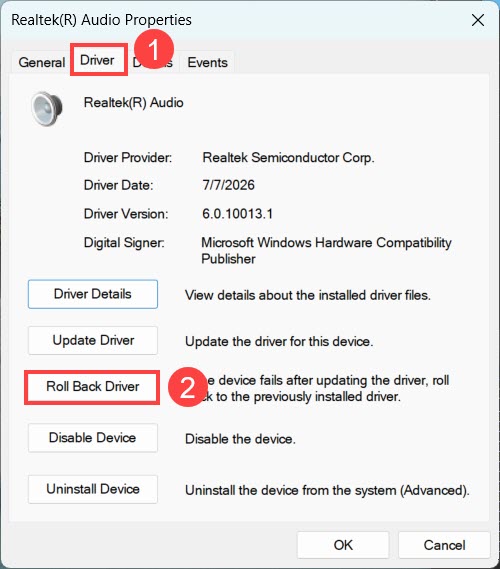
- Restart your computer.
If you don’t know which driver is causing the problem, check your system for outdated or corrupted drivers. You can update device drivers manually, or if you want to save the hassle, do it automatically with Driver Easy.
Driver Easy automatically detects your hardware and matches it with the appropriate drivers for your system, so you don’t have to identify each device or search for compatible driver versions yourself.
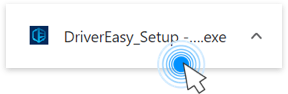
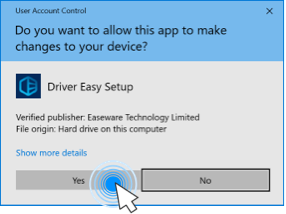
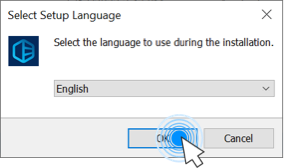
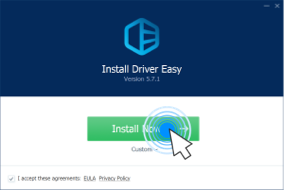
- Download and install Driver Easy.
- Run Driver Easy and click the Scan Now button. Driver Easy will then scan your computer and detect any problem drivers.
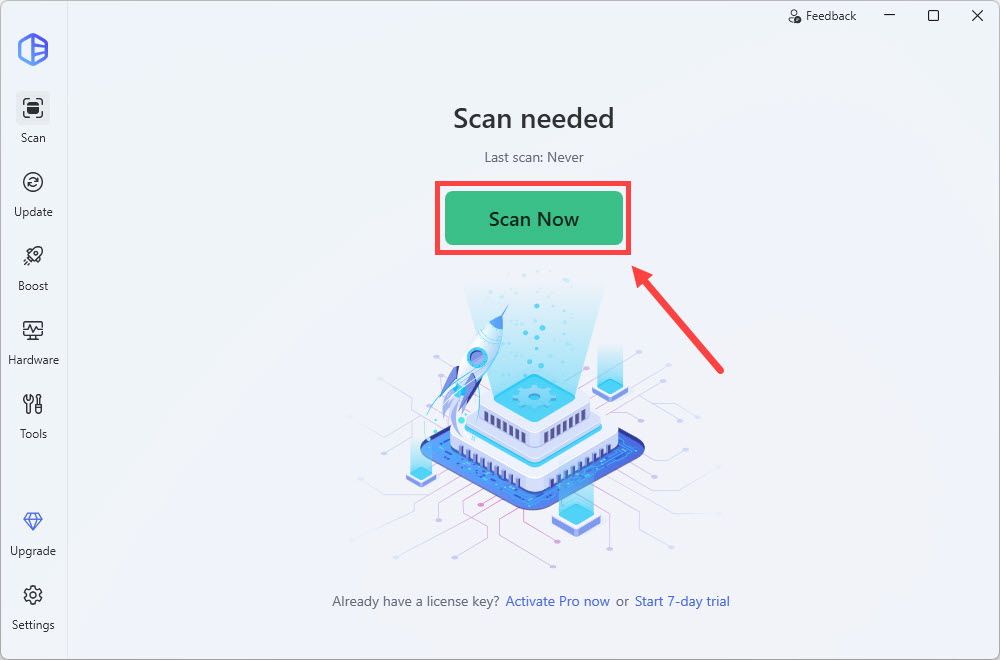
- Click the Activate & Update button next to the flagged devices to automatically download and install the correct version of their driver. Or click Update All to automatically download and install the correct version of all the drivers that are missing or out of date on your system.
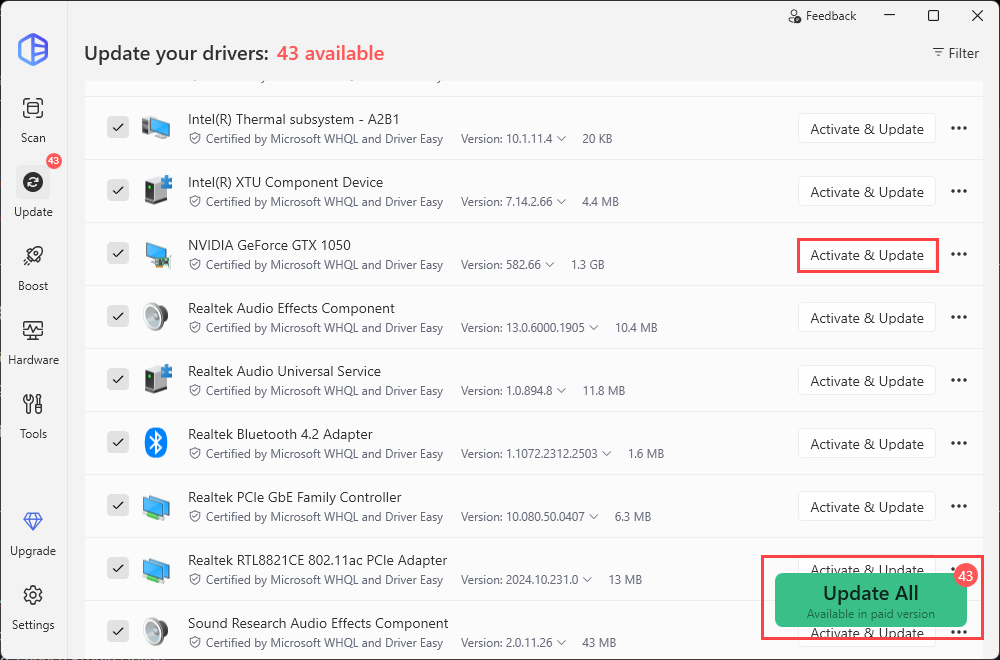
This will prompt you to upgrade to Driver Easy Pro. The Pro version provides hassle-free driver updates and full technical support for you to keep your PC running smoothly. If you’re not ready to purchase now, you can try all the Pro features with our 7-day free trial.
Restart your computer after the driver update and check if the BSOD is resolved now.
2. Temporarily disable any third-party antivirus applications
Third-party antivirus programs use deep kernel-level drivers to monitor system memory in real time. If your antivirus misinterprets a safe Windows process as a threat or conflicts with a system driver, it locks the target memory location and forces a system crash.
If you have a third-party antivirus program installed, temporarily disable it to identify whether it’s the cause. The exact steps vary between antivirus programs, so refer to the software vendor’s documentation for instructions. Restart your computer and use it normally for a while to check whether the blue screen returns.
If the issue remains, try the next fix below.
3. Run a disk check and memory test
If your RAM modules have faulty memory chips, or if your hard drive has bad physical sectors, Windows will fail when trying to read or write critical system data, therefore causing a PAGE_FAULT_IN_NONPAGED_AREA error.
Step 1. Check your disk
- Type cmd into the Windows search box. Then locate cmd and click Run as administrator.
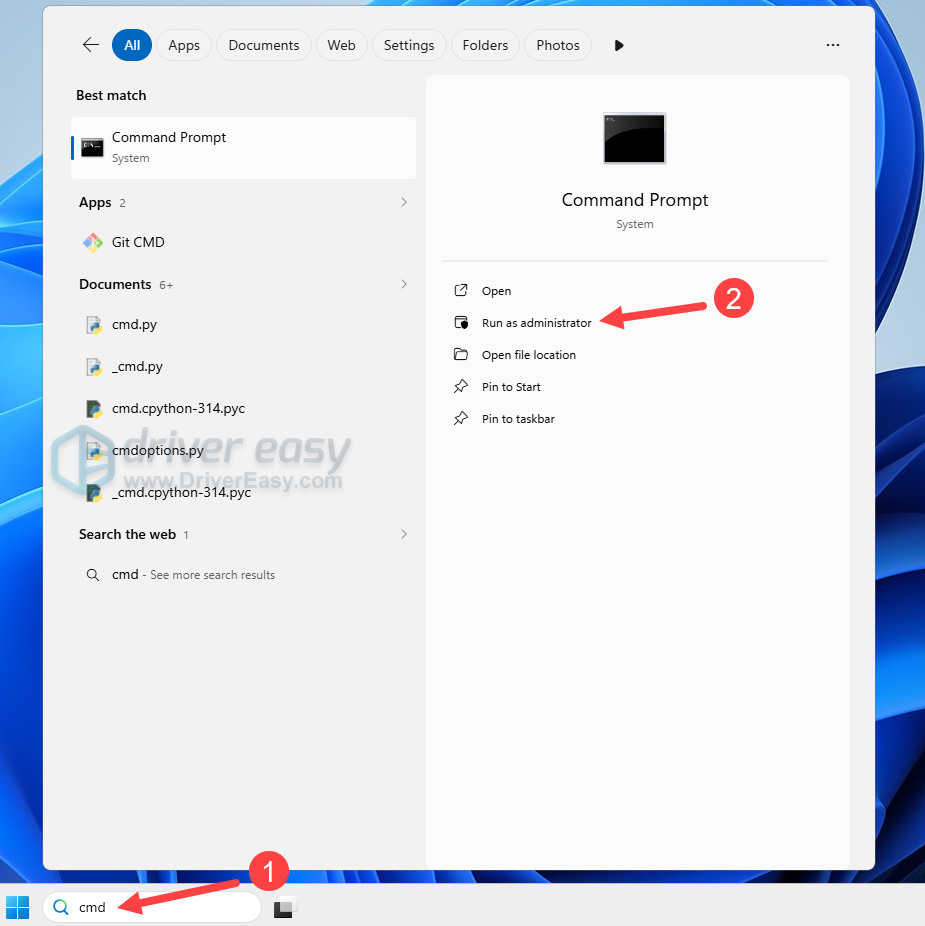
- Click Yes when you’re prompted for permission.
- In the Command Prompt screen, type chkdsk /f /r, then press Enter on your keyboard.
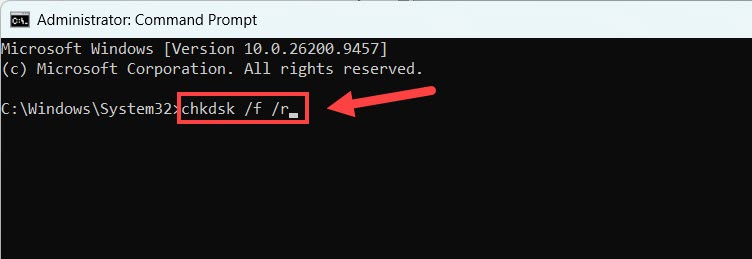
- Press Y on your keyboard.
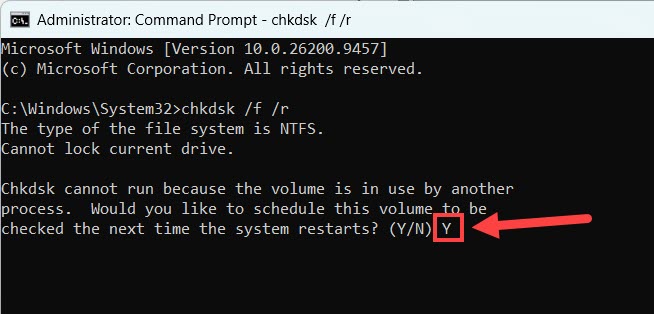
- Restart your PC. Windows will automatically scan and repair file system corruption during startup.
Step 2. Test the memory
- Press the Windows logo key and R at the same time to invoke the Run command box.
- Type mdsched.exe and press Enter.
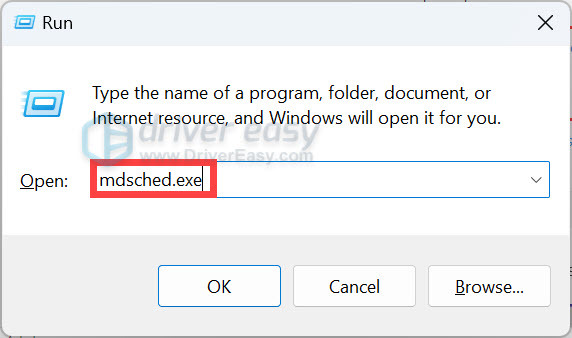
- Click Restart now and check for problems (recommended).
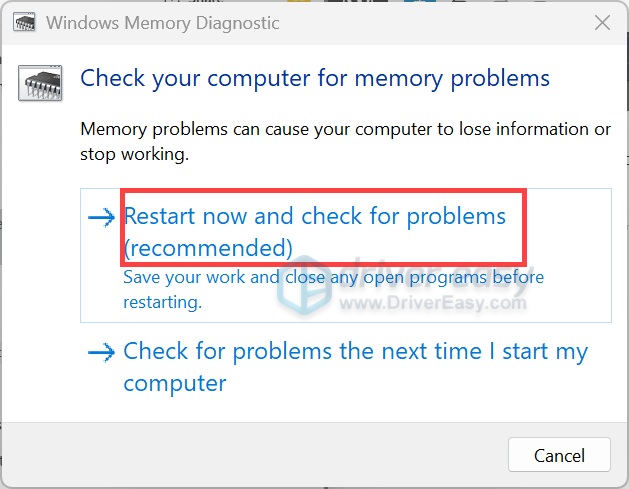
- Your PC will restart into the diagnostic screen (this test typically takes 15–20 minutes).
- After logging back into Windows, review the test results. If hardware faults are flagged, consider testing each RAM stick individually or replacing defective modules.
4. Check the paging file settings
If the paging file becomes corrupted or improperly distributed across multiple drives, Windows can fail when transferring data between RAM and disk storage. Simply reset the paging file, and Windows should re-create a clean virtual memory structure.
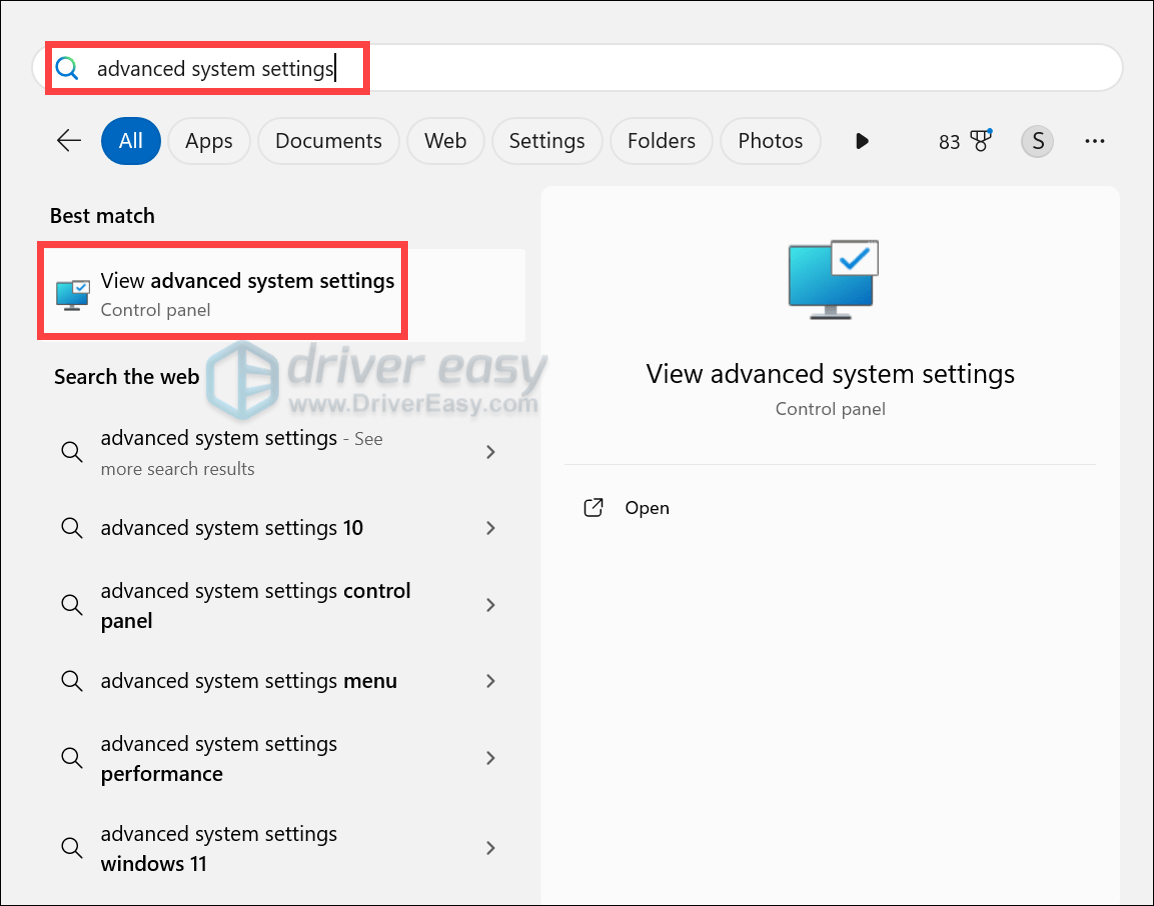
- Type advanced system into the Windows search box and select View advanced system settings.
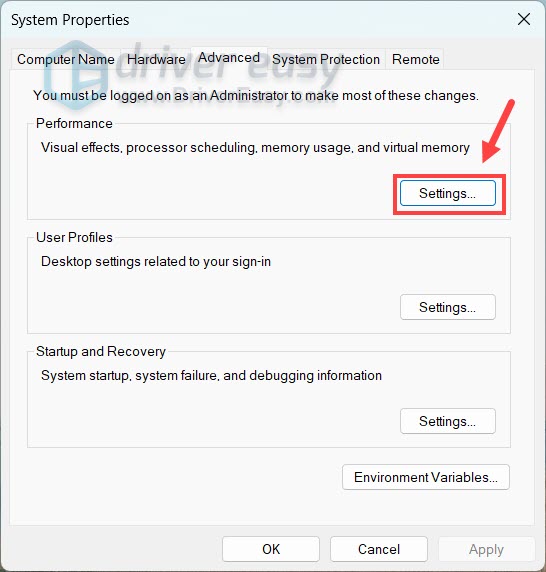
- In the Advanced tab, click Settings under the Performance section.
- Select the Advanced tab and click Change.
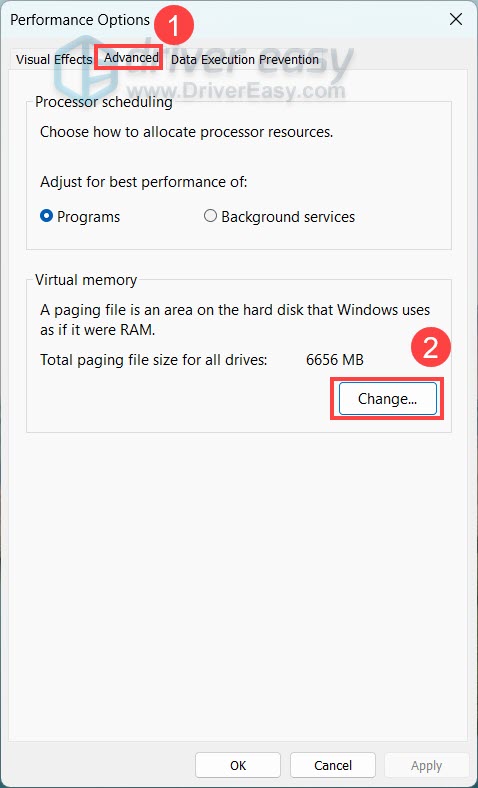
- Tick the box for Automatically manage paging file size for all drives and click OK. If it is already checked, uncheck it, click OK, then re-check it to force Windows to rebuild the file.
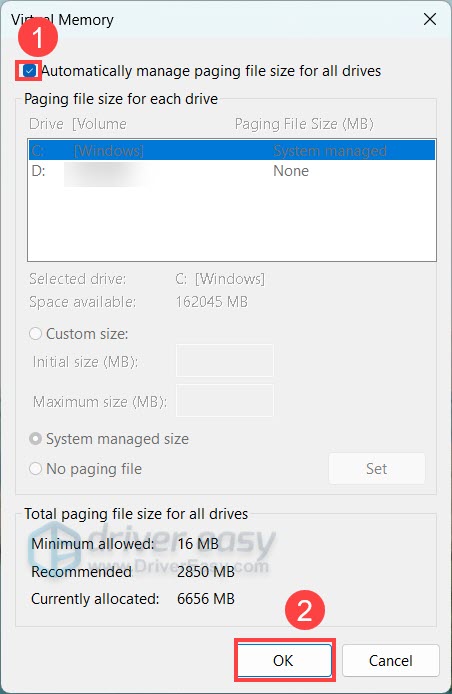
Restart your computer. Then check whether the PAGE_FAULT_IN_NONPAGED_AREA error occurs again.
5. Perform a system restore
If the fixes above don’t help, your Windows system may have deeper, hidden conflicts or corrupted registry entries caused by a recent background update. In this case, consider System Restore as a last resort.
This rolls your Windows registry, system files, and drivers back to an earlier “snapshot” when your PC was completely stable – without deleting your personal files like photos, documents, or downloads.
- Press the Windows logo key + R to open the Run command box.
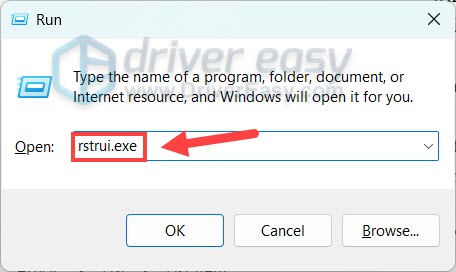
- Type rstrui.exe and press Enter to launch System Restore.
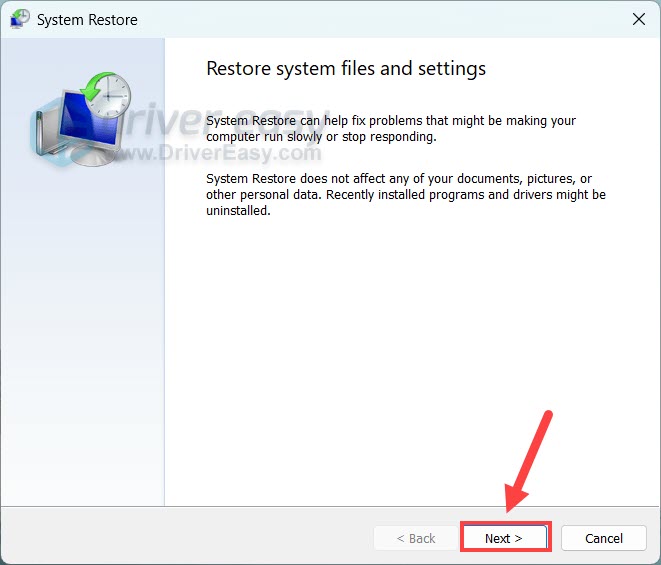
- Click Next to view saved system restore points.
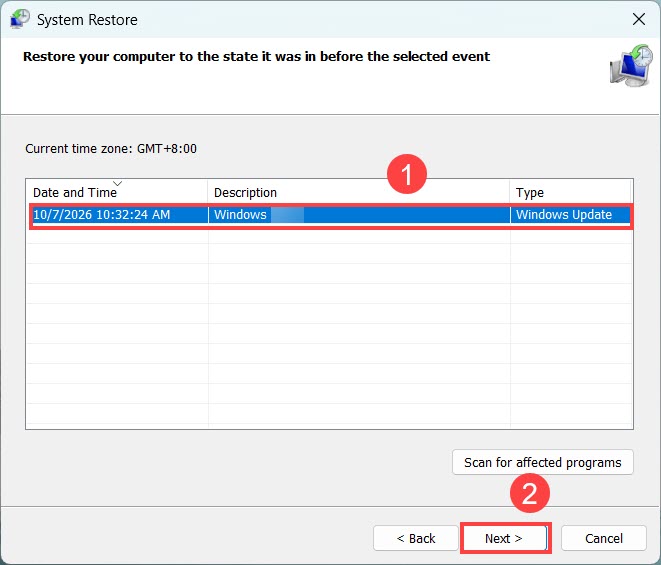
- Select a restore point created before you started seeing the PAGE_FAULT_IN_NONPAGED_AREA error, then click Next.
- Click Finish to confirm. Windows will restart and apply the restore process. It might take 15 minutes or even more.
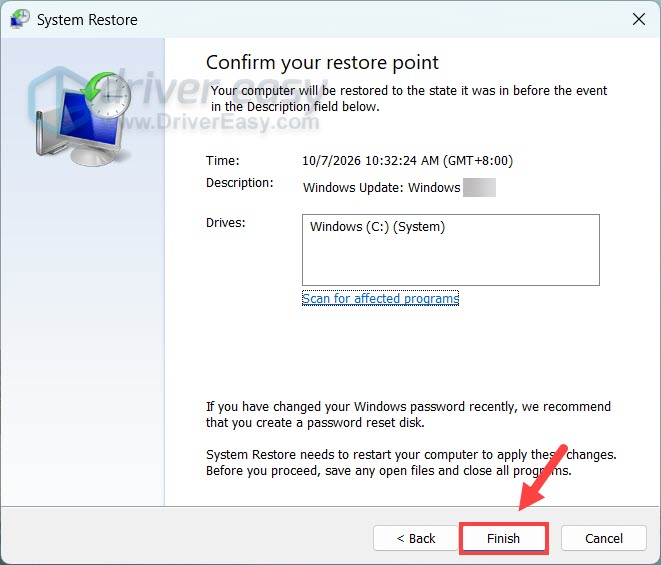
If your computer cannot boot normally, you’ll need to access the Windows Recovery Environment (WinRE). Different computer brands use specific keys:
- ASUS: While the computer isn’t powered on yet, press and hold the F9 key, then press the Power button. If F9 doesn’t work, use F12.
- HP: Repeatedly tap F11 during boot.
- Acer: Press Alt and F10 at the same time after powering on your computer.
- Dell: Tap F12 repeatedly during boot.
- Lenovo: Press F11 repeatedly during boot.
- MSI: Press F3 repeatedly during the boot process.
Once you’re in the WinRE, go to Troubleshoot > Advanced options > System Restore. 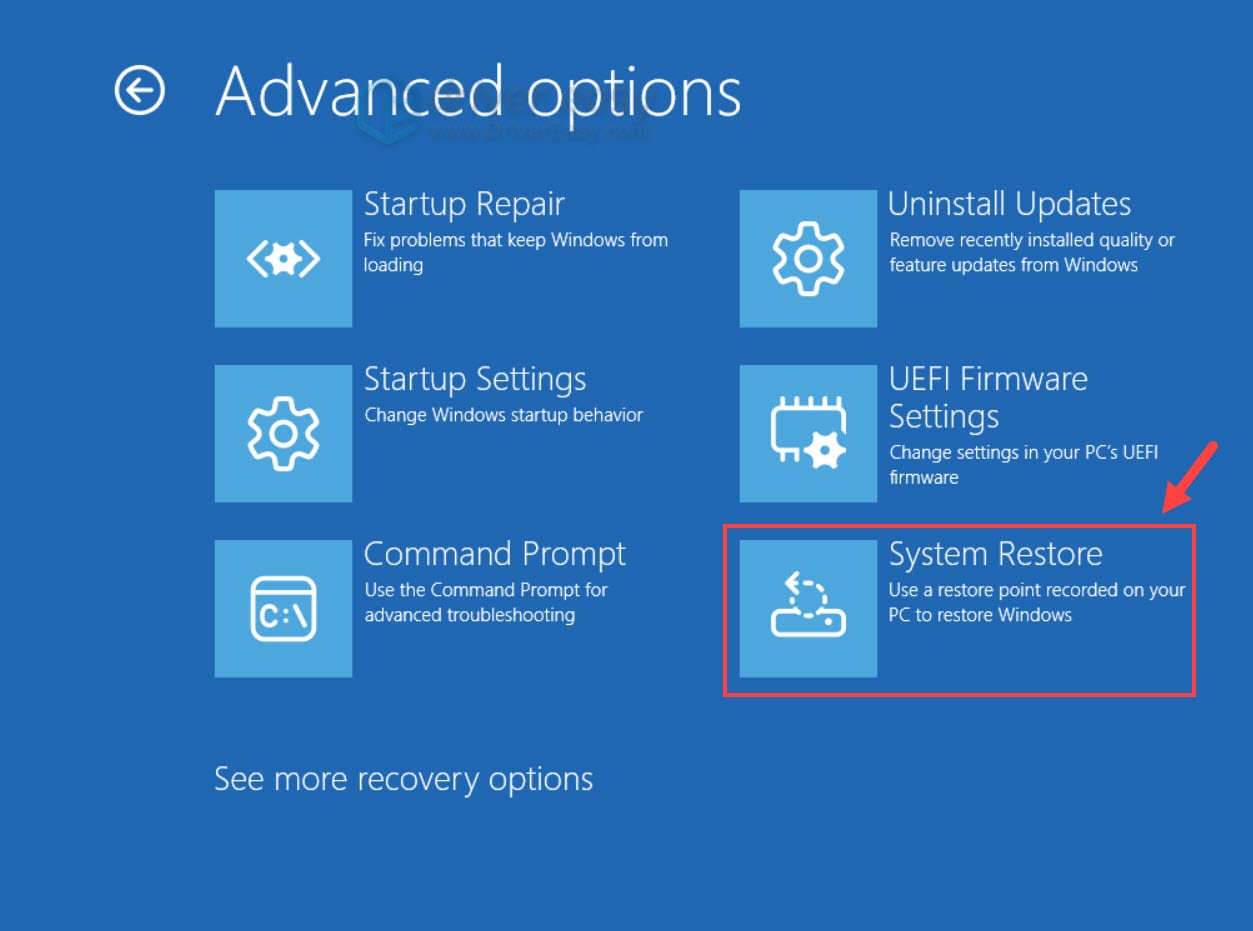
Windows will ask you to select your account and enter your password. A window will pop up. Click Next. You will see a list of recent restore points. Look for one dated right before you updated the driver. Select that restore point, click Next, and then Finish.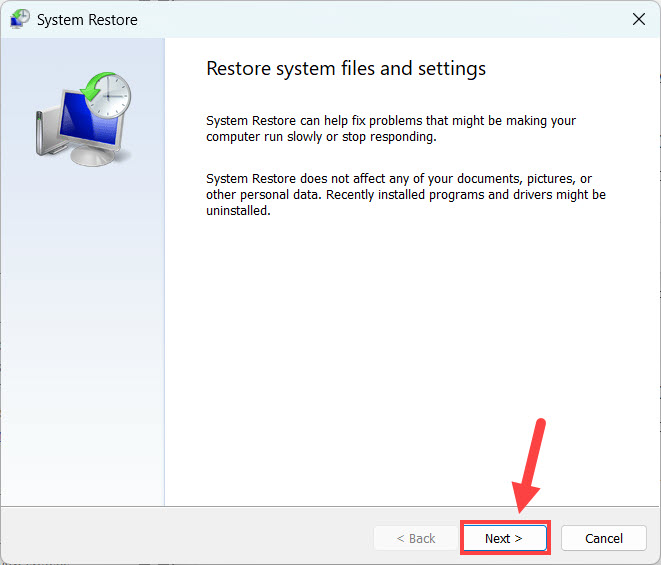
Wait patiently for the restoration process to complete.
Reboot your PC, launch your regular programs and run normal workloads to confirm that the blue screen crashes have stopped completely.
Facing a PAGE_FAULT_IN_NONPAGED_AREA Blue Screen can feel intimidating, but as shown in this guide, it’s often not hard to fix it.
Did one of these fixes resolve the issue for you? Or are you still encountering the blue screen? Leave a comment below with your Windows version and any details listed on the crash screen, and we’ll be glad to help!
