



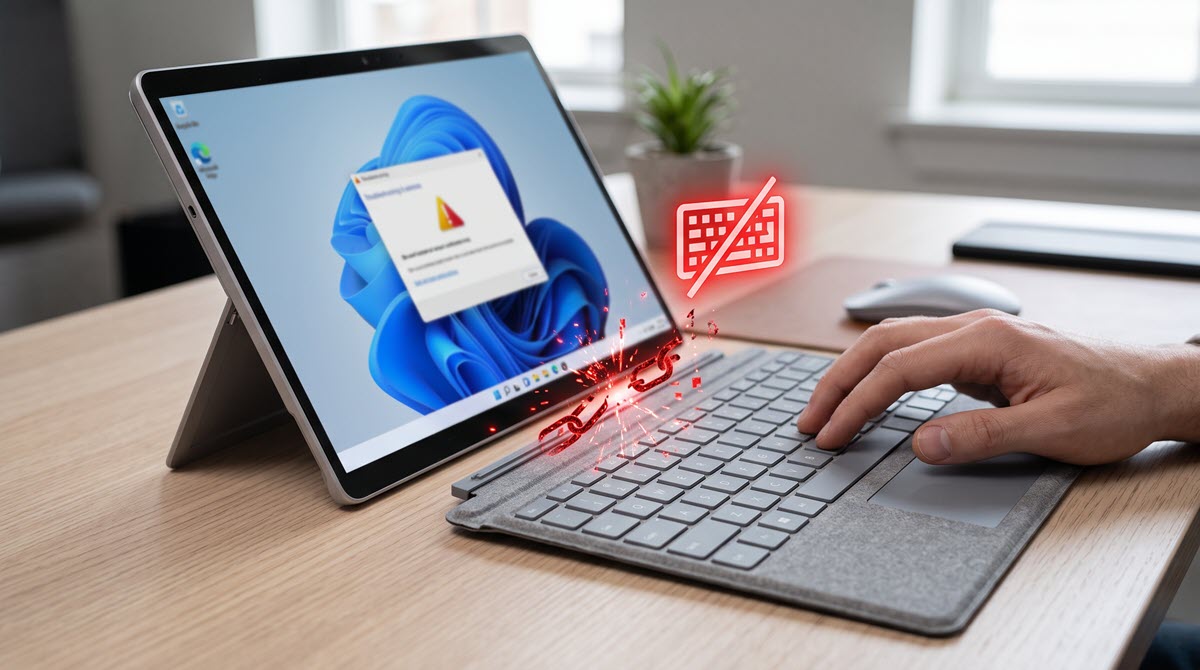

Is your Surface keyboard not working, even though your device turns on and the touchscreen responds? This is one of the most common issues across Microsoft Surface devices, including the Surface Pro (Pro 5 through Pro 11), Surface Go (1–4), Surface Laptop (1–7), and Surface Book (1–3).
In this guide, we walk you through 8 step-by-step fixes for the Surface keyboard not working issue. We’ll start with the simplest checks and move on to driver updates and more advanced software tweaks. Keep reading…
Try these fixes for the Surface keyboard not working problem:
You don’t need to try them all; just work your way down the list until you find the one that works for you.
- Disconnect and reconnect your Surface keyboard
- Restart your Surface
- Disable the filter key
- Reinstall or update your keyboard driver
- Update your Surface firmware
- Try the keyboard backlight workaround
- Run Surface Diagnostic
- Test another keyboard
Fix 1: Disconnect and reconnect your Surface keyboard
Start by checking the physical connection, especially if you’re using a detachable Type Cover.
- Save your work and shut down your Surface.
- If you’re using a Surface Pro or Surface Go, detach the keyboard.
- Check the connector and contact points for visible debris or damage. If necessary, gently clean the accessible contact surfaces with a soft, dry, lint-free cloth. Avoid liquids.
- Turn on your Surface without the keyboard attached.
- Once Windows has loaded, reconnect the keyboard, making sure it aligns correctly with the connector.
- Press the Caps and Fn keys a few times and check whether their indicator lights respond, if your keyboard has them.
Open Notepad and type a few sentences to verify whether the keyboard works. If these methods don’t help to bring back your keyboard, please move on to the other fixes below.
Fix 2: Restart your Surface
A temporary Windows or power-state glitch can sometimes prevent a keyboard from responding. A restart is an easy way to rule out this possibility.
- Save any open files.
- Select Start > Power > Restart.
- Wait for Windows to load completely.
- Test your keyboard in Notepad.
- If a normal restart doesn’t help, try a forced restart using Microsoft’s instructions for your specific Surface model.
If a normal restart doesn’t help, try a forced restart.
For Surface Pro (5th generation and later), Surface Go, Surface Laptop, and other supported models, Microsoft generally recommends shutting down normally first, then holding the Power button for about 20 seconds to force a restart. The instructions differ for older models, so check Microsoft’s official guide to forcing a Surface shutdown and restart before proceeding.
Fix3: Disable Filter Keys
Windows includes accessibility features that change how the keyboard handles keystrokes. Filter Keys, for example, can ignore brief or repeated keystrokes. If it was enabled accidentally, typing may become difficult or appear unresponsive. You can disable this feature to see if the problem is fixed.
Windows 11
- On your keyboard, press the Windows logo + I keys simultaneously to open Settings.
- Go to Accessibility > Keyboard.

- Toggle Off Filter keys.

- Now try using your keyboard and see if disabling Filter Keys can restore your keyboard.
Windows 10
- Click the Start menu (the Windows logo) at the bottom left of your screen. Then click Settings.

- Click Ease of Access.

- Click Keyboard.
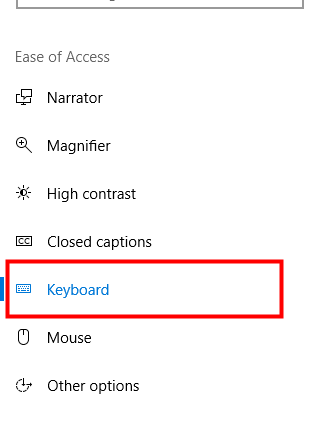
- Disable the Filter Keys function (switch off Filter Keys or uncheck Turn on Filter Keys).

- Try your keyboard and see if disabling Filter Keys can restore your keyboard.
Fix 4: Reinstall or update your keyboard driver
Corrupted HID keyboard drivers may cause Windows to misinterpret incoming signals, making your Surface keyboard fail to be detected or respond to keystrokes. Updating or reinstalling the relevant keyboard device can help resolve driver-related problems.
Option 1: Reinstall the keyboard driver
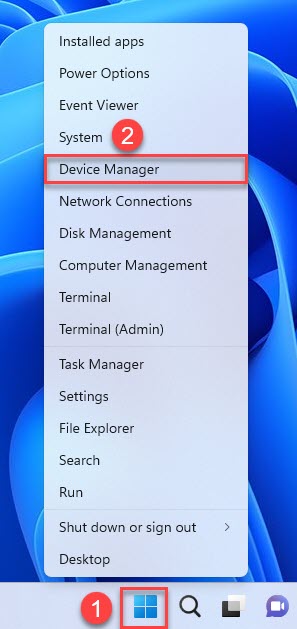
- Right-click the Start button and select Device Manager.
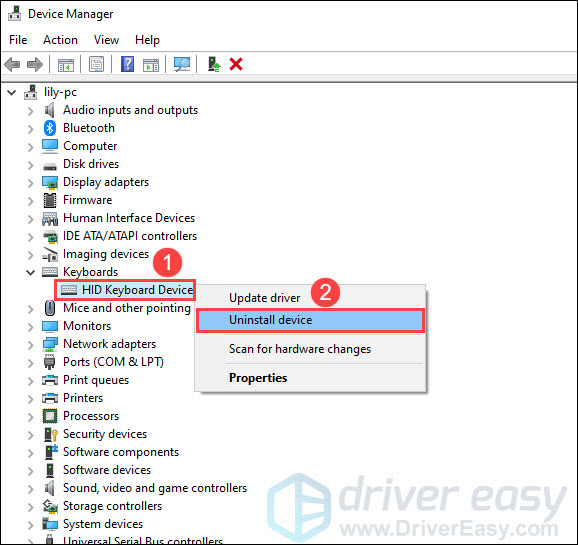
- Expand the Keyboard category.
- Right-click your keyboard and click Uninstall device.
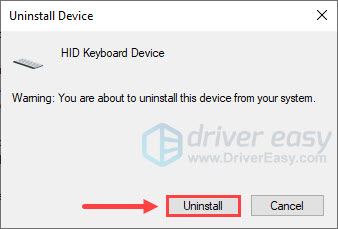
- Click Uninstall to confirm.
Option 2: Update keyboard driver and other device drivers automatically
If you aren’t comfortable with technical troubleshooting or prefer a simpler way to manage driver updates, Driver Easy can do the job for you.
Driver Easy can scan your Surface for missing or outdated drivers and help you update them without having to check each device individually. Instead of fixing just a single keyboard driver, it also checks for Wi-Fi, Bluetooth, and graphics drivers. Besides, it includes built-in driver backup and one-click rollback features – meaning if an update ever causes an issue, you can instantly restore your previous setup
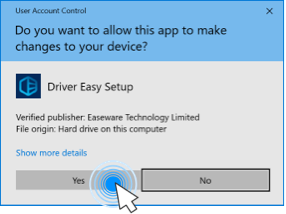
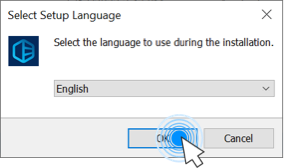
- Download and install Driver Easy.
- Run Driver Easy and click the Scan Now button. Driver Easy will then scan your computer and detect any problem drivers.

- Click the Activate & Update button next to the keyboard to automatically download and install the correct version of this driver. Or click Update All to automatically download and install the correct version of all the drivers that are missing or out of date on your system.
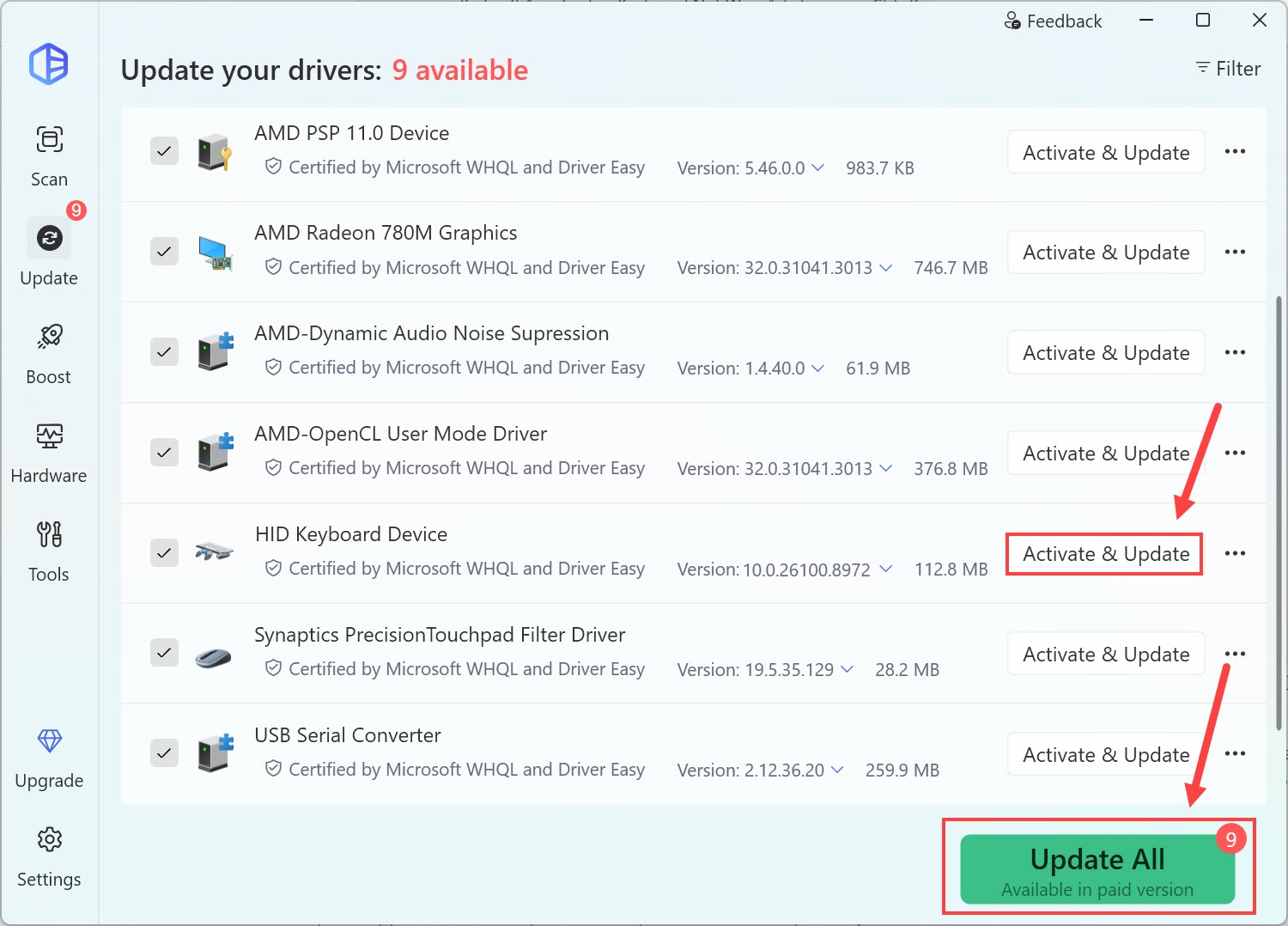
You’ll be prompted to start a 7-day free trial or upgrade to Driver Easy Pro. Either option will automatically download and install the latest drivers for you. - After updating, restart your computer to take effect.
Fix 5: Update your Surface firmware
Surface firmware helps Windows communicate with and manage your device’s hardware. If your keyboard problem began after a firmware update or a system change, checking for an applicable Surface firmware update may help resolve a compatibility or device-management issue.
Go to Microsoft’s download center, find the package for your exact Surface model and Windows version, then follow Microsoft’s installation instructions.
Fix 6: Try the keyboard backlight workaround
Some Surface Laptop users have reported that changing the keyboard backlight brightness temporarily restores certain unresponsive keys. However, this workaround isn’t an official Microsoft fix, and its effectiveness may vary by model.
If your Surface Laptop has a keyboard backlight, try the following:
- Use the keyboard’s backlight brightness key to lower the brightness to its minimum setting.
- Wait a few seconds, then test the affected keys in Notepad.
- If the keys start working again, adjust the backlight to your preferred level and test the keyboard once more.
If this doesn’t help, continue with the next fix.
Fix 7: Run Surface Diagnostic
Microsoft provides Surface-specific tools to help identify device problems. Depending on your model, you may be able to use the Surface app, Surface Repair Tool, or Surface Diagnostic Toolkit.
- Open the Surface app and go to Help & support.
- Check the update status and follow any troubleshooting recommendations.
- If more diagnostics are needed, open the Microsoft Store and check whether the Surface Repair Tool is available for your device. If your model isn’t supported by the Surface Repair Tool, use the Surface Diagnostic Toolkit instead, where available.
- Follow the tool’s instructions and review the results. You can find more information in Microsoft’s guide to diagnosing and repairing Surface problems.
If the diagnostic tool reports a keyboard or hardware issue, follow Microsoft’s recommended repair steps. If no hardware fault is identified, return to the software troubleshooting steps and consider whether a recent update or configuration change triggered the problem.
Fix 8: Test another keyboard
If none of the previous fixes work, you can cross-test to narrow down the fault.
If you’re using a detachable Surface keyboard:
- If possible, connect your keyboard to another compatible Surface device.
- Alternatively, attach a known-good compatible keyboard to your Surface.
- Test typing and the touchpad, if applicable.
The results can help you identify the likely source of the problem:
- Your keyboard works on another Surface: The original Surface’s connector, firmware, or software may be responsible.
- Another compatible keyboard works on your Surface: Your original keyboard is more likely to be faulty.
- Neither keyboard works: The Surface itself may have a connector, firmware, or other hardware issue.
For a built-in Surface Laptop keyboard, you can’t perform the same detachable-keyboard test. Instead, use the UEFI and diagnostic checks above to help narrow down the cause.
Dealing with a dead Surface keyboard is frustrating, but it’s often not hard to fix. Start by testing the lights, performing a hard shutdown, updating drivers, and cross-testing hardware. These fixes should bring it right back to life.
If your Type Cover won’t turn on no matter what device you plug it into, the hardware itself is likely dead and it’s time for a new one. Did these steps help? Tell us which fix worked for you in the comments!

