



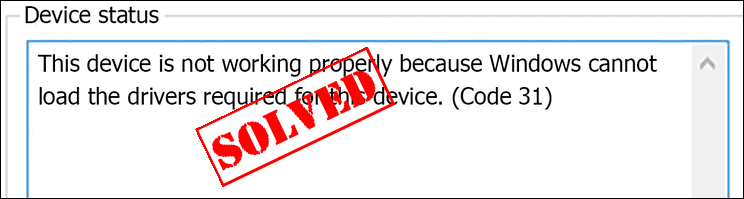
Seeing a graphics device driver error code 31 in Device Manager can be alarming, especially if it appears after a black screen or your GPU suddenly stops working. Windows may show your graphics card with a yellow warning icon and the message: This device is not working properly because Windows cannot load the drivers required for this device. (Code 31).
This is classified as a driver-loading failure, and its recommended first step is to update or reinstall the device driver. In this guide, we’ll walk you through 6 ways to fix graphics device driver error code 31, easily and quickly.
Code 31 can also affect network adapters, USB devices, and sound cards besides graphics cards. The general driver troubleshooting methods are similar.
What is Graphics Device Driver Error Code 31?
Graphics device driver error code 31 means Windows detected the graphics device but failed to load its required driver correctly. As a result, the GPU may not work properly or may appear with a yellow warning icon in Device Manager.
In most cases, Code 31 points to a driver or driver-initialization problem and doesn’t indicate the graphics card is faulty or broken.
How to Fix Driver Error Code 31
Here are 6 fixes to try. You can start with the simplest software checks and gradually move toward driver cleanup, BIOS settings, power, and hardware troubleshooting.
- Restart your computer
- Check the installed graphics driver
- Update or roll back your graphics driver
- Remove conflicting background software
- Check the GPU power and connections
- Check for a GPU hardware problem
Fix 1 – Restart your computer
If Code 31 appeared immediately after a crash, sleep/wake event, Windows update, or driver installation, start with a normal restart.
Simply save your work and close your applications. Reboot your computer and check whether the error is still present. If Code 31 returns, continue to the next fix.
Fix 2 – Check the installed graphics driver
Before changing the driver, you can check exactly what Windows is currently using.
1) On your keyboard, press the Windows key and R to open the Run command box.
2) Type in devmgmt.msc and press Enter.
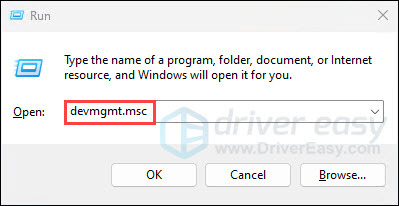
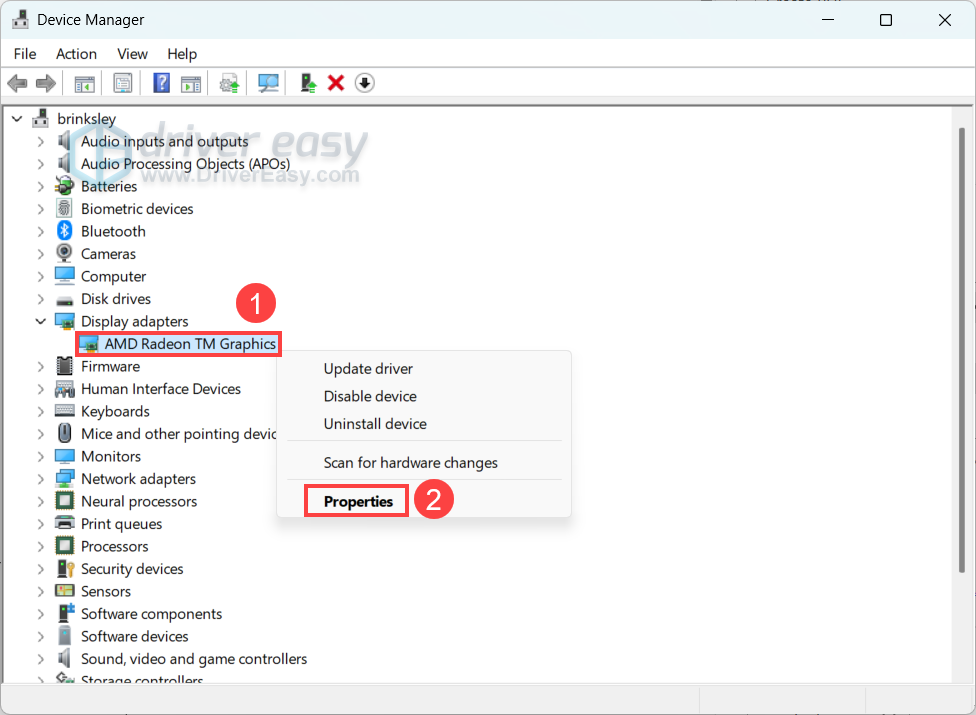
3) Expand Display adapters.
4) Right-click your GPU and select Properties.
5) Open the Driver tab, and note the Driver Provider, Driver Date, and Driver Version.
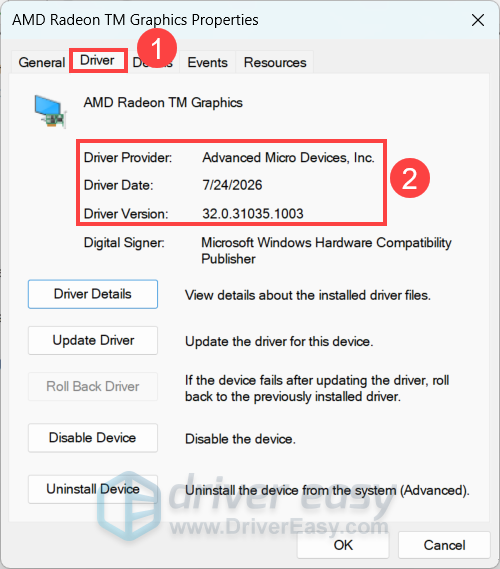
This information helps determine whether the problem started after a recent driver change.
For example, if Code 31 appeared immediately after installing a new NVIDIA, AMD, or Intel driver, rolling back to the previous driver may be more appropriate than installing an even newer one.
You don’t need to change anything yet. Record the current driver version so you can compare it after the next troubleshooting steps.
Fix 3 – Update or roll back your graphics driver
Updating the device driver is the initial resolution for Code 31 recommended by Microsoft.
Option 1: Update the driver in Device Manager
1) Open Device Manager.
2) Expand Display adapters. Right-click your graphics card and select Update driver.
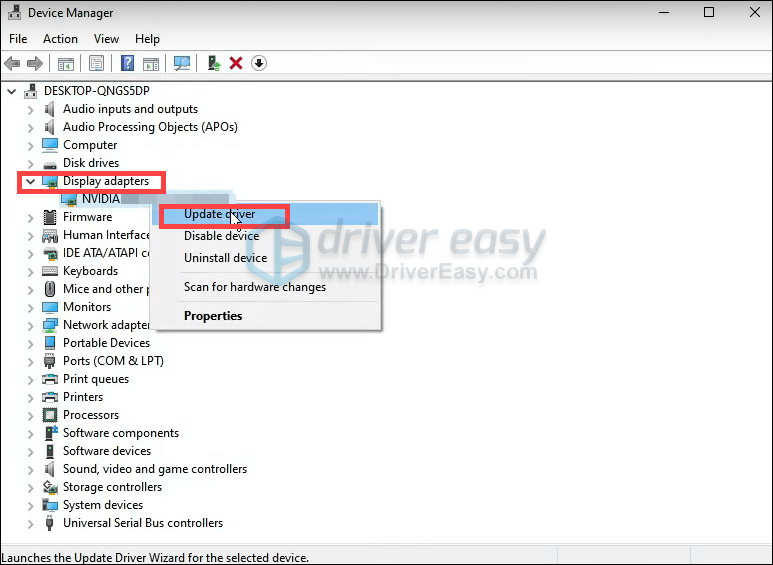
3) Choose Search automatically for drivers.
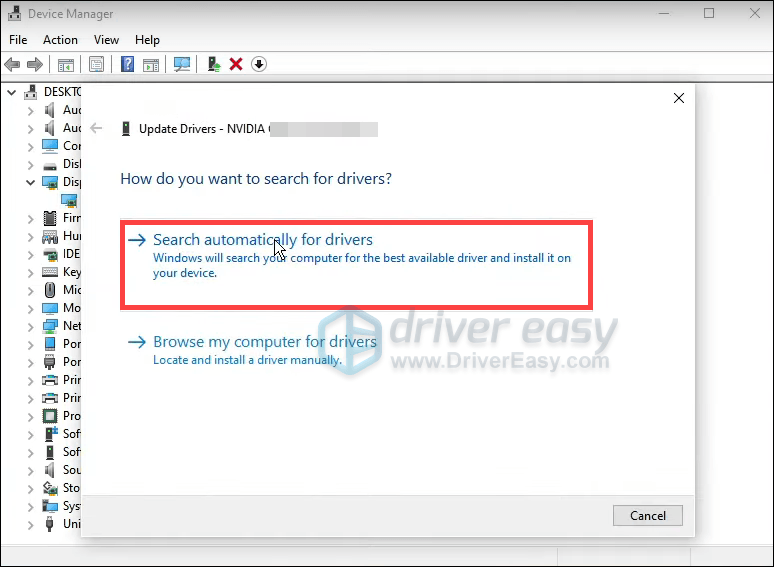
Follow the on-screen instructions if Windows finds a driver.
If Windows doesn’t find a suitable driver, you can also download the latest driver directly from the GPU manufacturer’s website.
Option 2: Update automatically with Driver Easy
If you don’t want to manually identify your GPU model, find the correct driver package, and compare driver versions, Driver Easy can do the job for you.
Driver Easy can automatically scan your system, identify outdated or problematic drivers, and find compatible updates. You don’t need to figure out which driver you need, search through manufacturer websites for the latest correct version, or worry about making a mistake when installing the driver.
With Driver Easy, it takes just two clicks to update the drivers:
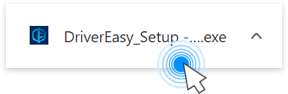
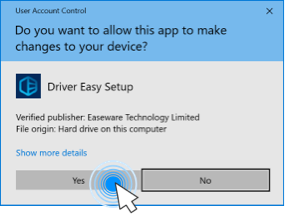
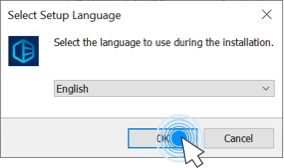
1) Download and install Driver Easy.
2) Run Driver Easy and click Scan Now.
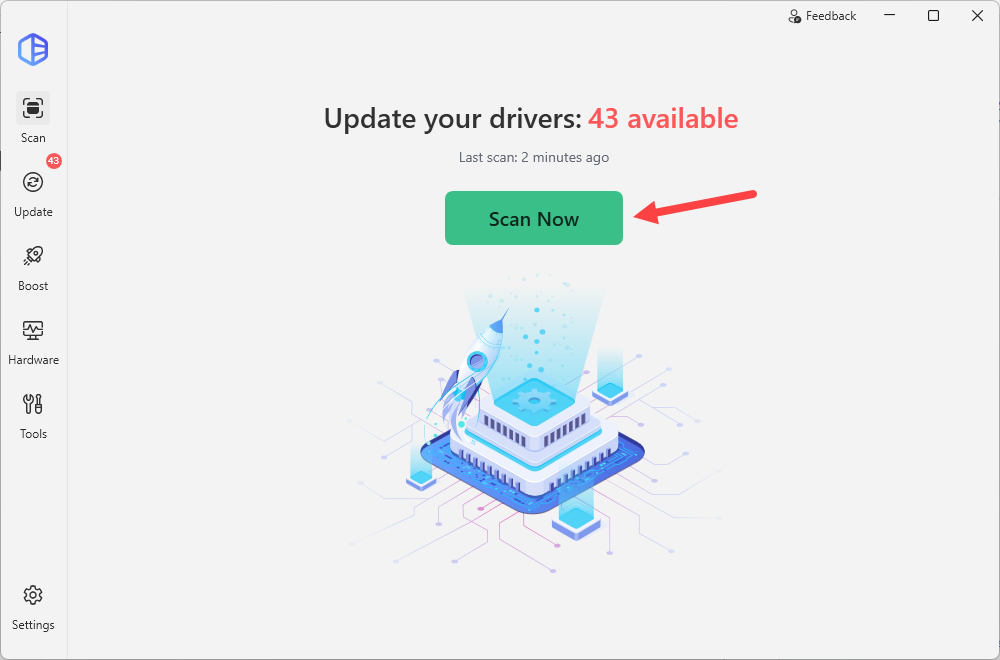
3) Click the Activate & Update button next to the GPU driver to automatically install the correct driver. Or click Update All to automatically install the correct version of all drivers that are missing or outdated.
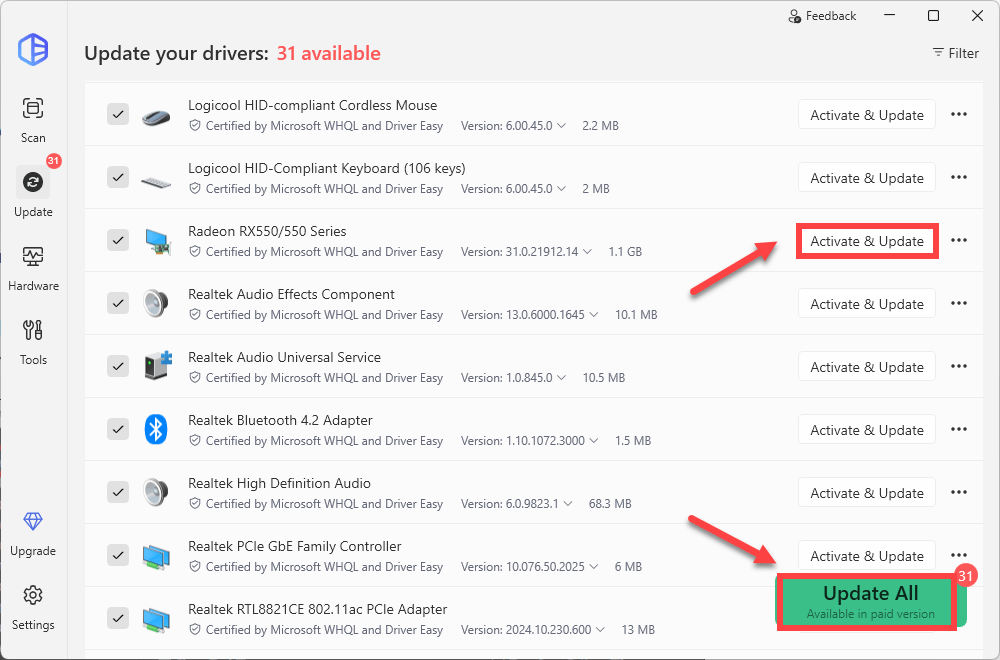
4) After updating drivers, restart your computer to see if the issue is resolved.
If Code 31 appeared after a recent driver update, however, installing the newest driver may not be the best next step. In this case, trying a previous, known-stable version can be worth considering. For example, some AMD users reported that the older 26.1.1 driver is more stable on RX 7900 XTX and RX 9070 XT cards than the newer builds.
You can simply download a previous driver version from your GPU manufacturer’s official website. Make sure to choose the driver that matches your exact GPU model and Windows version.
Alternatively, Driver Easy provides different driver packages for one-click install, from the older ones to the newest. You can easily switch between different releases without searching through the manufacturer’s website. Just click the three-dot button next to your GPU, select All available versions, and install a previous version.
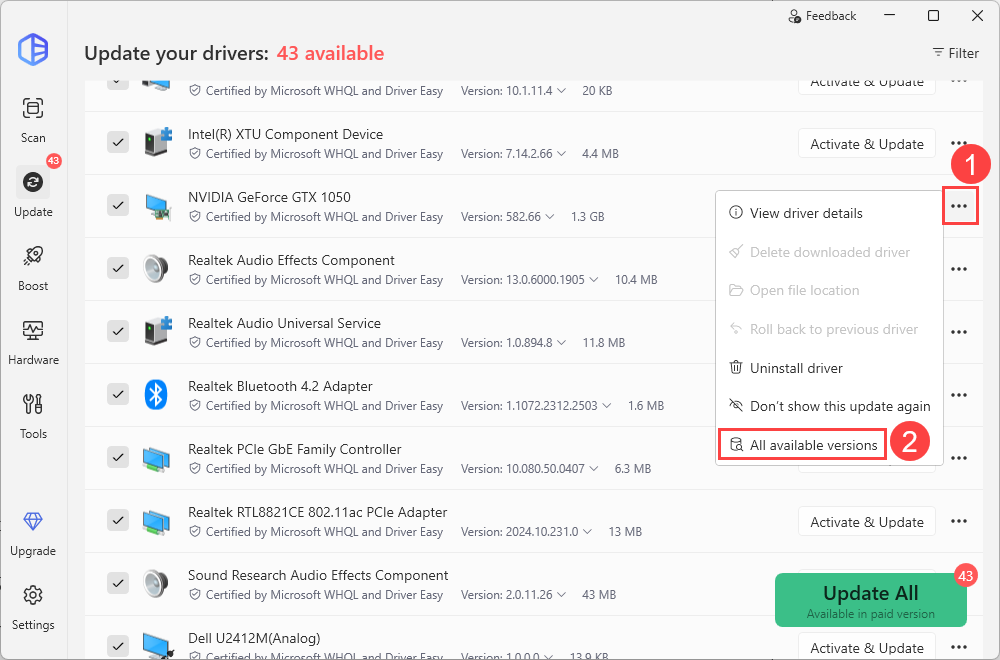
If a normal update or rollback doesn’t fix Code 31, the existing driver installation may need to be cleaned before installing another version. You can try clean reinstalling the graphics driver using DDU.
Fix 4 – Remove conflicting background software
GPU utilities can interact with graphics drivers, especially software that monitors hardware, controls lighting, changes GPU settings, or communicates with an AIO cooler or LCD display. You can temporarily disable software below to see if they’re the conflict.
- Corsair iCUE
- RGB-control utilities
- GPU monitoring and overclocking tools
- Fan-control software
- AIO/LCD control software
- Third-party hardware monitoring utilities
Community reports have linked black-screen and driver-timeout problems with combinations of GPU drivers and background utilities, but these reports are system-specific and do not prove that a particular application causes Code 31 in general.
Remove or disable one application at a time so you can identify which change affected the problem.
Fix 5 – Check the GPU power and connections
If the software checks above don’t give you luck, you can rule out a physical connection or power problem.
A poorly seated GPU or an improperly connected power cable can cause black screens, crashes, or the GPU to stop initializing correctly after a reboot. Code 31 alone doesn’t prove a power or hardware problem, so treat this as an elimination step rather than the primary cause.
Shut down your computer, turn off the power supply, and unplug the PC. Remove the side panel and check that the graphics card is fully seated in its PCIe slot. Check that every required GPU power connector is firmly attached.
If your graphics card requires multiple power connectors, use separate PSU PCIe cables when recommended by the GPU or PSU manufacturer rather than relying on a single daisy-chained cable.
Close the case, reconnect the power, and boot Windows to see if the Code 31 is gone. Launch the game or application that previously triggered the black screen.
Fix 6 – Check for a GPU hardware problem
If the fixes above don’t work, it’s worth checking whether a hardware problem is contributing to the issue. Look for additional symptoms such as:
- Persistent graphical artifacts
- Colored blocks or corrupted textures
- Repeated black screens
- GPU crashes across multiple applications
- The GPU disappearing from Windows after a crash
Code 31 alone does not mean your GPU is defective. However, if the error persists after trying multiple driver versions, performing a clean driver installation, and ruling out software conflicts, the cause may be a hardware issue.
If you continue to experience these symptoms, contact your GPU manufacturer’s support for further diagnosis.
Graphics device driver error code 31 usually means Windows can’t successfully load the GPU driver. Follow the steps above to fix the issue. The key is to work from a simple driver update and rollback to move to deeper hardware troubleshooting.
If you have any questions or suggestions, feel free to leave a comment below.