Is your Internet suddenly slow on Windows 11 or 10? Web pages may take longer to load, downloads may crawl, or online games and video calls may keep buffering.
A slow Internet connection can have varying causes. In this guide, we’ll walk you through 6 practical ways to fix slow Internet on a Windows computer, starting with the simplest solutions and moving on to more advanced troubleshooting.
If every device connected to the same router has slow Internet, the problem is probably with your router, modem, or ISP rather than Windows. If only your Windows PC is affected, continue with the fixes below.
6 fixes for Windows 11/10 Slow Internet
All the fixes below work in Windows 11/10. You don’t need to try them all; just work your way down the list until your Internet speed returns to normal.
Windows uses Delivery Optimization to download Windows updates, Microsoft Store apps, and other Microsoft content. Depending on your settings, Windows can also download or upload update files between your PC and other PCs on your local network or the Internet.
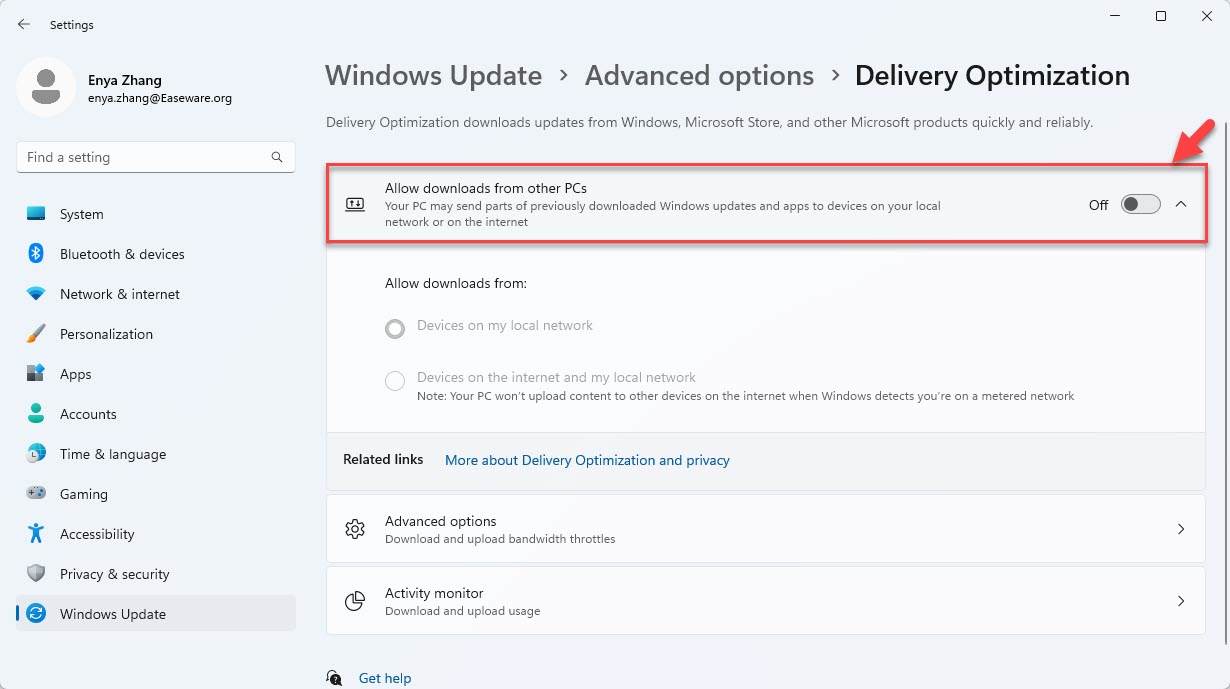
If Delivery Optimization is actively using your connection, temporarily disabling downloads from other PCs can help determine whether it’s contributing to your slow Internet.
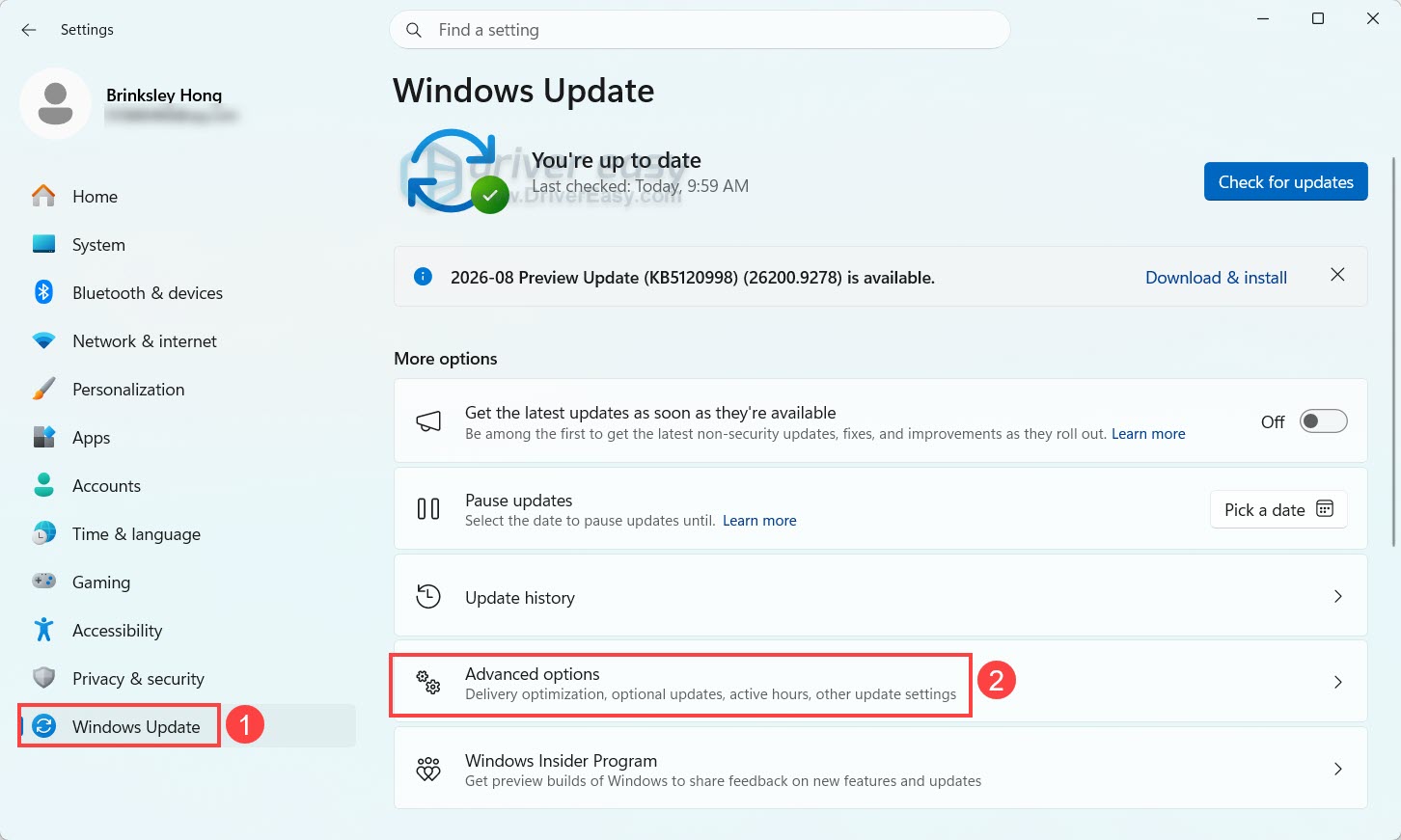
On your keyboard, press the Windows logo key and I at the same time to open Settings.
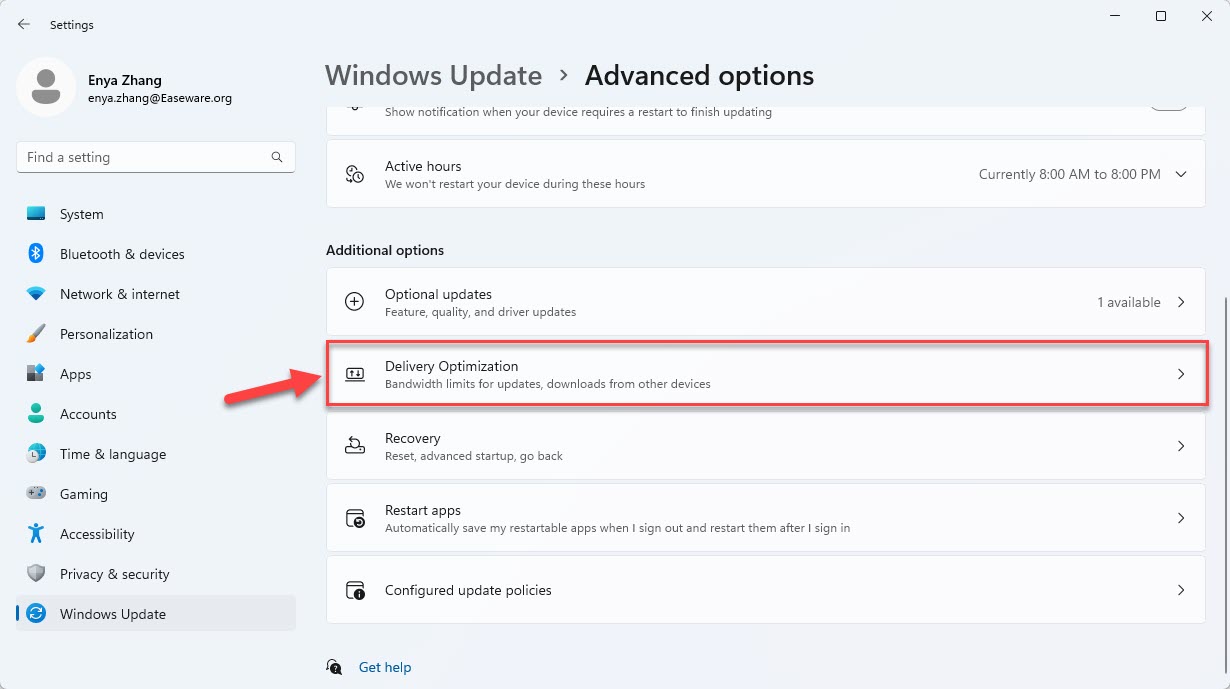
Go to Windows Update > Advanced options. If you’re on Windows 10, go to Update & Security.
Select Delivery Optimization.
Turn off Allow downloads from other devices (Or Update from more than other PCs)
Now browse a few websites or run a speed test to see whether your connection has improved. But if the problem persists, move on to Fix 2 below.
Fix 2: Update your network adapter drivers
An outdated, incompatible, or corrupted Wi-Fi or Ethernet driver can sometimes cause connection problems, reduced performance, or intermittent connectivity.
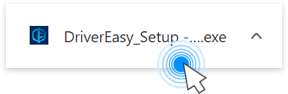
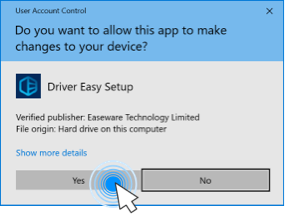
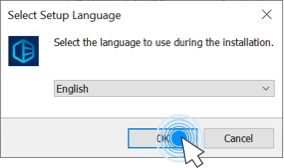
Try updating your network adapter drivers. You can download the latest driver from your PC or network adapter manufacturer‘s official website. But if you don’t want to search through manufacturer websites and identify the correct driver yourself, you can do it automatically with Driver Easy.
Driver Easy will automatically recognize your system and find the correct drivers for it. You don’t need to know exactly what system your computer is running; you don’t need to risk downloading and installing the wrong driver, and you don’t need to worry about making a mistake when installing. Driver Easy handles it all.
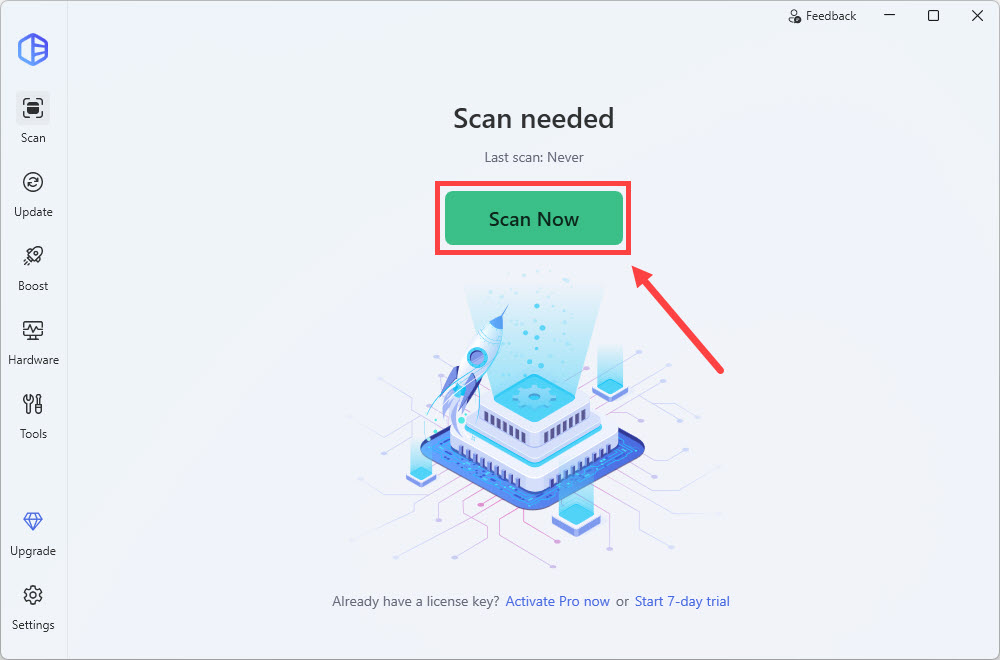
Run Driver Easy and click the Scan Now button. Driver Easy will then scan your computer and detect any problematic drivers.
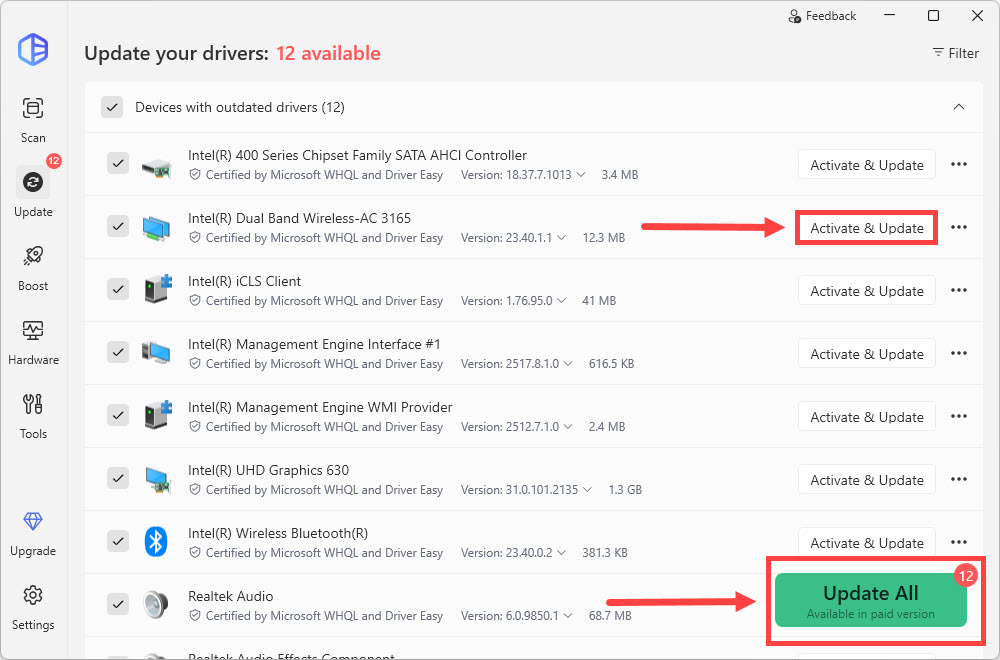
Check if your Wifi driver or Ethernet/network driver is flagged in the scan results. If it is, click the Activate & Update button to update the driver, or you can update multiple or all device drivers all at once. Upgrade to Driver Easy Pro to unlock all the advanced features such as driver updates, backup, rollback, and full technical support. You can also start with a 7-day free trial to explore the Pro features before deciding whether it’s right for you.
The Pro version of Driver Easy comes with full technical support. If you need assistance, please contact Driver Easy’s support team at support@drivereasy.com.
After updating the driver, restart your computer and test your Internet connection again.
If the connection is still slow, continue to Fix 3.
Fix 3: Repair system files
Missing, corrupt, or damaged system files may reduce your internet connection speeds. To eliminate this issue as a possible cause, you can try the steps below to repair possible system file issues.
System File Checker (SFC) is a handy feature in Windows that helps scan your system files and repair missing or corrupted system files(including those related to BSOD). To run the SFC scan:
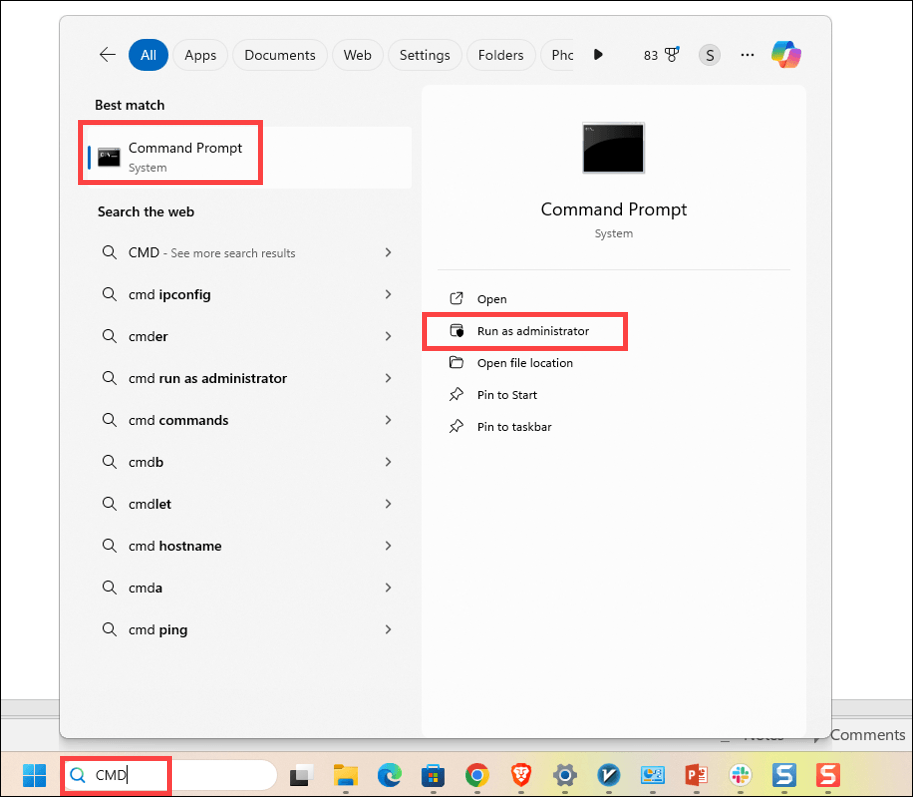
On your keyboard, press the Windows logo key and type cmd. Then locate Command Prompt and click Run as administrator.
Click Yes when prompted to confirm.
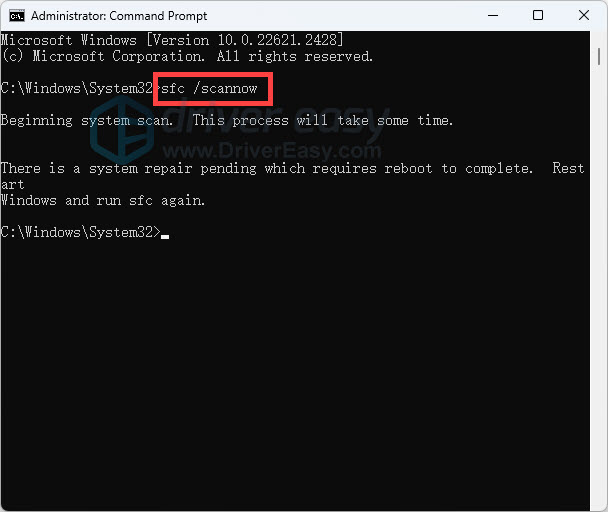
In the Command Prompt window, type sfc /scannow and press Enter. It’ll take some time for the SFC to replace the corrupted system files with new ones if it detects any, so please be patient.
When the scan finishes, restart your computer and test your Internet connection again.
If the slow Internet problem persists, move on to Fix 4.
Fix 4: Check Windows TCP Auto-Tuning
TCP Receive Window Auto-Tuning allows Windows to dynamically adjust the TCP receive window to improve data transfer efficiency over different network conditions. The default normal setting is generally appropriate for modern Windows systems. If you keep encountering connection issues, check whether the setting has already been changed.
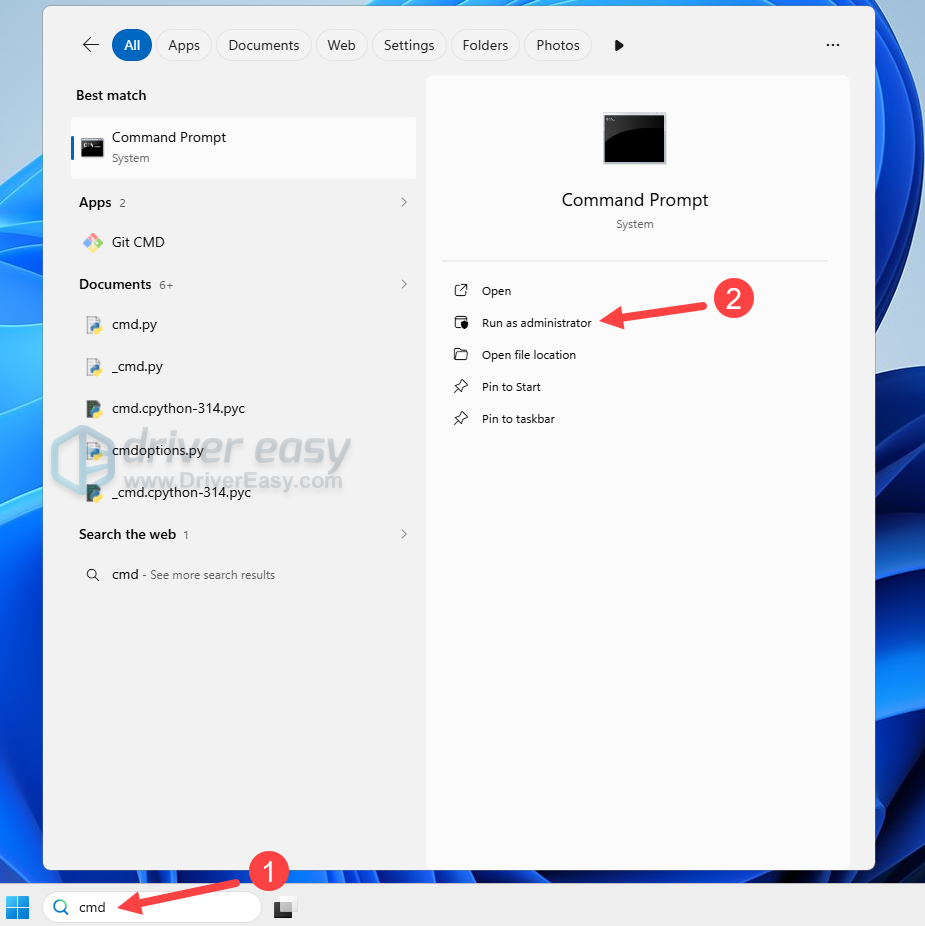
On your keyboard, press the Windows logo key and typecmd. Then select Command Promptand clickRun as administrator.
Click Yes when prompted to confirm.
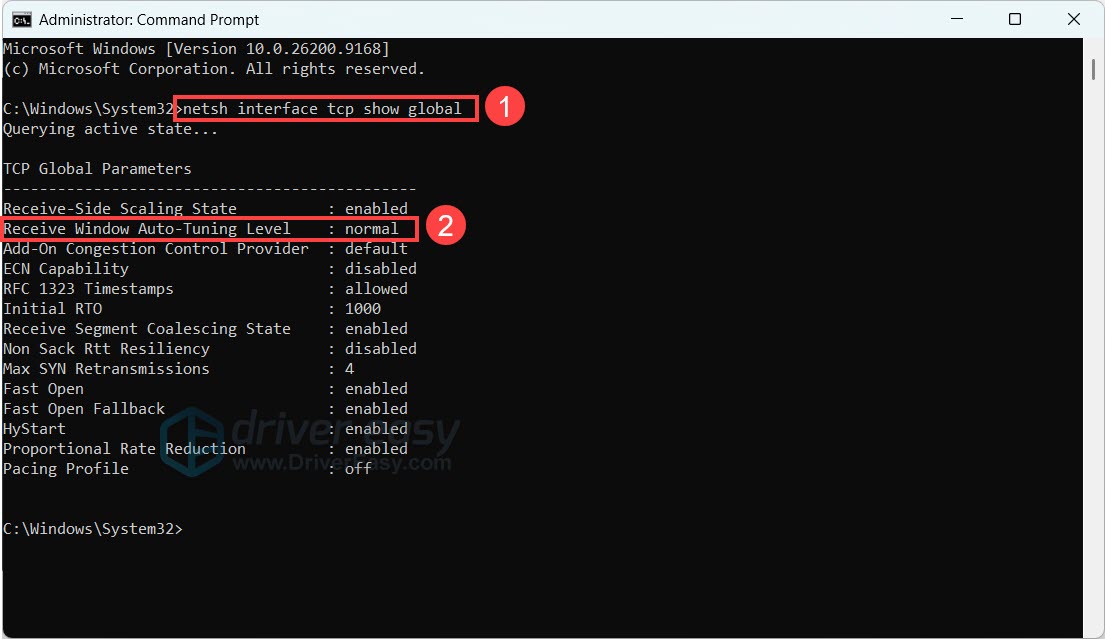
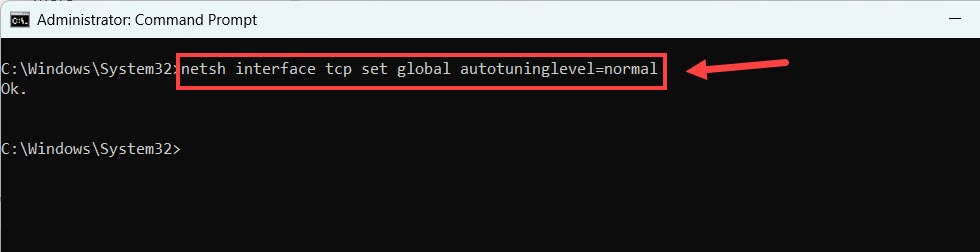
Copy & paste netsh interface tcp show global into the window and press Enter. Then check if Receive Window Auto-Tuning Level is set to normal.
If it is already set to normal, leave it as it is. If the setting is disabled or has been manually changed, copy & paste netsh interface tcp set global autotuninglevel=normal into the window and press Enter to execute the command.
If your Internet is still slow, continue to Fix 5.
Fix 5: Disable Large Send Offload
Large Send Offload(LSO) is another feature in Windows designed for better network performance. Well-intended, but the whole thing of allowing background apps to consume large amounts of network bandwidth is the reason why our Internet speed takes a hit. To disable LSO:
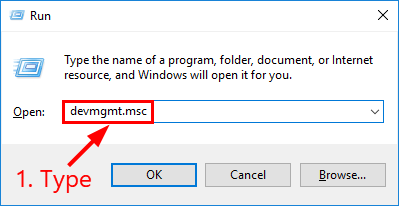
On your keyboard, pressthe Windows logo key andRat the same time, then type devmgmt.msc into the box and press Enter.
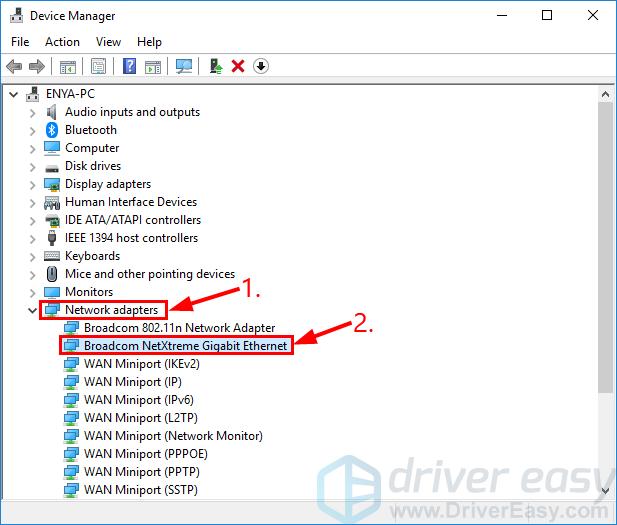
Double-click Network adapters > your network adapter.
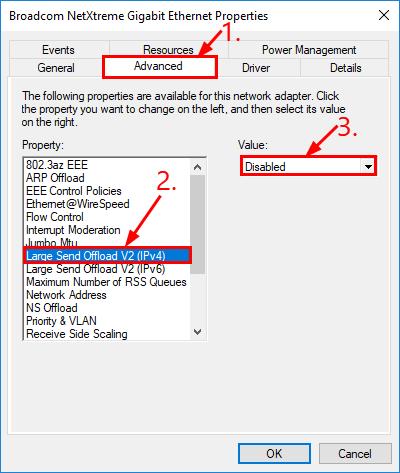
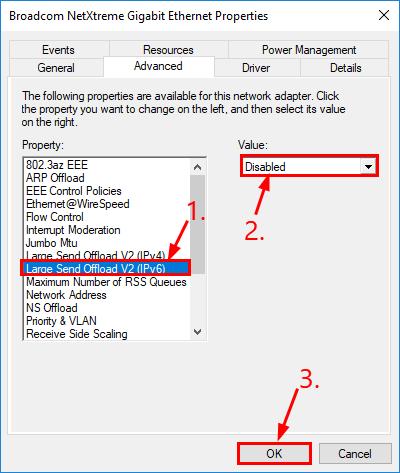
Click the Advanced tab, then click Large Send Offload V2 (IPv4) and set the value to Disabled.
Click Large Send Offload V2 (IPv6) and set the value to Disabled. Then click OK.
Restart your computer and test your connection. If disabling LSO makes no difference, or makes performance worse, restore both settings to their previous values.
Fix 6: Check your Wi-Fi, router, and Internet connection
If the Windows-side fixes above don’t solve the problem, the issue may not be Windows at all.
Try these checks:
Use Ethernet if possible – Connect your computer directly to the router with an Ethernet cable. – If Ethernet is fast but Wi-Fi is slow, the problem is likely related to your Wi-Fi signal, wireless interference, or router settings. – If both Ethernet and Wi-Fi are slow, the problem may be with your router, modem, ISP, or Internet plan.
Move closer to your router – If you’re using Wi-Fi, move your computer closer to the router and check whether the connection improves.
Reduce network congestion – Disconnect devices that aren’t currently needed, especially if someone is streaming high-resolution video, downloading large files, or running cloud backups.
Restart your router and modem – Power off your modem and router, wait for a short period, then turn them back on. Once the connection is restored, test your Internet speed again.
Update your router firmware – Check your router manufacturer’s official website or management app for firmware updates. Outdated router firmware can sometimes cause connectivity or performance problems.
Contact your ISP – If multiple devices on your network are experiencing slow Internet, contact your Internet Service Provider (ISP) and confirm whether there are outages, line problems, maintenance, or service-side speed issues affecting your connection.
Consider your Internet plan or hardware – If your connection consistently reaches the maximum speed supported by your current plan, changing Windows settings won’t make it faster.
In that situation, you may need to consider a faster Internet plan, a newer router, or upgraded networking hardware.
Hopefully, one of the solutions above helps you resolve your Windows 11/10 slow Internet problem. If you’ve found another fix that worked for you, feel free to share it in the comments below.