



Want to know how to update video drivers on your Windows computer? Whether you’ve just reinstalled Windows, upgraded your system, or are troubleshooting graphics problems, updating your video driver is recommended. This may improve system compatibility, stability, and your graphics performance, especially if you’re heavy into PC gaming.
Here are three practical methods to update your video drivers, ordered from the easiest to the more manual options:
- Update video drivers via Device Manager
- Update video drivers automatically with Driver Easy
- Download and install drivers from the manufacturer
Method 1: Update video drivers via Device Manager
You can download and install the new video drivers via the Device Manager. Follow the steps below:
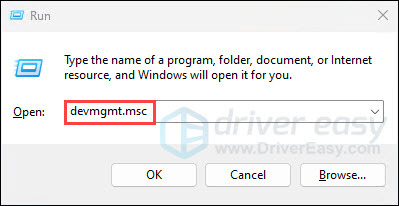
- On your keyboard, press the Windows logo key and R key at the same time to invoke the Run command. Type devmgmt.msc and press Enter to open Device Manager.
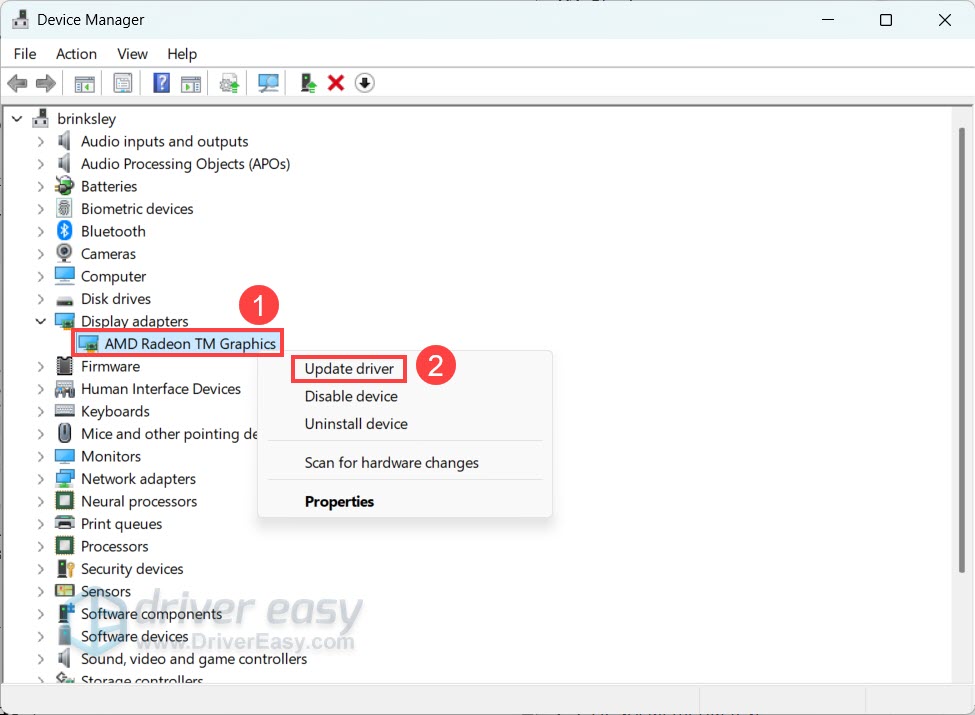
- In Device Manager, expand the Display adapters category. Right-click your graphics card and select Update driver.
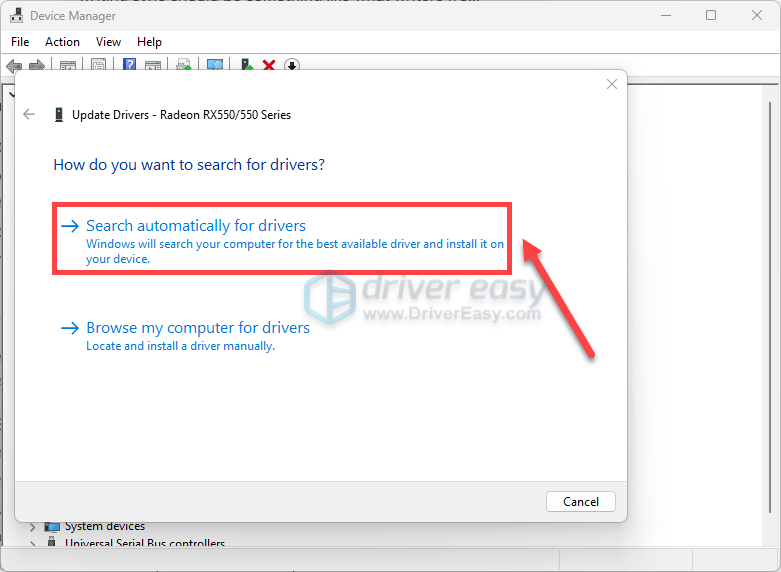
- In the pop-up window, you will see two options. Click Search automatically for updated driver software. Then Windows will find and install drivers for your video device automatically.
Repeat the steps above to update drivers for each graphics card if you’ve installed more than one graphics card.
If Device Manager says the best driver is already installed, it doesn’t necessarily mean you have the latest driver. Windows may be using a compatible driver that prioritizes stability rather than the newest version available. If you want to install the latest video driver, try one of the methods below.
Method 2: Update video drivers automatically with Driver Easy
If you don’t have the time, patience, or technical skills to find and install graphics drivers, Driver Easy can handle the process automatically.
Driver Easy will automatically recognize your system and find the correct drivers for your graphics card, whether it’s NVIDIA, AMD, or Intel. It also identifies other hardware components that need driver updates, including your CPU, audio, network adapter, and more. You don’t need to know exactly what system your computer is running, you don’t need to risk downloading and installing the wrong driver, and you don’t need to worry about making a mistake when installing.
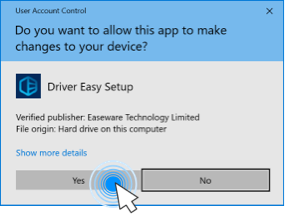
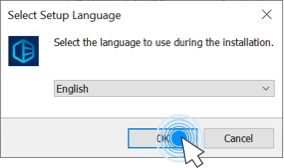
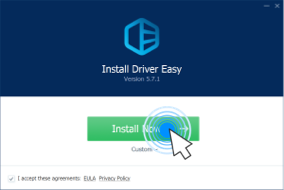
- Download and install Driver Easy.
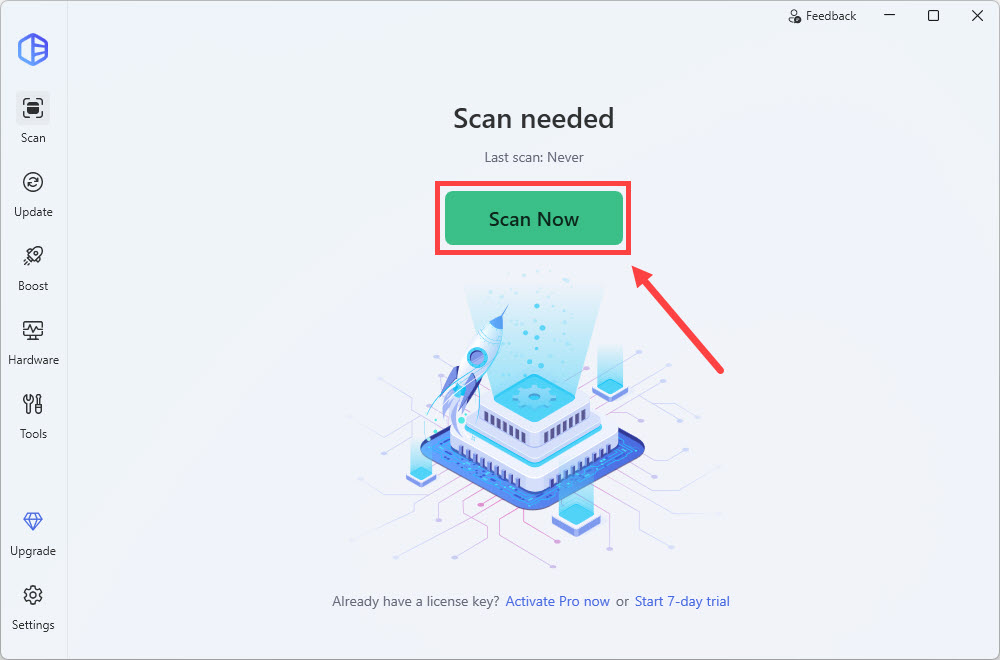
- Run Driver Easy and click the Scan Now button. Driver Easy will then scan your computer and detect any problem drivers.
- Click the Activate & Update button next to the flagged GPU to automatically download and install the correct version of this driver. Or click Update All to automatically download and install the correct version of all the drivers that are missing or out of date on your system.
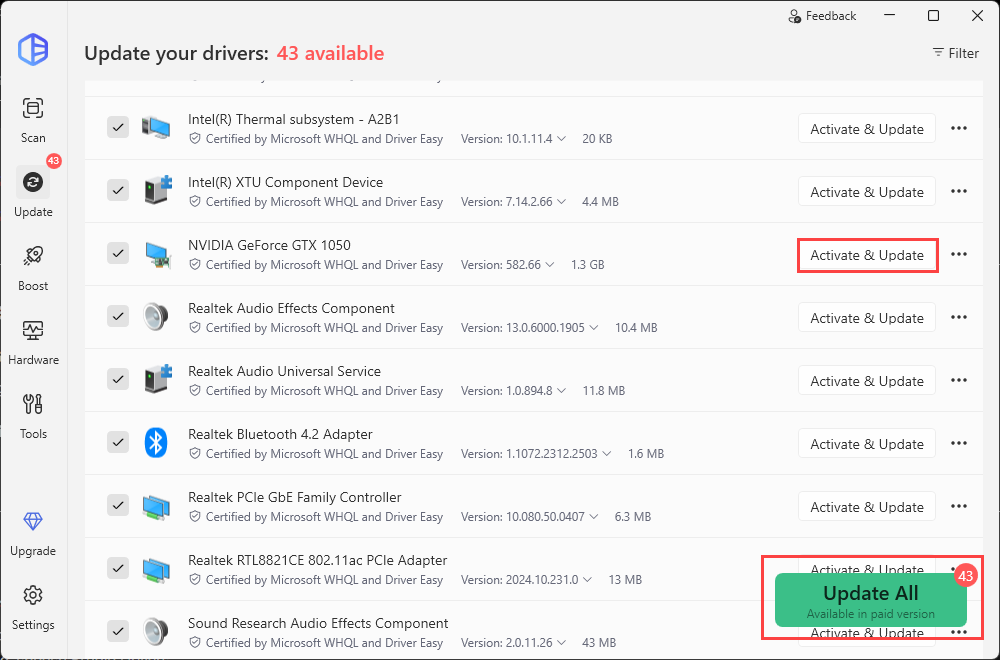
You’ll be prompted to upgrade to the Pro version or start a 7-day free trial when you update the drivers. Driver Easy provides automatic driver updates, backup, and rollback plus advanced technical support. If you’re not prepared to purchase the Pro version, you can start a 7-day free trial to unlock all the Pro features like fast downloads and easy installation.
After updating, restart your computer to apply the changes.
Method 3: Download and install drivers from the manufacturer
You can download and install the drivers manually if you know what you’re doing. Both PC manufacturers and your hardware manufacturers provide drivers.
Download the video drivers from PC manufacturers:
If you’re using a laptop or a prebuilt desktop, check your PC manufacturer’s support website first. They may customize the video drivers for their systems.
To download a driver, you’ll usually need your PC model, Windows version, and Windows system type. Here’s how to check them out:
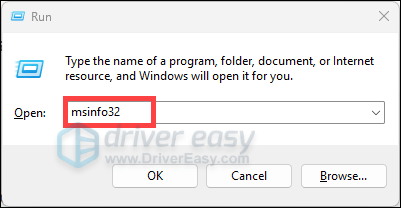
- On your keyboard, press the Windows logo key and the R key at the same time to invoke the Run command. Type msinfo32 and press Enter.
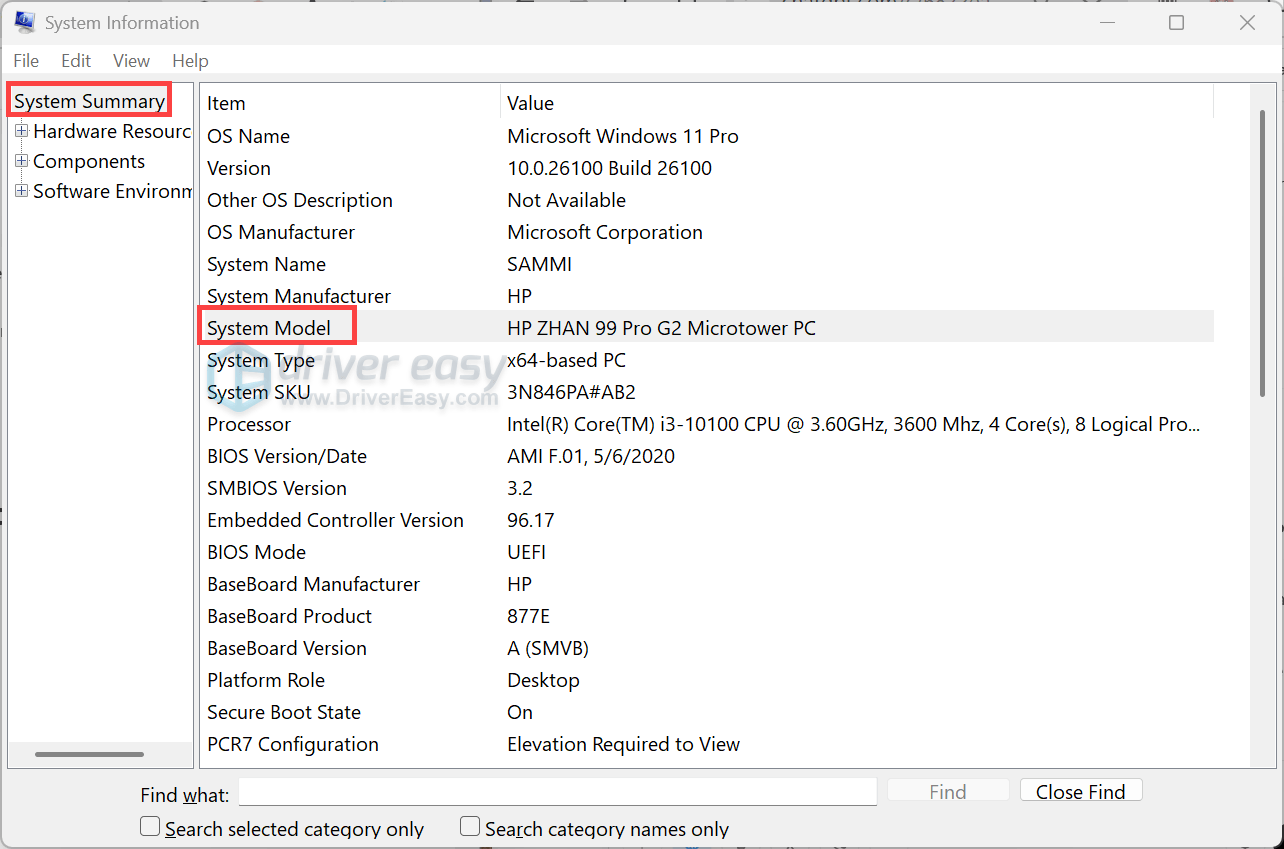
- Check System Model to identify your PC model.
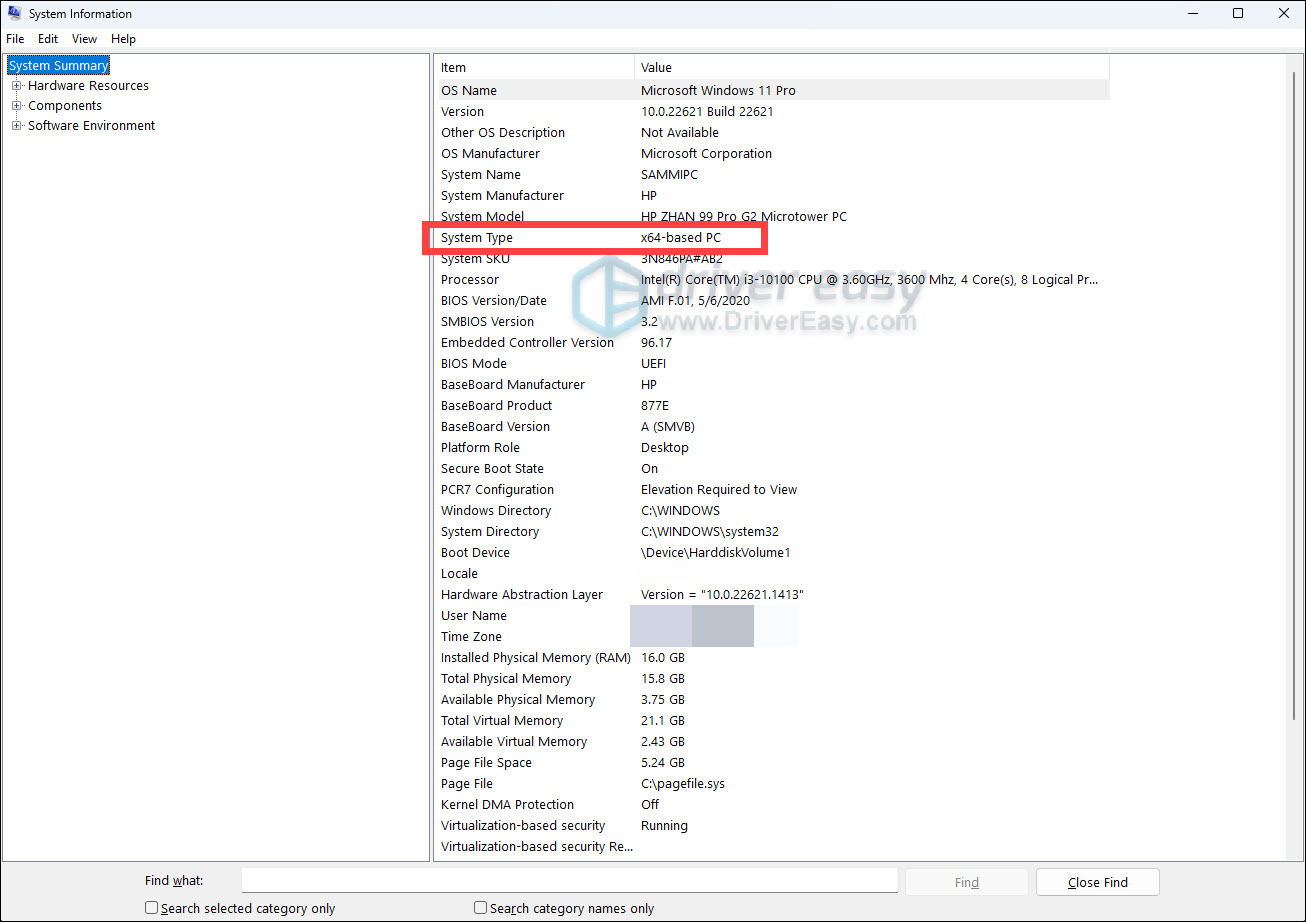
- Check System Type to determine whether you’re running a 64-bit or 32-bit version of Windows.
Visit your PC manufacturer’s official support page.
Then, find your model and download the latest compatible graphics driver. Once done, open the file to complete the driver installation.
Download the video drivers from graphics card manufacturers:
If you built your own desktop, or your PC manufacturer doesn’t provide the driver you need, you can download the driver directly from your GPU manufacturer: AMD, NVIDIA, or Intel.
If you’re not sure what graphics card you’ve installed, you can check it via Device Manager. Follow the steps below.
- On your keyboard, press the Windows logo key and R key at the same time to invoke the Run command. Type devmgmt.msc and press Enter to open Device Manager.
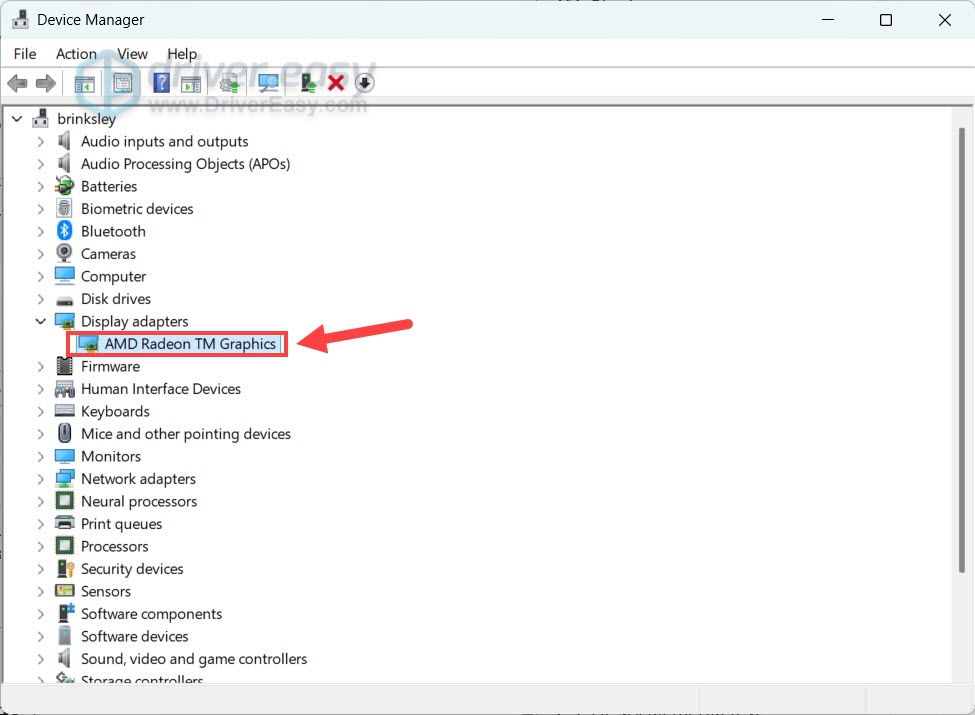
- Expand the Display adapters category, and then you’ll get the graphics card model name. If you’ve installed more than one graphics card, you’ll see more than one item under this branch.
- Then visit the manufacturer’s official driver page, select your GPU model and Windows version, download the appropriate driver, and run the downloaded file to install the driver.
When should you update the video driver?
It’s always recommended to keep your video drivers up-to-date for better performance, smoother video playback, higher resolutions, multiple-monitor support, and additional graphics features. A driver update is essential, particularly when:
- You have just installed or reinstalled Windows.
- You’re experiencing graphics glitches, screen flickering, or crashes.
- A game recommends a newer graphics driver.
- You’re installing a new graphics card.
- A new driver adds compatibility or performance improvements for a game or application.
If updating the video driver doesn’t fix your problem
If a graphics problem started immediately after a driver update, installing an even newer driver isn’t always the best next step. You may try rolling back the graphics driver.
If the problem persists, you can consider reinstalling the display driver with DDU or troubleshooting other possible causes, such as Windows updates, conflicting applications, overheating, or hardware problems.
Now you know how to update video drivers on your Windows computer. If you prefer a simpler approach, you can start with Windows Device Manager or opt for an automatic driver updater like Driver Easy. Or you can download the driver from your PC or graphics card manufacturer’s official website.
If you have any questions or are experiencing any GPU-related or driver issues, feel free to leave a comment below. We’d be glad to help you troubleshoot.
