



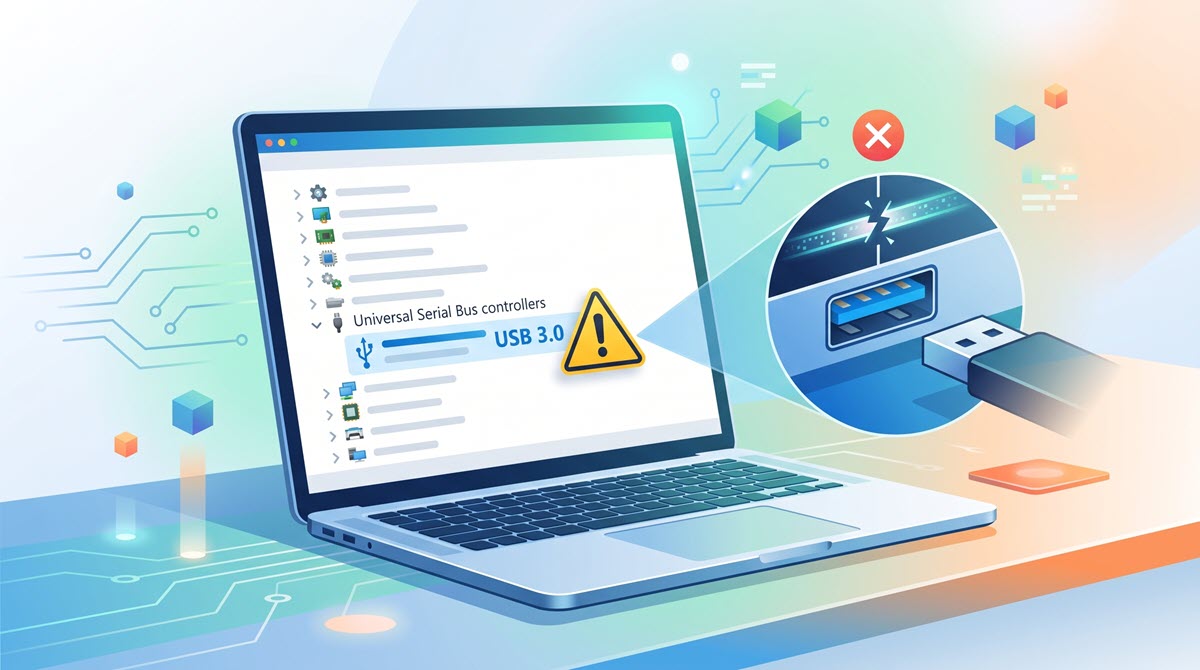

Running into a USB 3.0 driver issue and looking to download a USB 3.0 driver for Windows? In most cases, you don’t need to download a separate USB 3.0 driver.
Windows 10 and Windows 11 include built-in support for USB 3.x and xHCI controllers. If your USB 3.0 port or device isn’t working, the problem is more likely related to the USB controller, chipset drivers, power management settings, Windows, or the USB device itself.
Windows 7 is different. It doesn’t include native support for many USB 3.0/xHCI controllers, so you may need to download and install a USB 3.0/xHCI driver. In this guide, we’ll show you how.
Choose your Windows version below and follow the steps.
USB 3.0 driver for Windows 11 & Windows 10
If you’re using Windows 11 or Windows 10, you generally don’t need to search for a standalone USB 3.0 driver. Windows includes the necessary USB 3.x/xHCI drivers. If a USB 3.0 port or device isn’t working, here are some practical fixes to try.
Fix 1 – Uninstall the USB device and restart your PC
If a USB controller or device is experiencing a driver problem, Windows may be able to resolve it by removing the device and loading its built-in driver again after a restart. This is a simple yet effective solution when you see a yellow exclamation mark next to a USB device in Device Manager.
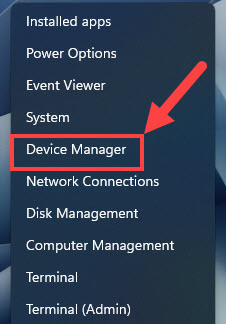
- Press the Windows key + X on your keyboard, and then select Device Manager.
- Expand Universal Serial Bus controllers.
- Look for a USB device or USB controller with a yellow exclamation mark. Right-click the problematic device and select Uninstall device.
🔔 Depending on your hardware, you may see entries such as USB Root Hub, USB xHCI Compliant Host Controller, or Unknown USB Device.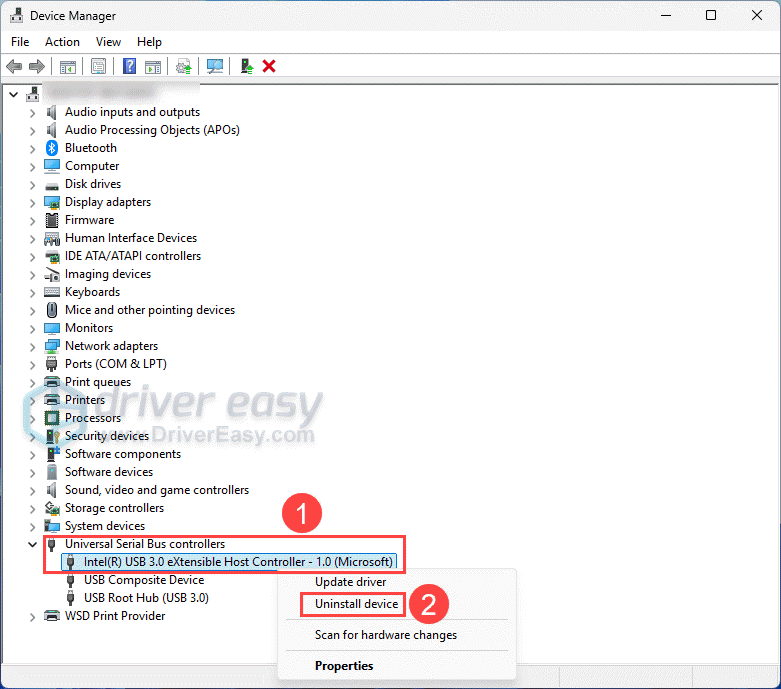
- Click Uninstall to confirm.
Restart your computer. Windows should automatically detect the USB controller or device during startup and load the appropriate built-in driver.
After restarting, reconnect your USB device and check whether it is detected and working normally. If the USB problem persists, move on to the next fix.
Fix 2 – Update your chipset drivers
If reinstalling the USB device doesn’t help, the problem may be related to the chipset drivers that support your PC’s USB controller. In this case, you can try updating your chipset drivers manually or automatically.
Manual driver update
Simply go to the manufacturer’s official support website, search for your exact model, and download the latest compatible chipset driver. Then, open the downloaded driver package and follow the on-screen instructions to install it. Follow this detailed guide to update your drivers manually.
Automatic driver update
If you’re not sure which driver is responsible for your USB problem, or don’t want to search for the appropriate chipset or controller driver manually, use Driver Easy to keep your device drivers up-to-date with ease.
Driver Easy will scan your computer and detect all problem drivers. You don’t need to know your Windows OS. You don’t need to risk downloading the wrong drivers. The entire process takes just two clicks:
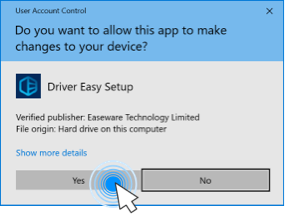
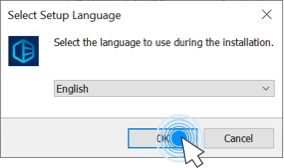
- Download and install Driver Easy.
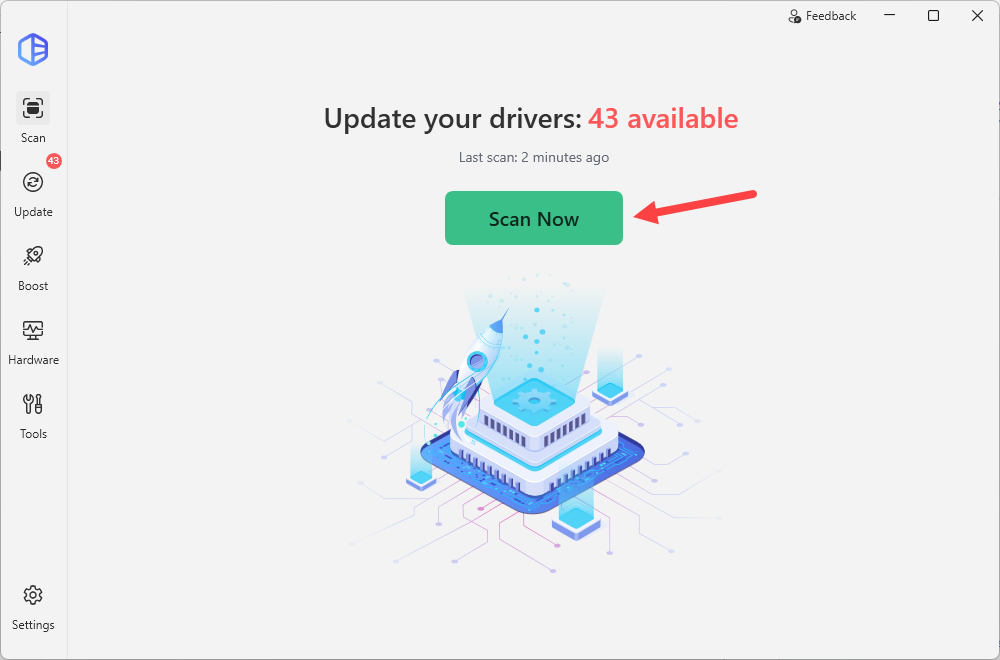
- Run Driver Easy and click Scan Now. Driver Easy will then scan your computer and detect any problem drivers.
- Click the Update button next to the flagged relevant USB, chipset, or controller devices to automatically download and install the latest driver version. Or click Update All to automatically download and install all the latest correct drivers that are missing or outdated in your system.
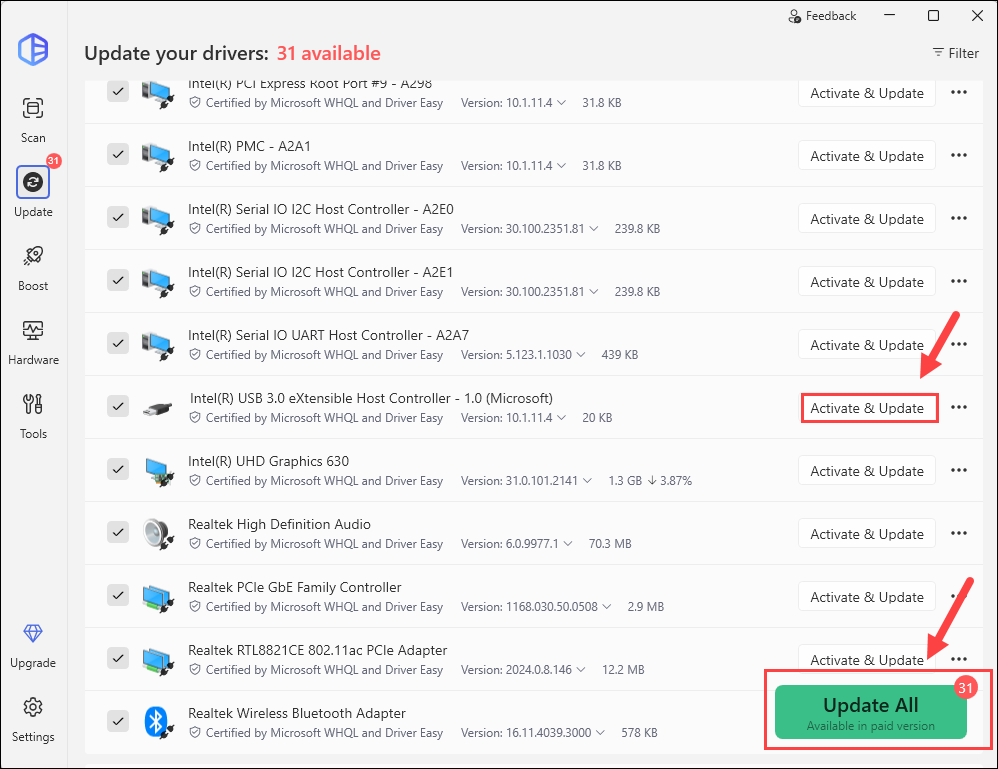
This requires the Pro version, which includes high-speed driver updates and advanced technical tools. If you’re not sure if Driver Easy is right for you, you can start a 7-day free trial to try all the Pro features. - Restart your computer and check whether your problem is solved.
Restart your computer after updating the drivers and reconnect your USB device and check whether it works normally.
Fix 3 – Change USB power management settings
Windows can turn off certain USB devices to save power. On some systems, this can contribute to USB devices disconnecting, failing to wake up, or becoming intermittently unavailable. You can disable this power-saving option for the affected USB device.
- Press the Windows key + X at the same time.
- Select Device Manager.
- Expand Universal Serial Bus controllers. Right-click USB Root Hub or another affected USB hub and select Properties.
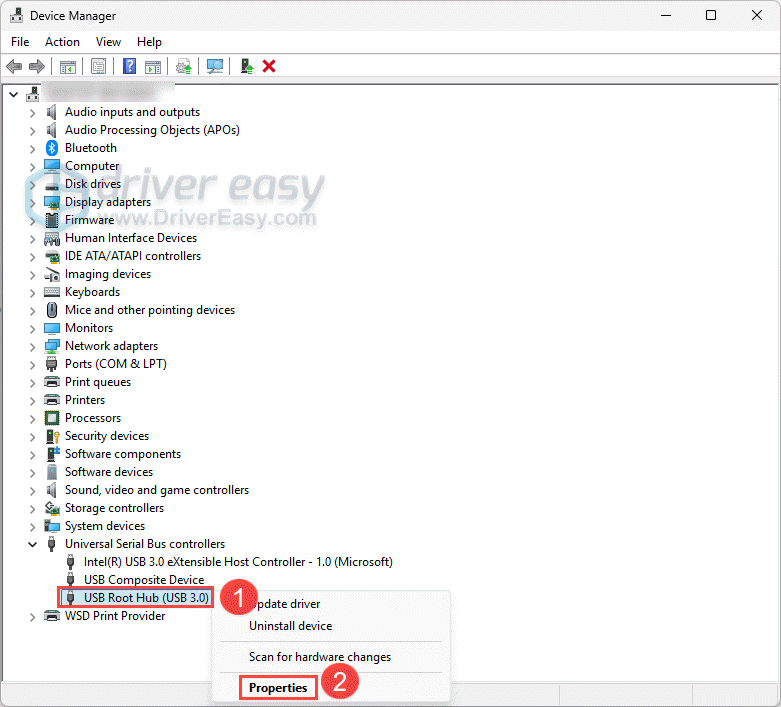
- Select the Power Management tab. Uncheck Allow the computer to turn off this device to save power, and click OK.
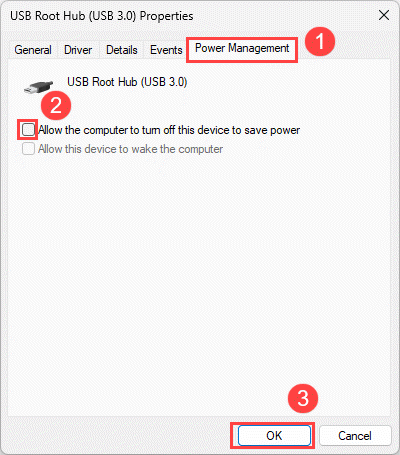
Restart your computer and test your USB device. If the problem remains, continue below.
Fix 4 – Update Windows
Windows 10 and Windows 11 provide built-in USB support, so installing the latest Windows updates can usually help resolve compatibility and driver-related problems.
- Press the Windows key + I to open Settings.
- Select Windows Update. If you’re on Windows 10, go to Update & Security > Windows Update.
- Click Check for updates.
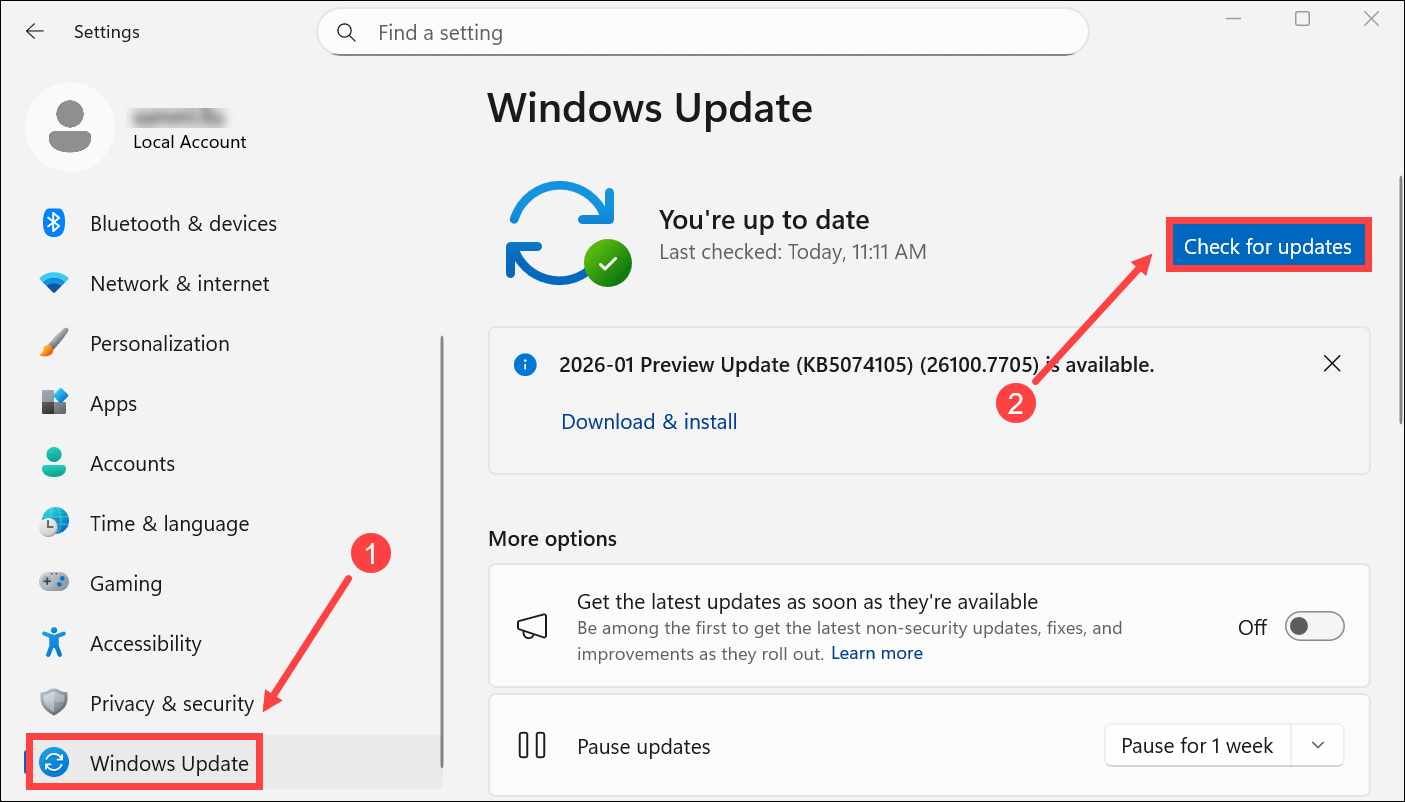
- Install any available updates.
Restart your PC if prompted. Then reconnect the USB device and check whether it works normally.
Fix 5 – Check the USB device, cable, and port
If Windows doesn’t detect the USB device at all, the problem may not be related to the driver. Try these basic hardware checks:
- Connect the device to another USB port.
- If possible, try a different USB cable.
- Disconnect other USB devices temporarily.
- Connect the device directly to the PC instead of through a USB hub.
- Test the USB device on another computer.
- Test another USB device on the same USB port.
These tests can help determine whether the problem is caused by the USB device, cable, USB port, or Windows system. For example, if several USB devices fail on the same port while other ports work normally, the physical port or its controller may be the problem.
USB 3.0 driver for Windows 7
Windows 7 works differently from Windows 10 and Windows 11. Windows 7 does not include native support for many USB 3.0/xHCI controllers.
Therefore, if your USB 3.0 ports aren’t working correctly on Windows 7, you can download the appropriate USB 3.0/xHCI driver from your PC or motherboard manufacturer and install it manually. The USB 3.0/xHCI driver may be included in a chipset package rather than listed as a standalone USB driver. If you can’t find a driver specifically named “USB 3.0 Driver,” check the chipset and USB controller sections.
If you don’t have the time or patience to do this on your own, you can also let Driver Easy handle it all.
So the above are effective solutions to fix the Windows 3.0 USB driver issue. If you have any questions, feel free to comment below and we will see what more we can do to help.