




You’re walking out of Whiterun with hundreds of mods installed. The counter reads a comfortable 60 FPS — then you turn the camera toward the tundra and the framerate suddenly drops, or the game starts to feel choppy even though the FPS counter looks normal.
This is common in heavily modded Skyrim Special Edition, and a powerful GPU doesn’t necessarily prevent it. Skyrim SE can become CPU-, VRAM-, rendering-, or mod-limited long before a modern graphics card reaches its full potential.
In this guide, we’ll walk you through 9 practical ways to improve Skyrim Special Edition FPS, starting with quick and effective fixes to more advanced solutions.
9 ways to boost Skyrim Special Edition FPS
You don’t need to apply all nine fixes. Start with the one that matches your issue and test.
- Make sure Skyrim uses your dedicated GPU
- Check your display settings
- Use SSE display tweaks
- Reduce ENB effects
- Lower Shadow and LOD settings
- Update your graphics driver
- Reduce Texture and VRAM usage
- Check your Pagefile
- Reduce performance-heavy mods
Fix 1 – Make sure Skyrim uses your dedicated GPU
If your PC has both integrated and dedicated graphics, make sure Skyrim SE is actually running on your dedicated GPU. This takes only a minute to check and can save you from troubleshooting the wrong problem.
On a desktop PC, first make sure your monitor cable is connected to the discrete graphics card, not the motherboard’s video output.
You can also check which GPU Skyrim is using through your GPU monitoring software or Windows.
- Press the Windows key + I to open Settings. Go to System > Display > Graphics.
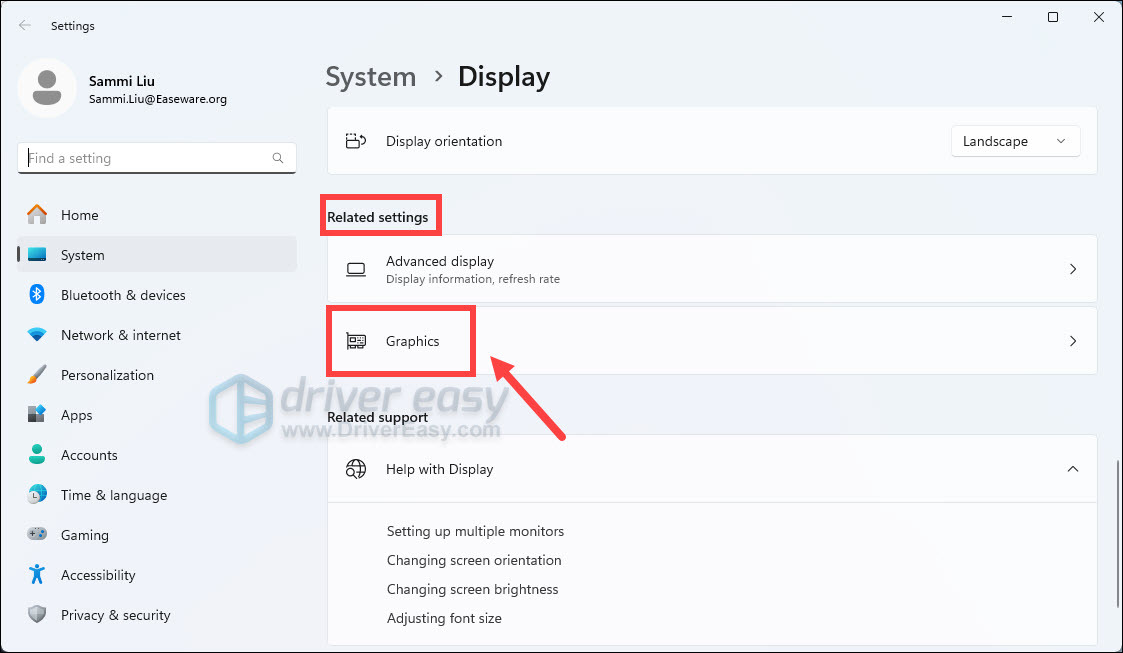
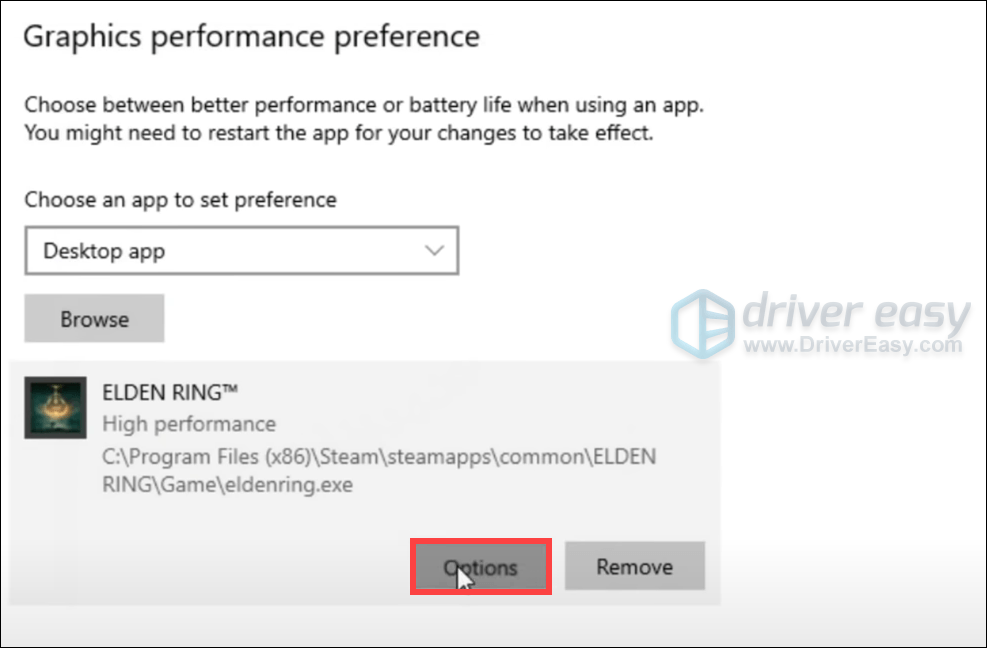
- Click Browse and add SkyrimSE.exe.
- Click Options.
- Select High performance and choose your dedicated GPU. Click Save.
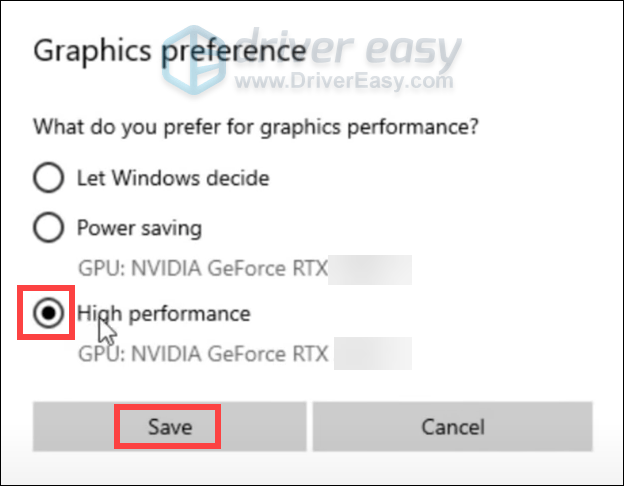
After confirming the game is using the intended GPU, relaunch it and test.
Fix 2 – Check your display settings
If your FPS counter looks reasonable but Skyrim still feels choppy, start by checking your display and fullscreen settings.
First, confirm your monitor’s refresh rate. Press the Windows key + I to open Settings. Then go to System > Display > Advanced display. Make sure Windows is using the refresh rate you expect. For example, a 144Hz monitor running at 60Hz won’t display motion as smoothly as it can.
You can also test Skyrim without fullscreen optimizations. Right-click SkyrimSE.exe and select Properties. Click the Compatibility tab, tick Disable fullscreen optimizations, and click Apply > OK.
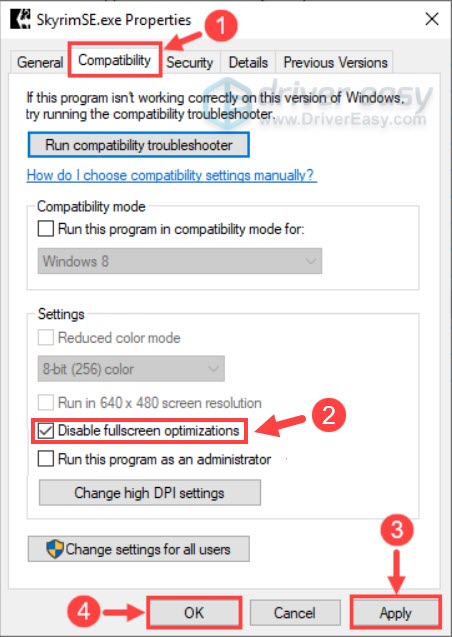
Restart Skyrim, load the same save, and test the game’s performance. Tweaking these settings may not dramatically increase average FPS but can be useful when the problem is stutter, uneven frame pacing, or fullscreen behavior.
Fix 3 – Use SSE display tweaks
If you want to run Skyrim above 60 FPS, don’t simply disable VSync and leave the game completely uncapped.
Skyrim’s physics and timing systems were designed around older framerate assumptions. Poorly configured high FPS can cause physics or animation problems, especially when the game is allowed to run at very high or unstable framerates.
SSE Display Tweaks provides additional control over framerate limiting, synchronization, display behavior, and high-FPS-related timing.
After installing it, configure its settings according to your monitor and desired framerate. Start with a cap your system can maintain consistently instead of chasing the highest possible number.
For example, if your system can maintain around 90 FPS in your usual gameplay areas, a stable 90 FPS cap may provide a smoother experience than allowing the framerate to fluctuate widely.
⚠️ Don’t immediately set Skyrim to an extremely high FPS cap. Some mods and game systems can behave unexpectedly at very high framerates. Review SSE Display Tweaks’ documentation and configuration options before making advanced changes.
Fix 4 – Reduce ENB effects
If disabling ENB gives you a significant FPS increase, your ENB setup is contributing to the performance cost.
Instead of removing the entire visual setup, re-enable ENB and reduce expensive effects one at a time.
Depending on your preset, pay particular attention to effects such as:
- Ambient occlusion
- Depth of field
- Complex lighting effects
- Bloom
- Reflections
- Weather-related effects
The exact performance impact varies between ENB presets, so test each change individually.
If you want to experiment with a different graphics framework, you can also test Community Shaders and its compatible add-ons. However, don’t assume that switching frameworks will automatically produce higher FPS. Compare the actual configuration you’re using.
Fix 5 – Lower Shadow and LOD settings
Outdoor Skyrim areas can become expensive to render when there are many shadows, trees, grass, objects, NPCs, and distant details on screen.
Instead of lowering every graphics setting, target the settings that increase rendering workload:
- Shadow quality and distance
- Object and actor LOD
- Tree distance
- Grass density and distance
- Mods that add large numbers of objects or NPCs
You can use BethINI to manage Skyrim’s configuration more easily, then make smaller changes and test after each adjustment.
Fix 6 – Update your graphics driver
An outdated or problematic GPU driver can cause compatibility issues and, in some cases, performance problems. Updating the driver is particularly worth trying if you’re using a newer GPU card or experiencing other graphics-related issues.
There are mainly two ways you can update your graphics driver:
Option 1 – Manually: If you know the exact model of your graphics card, you can go straight to the manufacturer’s website: Intel, AMD or NVIDIA. Then search for the most recent driver that’s compatible with your operating system and install it manually.
Option 2 – Automatically (Recommended): If you don’t have the time, patience or computer skills to update your video driver manually, you can do it automatically with Driver Easy. Driver Easy will automatically recognize your system and find the correct drivers for your exact GPU and your Windows version, and it will download and install them correctly:
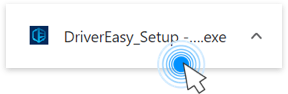
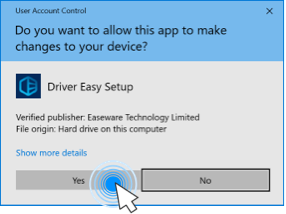
- Download and install Driver Easy.
- Run Driver Easy and click the Scan Now button. Driver Easy will then scan your computer and detect any problem drivers.

- Click the Activate & Update button next to the flagged graphics driver to automatically update the correct version of that driver. Or click Update All to automatically download and install the correct version of all the drivers that are missing or out of date on your system.

🔔 With the Driver Easy Pro version, you can unlock the full-packed features and technical support. If you’re not prepared to purchase the Pro version yet, Driver Easy provides a 7-day trial at no cost, granting access to all Pro features like fast downloads and easy installation. No charges will occur until after your 7-day trial period ends.
Restart your computer to apply the changes. If the issue persists, try the next fix below.
Fix 7 – Reduce Texture and VRAM usage
If you’re using many 4K or 8K texture packs, VRAM can become a major source of stuttering and asset-streaming problems.
Start by replacing unnecessary 4K/8K textures with 2K or 1K versions, especially for objects that are rarely viewed up close.
You can also use VRAMr to optimize textures and reduce their VRAM footprint. This can be useful for large mod lists where manually replacing hundreds of high-resolution textures would be impractical.
Fix 8 – Check your pagefile
A heavily modded Skyrim installation can consume substantial system memory. If Windows runs low on available RAM and the pagefile is disabled or configured too small, you may experience instability or performance problems. If you’ve manually configured an unusually small pagefile or disabled it completely, test automatic management.
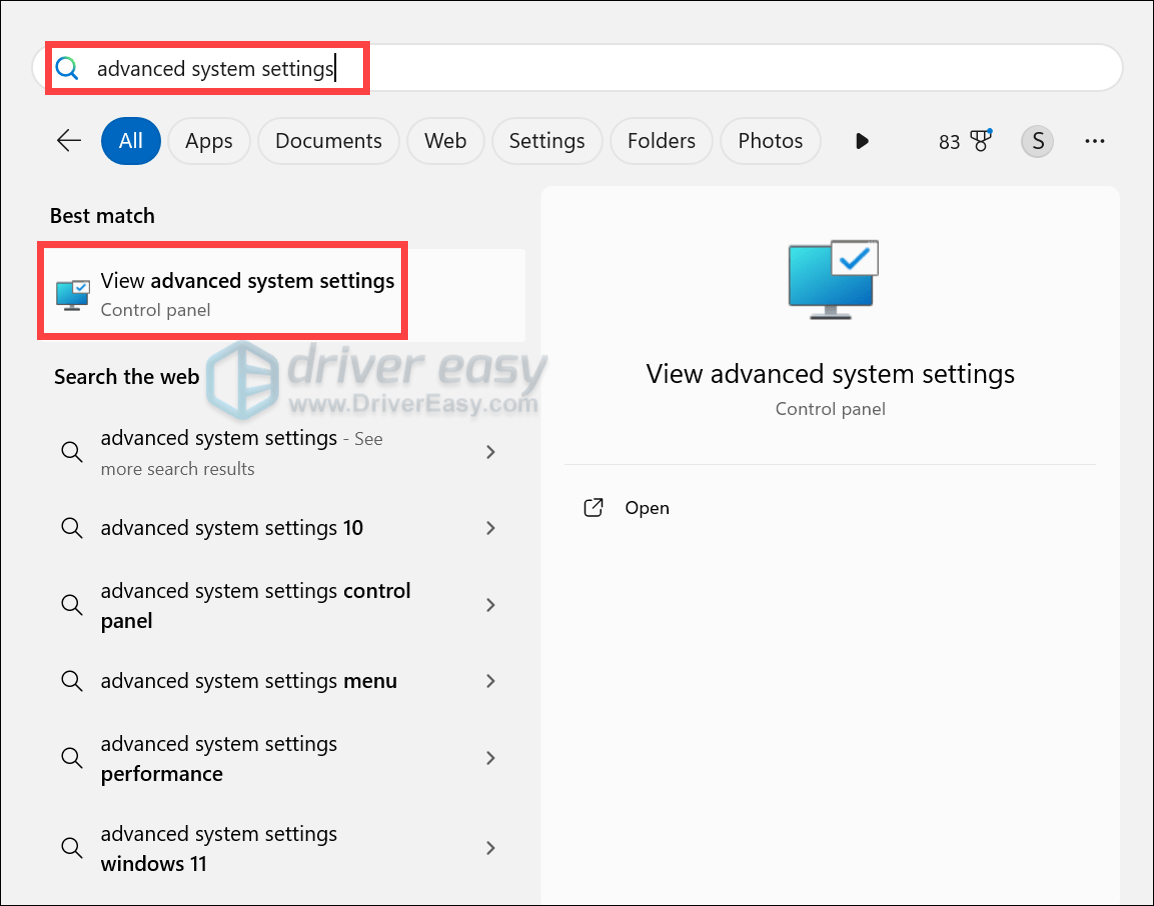
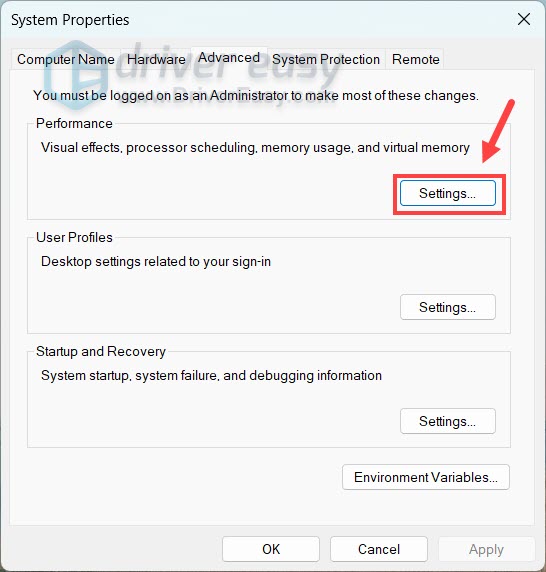
- Type advanced system into the Windows search box and select View advanced system settings.
- In the Advanced tab, click Settings under the Performance section.
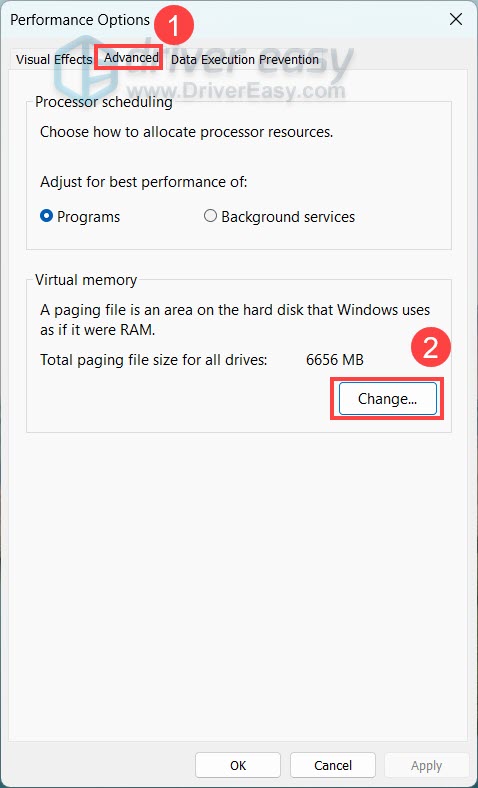
- Select the Advanced tab and click Change.
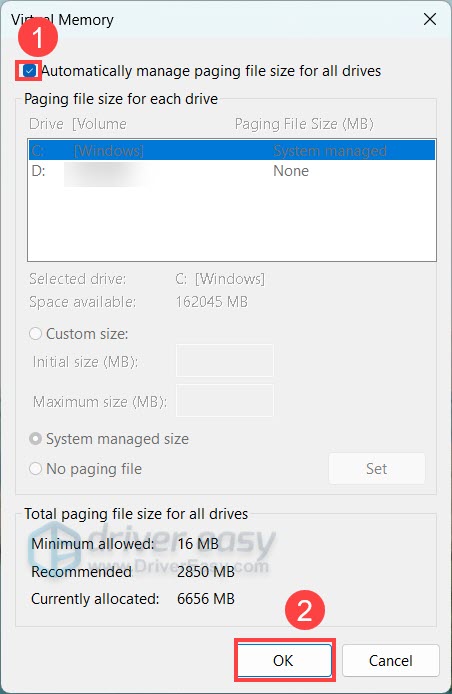
- Tick the box for Automatically manage paging file size for all drives and click OK.
Fix 9 – Reduce performance-heavy mods
Some Skyrim mods add substantial runtime workloads by design. If your FPS drops mainly in heavily modded areas or when certain effects are active, your mod list may be the limiting factor.
- Physics mods
Physics-heavy setups can increase CPU workload, particularly when many characters or objects are being simulated. If you’re using HDT-SMP, consider testing Faster HDT-SMP (FSMP) or reducing its configuration to a more performance-oriented preset. - Grass mods
Dense grass can increase both rendering and object-processing workloads. Try reducing grass density or temporarily disabling your grass mod to see whether outdoor FPS improves. - NPC and object-heavy mods
City overhauls, large NPC additions, dense object placement, and other environment-heavy mods can increase the amount of work Skyrim has to process and render.
If performance is poor only in certain cities or locations, temporarily disable the mods that heavily modify those areas and compare the result.
If disabling one mod produces a large improvement, you’ve found a useful lead. You can then look for a lighter configuration or a performance-friendly alternative rather than removing your entire mod list.
So these are all the tips to boost your Skyrim SE FPS. If you have further questions or suggestions, please feel free to leave a comment below.