


When you connect any pair of Bluetooth headphones, earbuds, or speakers to your computer, few things are more frustrating than sound that constantly stutters, crackles, or drops out. Even if your audio device is fully charged and right next to your PC, the audio can get delayed or dropped during transmission.
Fortunately, Bluetooth audio stuttering is usually caused by software misconfigurations, driver conflicts, or signal interference – all of which are easy to fix.
Quick checks before you start
Before diving into deeper system settings, rule out basic hardware and environmental issues:
- Check device battery: Low battery on your Bluetooth headset can cause erratic connectivity and packet loss. Charge it to at least 50%.
- Reduce physical distance: Keep your headphones within 3–5 meters (10–16 feet) of your PC with a direct line of sight. Walls, metal desks, and computer cases block Bluetooth signals.
- Switch Wi-Fi to 5 GHz: Bluetooth operates on the 2.4 GHz frequency. If your Wi-Fi router uses 2.4 GHz, it can cause heavy frequency interference. Switch your Wi-Fi connection to 5 GHz or temporarily turn off Wi-Fi to test.
If the stuttering persists after these quick checks, follow the step-by-step fixes below, ranked from the easiest solutions to more advanced adjustments.
7 fixes for Bluetooth Audio Stuttering
There are 7 tested methods to solve the Bluetooth audio stuttering issue. You don’t have to try them all; just work your way down the list until you find the one that works for you.
- Disable Hands-free Telephony
- Update the Bluetooth and audio drivers
- Disable audio enhancement
- Change the default audio format
- Restart and reconfigure the Bluetooth Support Service
- Disconnect or reset Phone Link
- Upgrade or replace your USB Bluetooth adapter
Fix 1: Disable Hands-free Telephony
Windows treats Bluetooth headsets as two distinct profiles: A2DP (High-Quality Stereo Playback) and HFP/HSP (Hands-free Telephony for voice calls). When the Hands-free Telephony service is active, Windows frequently toggles or reserves bandwidth for the microphone, forcing your audio into low-bitrate mono mode and causing severe audio stuttering.
Disabling this feature forces Windows to strictly use the high-quality stereo profile. Here’s how:
- On your keyboard, press the Windows logo key and the I key to open Windows Settings.
- Select Bluetooth & devices, then Devices.

- Scroll down and select More devices and printer settings.

- Right-click your Bluetooth headset/headphones and select Properties.

- Go to the Services tab and untick the box for Hands-free Telephony.

- Click Apply and OK to save the changes.
Try your Bluetooth devices again to see if the stuttering problem remains. If so, please move on.
Fix 2: Update the Bluetooth and audio drivers
An outdated or corrupted Bluetooth controller driver (or audio driver) often fails to properly process audio codecs, resulting in sound buffering or stuttering. Updating both the Bluetooth driver and audio driver to their latest version is one of the most effective ways to eliminate audio playback issues.
You can manually update your drivers by visiting the official website of your PC or motherboard manufacturer (such as Intel, Realtek, Dell, HP, or ASUS), searching for your exact model, and installing the latest Bluetooth and audio driver packages compatible with your Windows version.
If you don’t have the time, patience, or computer skills to update drivers manually, you can do it automatically with Driver Easy.
Driver Easy will automatically recognize your system and find the correct drivers for it. You don’t need to know exactly what system your computer is running; you don’t need to risk downloading and installing the wrong driver, and you don’t need to worry about making a mistake when installing. Driver Easy handles it all.
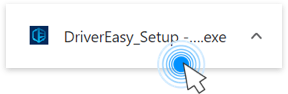
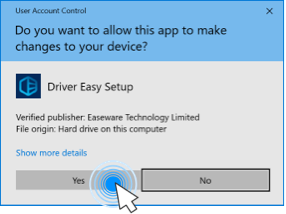
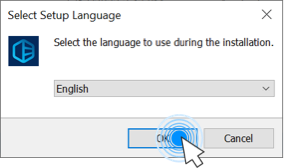
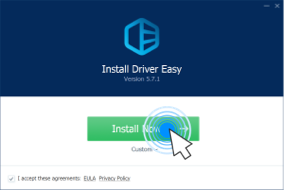
- Download and install Driver Easy.
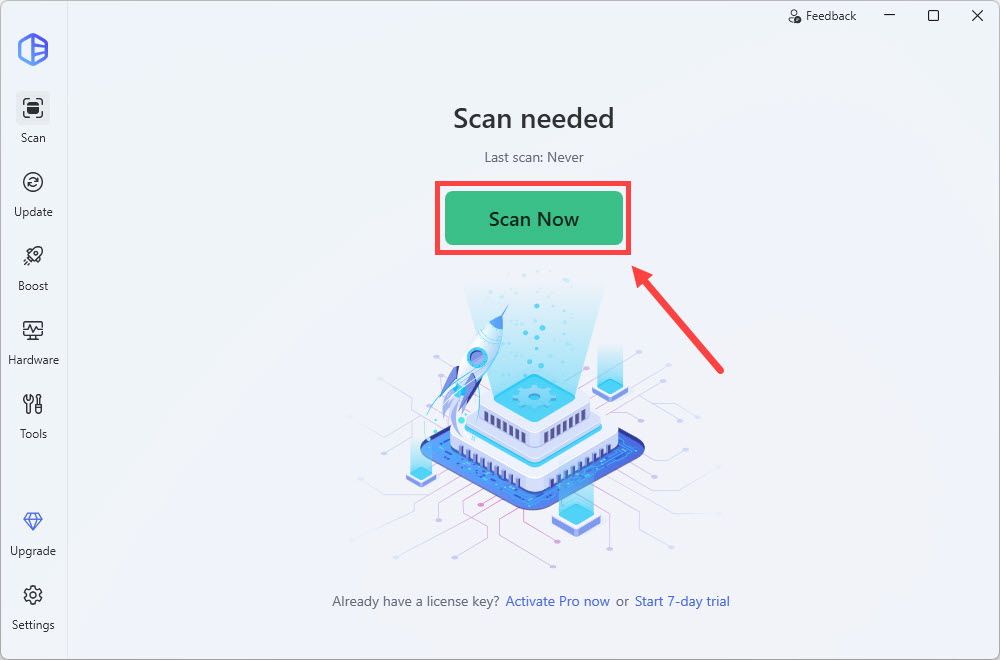
- Run Driver Easy and click the Scan Now button. Driver Easy will then scan your computer and detect any problematic drivers.
- Click Activate & Update next to your Bluetooth or audio driver to update it. Or click Update All to automatically download and install the correct version of all the drivers that are missing or out of date on your system.
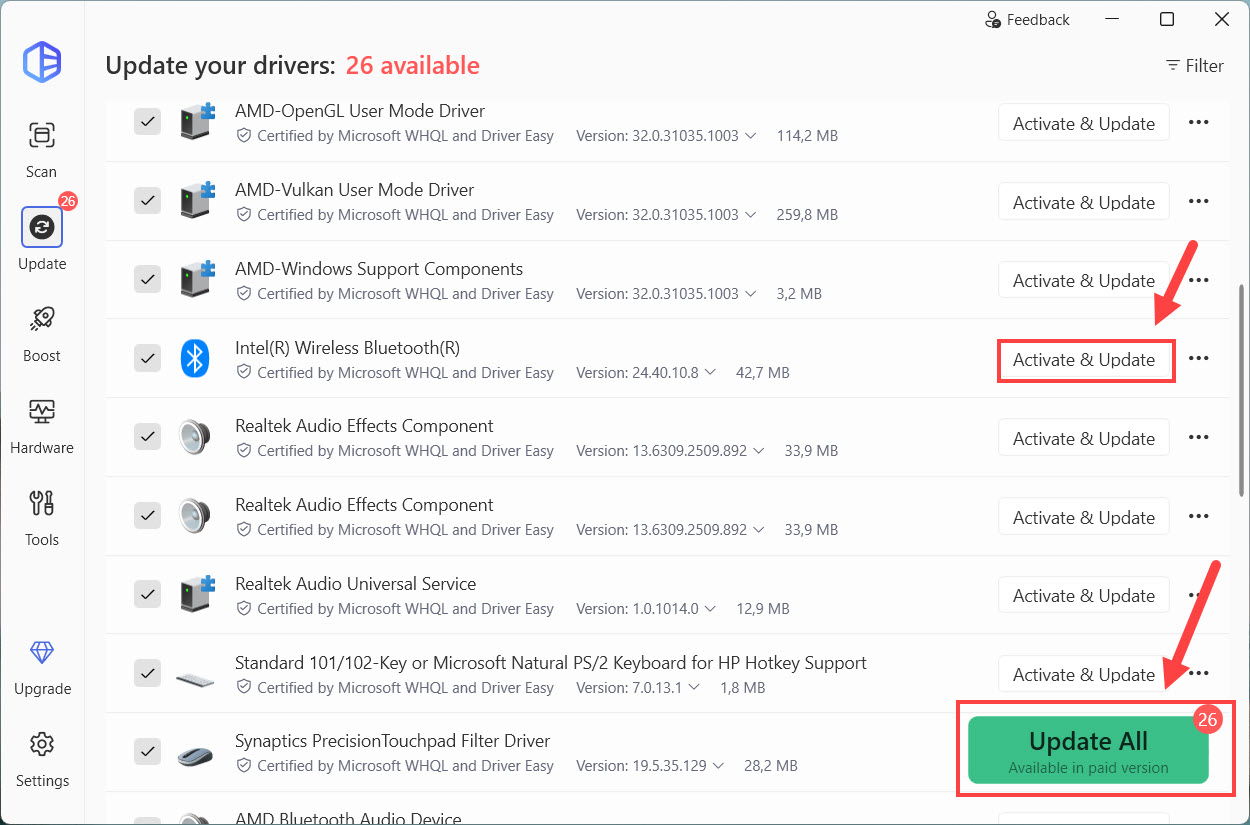
(This requires the Pro version which comes with a full set of premium features, technical support, and a 30-day money-back guarantee. If you’re not ready to buy the Pro version, Driver Easy offers a 7-day free trial which includes access to all the Pro features such as high-speed download and one-click install. You won’t be charged anything until your 7-day trial has ended.) - Restart your computer for the changes to take effect.
Fix 3: Disable audio enhancement
Windows includes built-in audio signal processing effects (APOs) designed to improve sound quality. However, these processing enhancements can conflict with modern Bluetooth audio codecs, causing popping or stuttering sound.
- On your keyboard, press the Windows logo key + R on the keyboard at the same time.
- Type mmsys.cpl and press Enter.

- Right-click your default playback device (the one with a green tick) and click Properties.
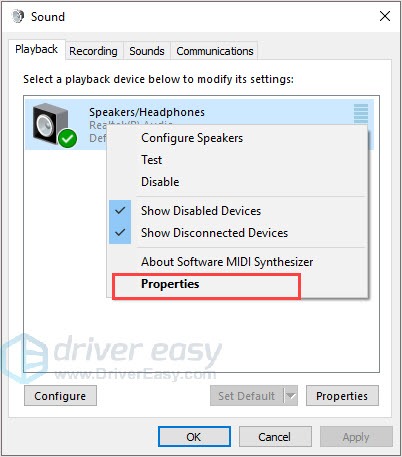
- Click Enhancement. Make sure the box for Disable all enhancements is empty. Click Apply and OK to save the change.
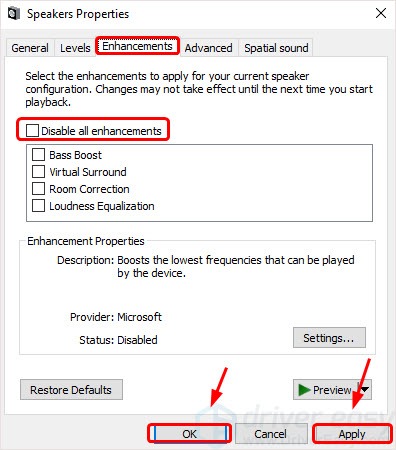
If you don’t have an Enhancement tab here, the culprit is not enhancement then. Move on to the next fix.
Fix 4: Change the default audio format
If your Windows audio sample rate is set higher than what your Bluetooth adapter or headphones can reliably buffer wirelessly, sound issues such as static or stuttering may occur. To fix it, you can try setting the format to standard CD or DVD quality:
- On your keyboard, press the Windows logo key + R on the keyboard at the same time.
- Type mmsys.cpl and press Enter.
- Right-click your default playback device (the one with a green tick) and click Properties.
- Click the Advanced tab. Select 16 bit, 48000 Hz (DVD Quality). Click Apply and OK to save the changes.
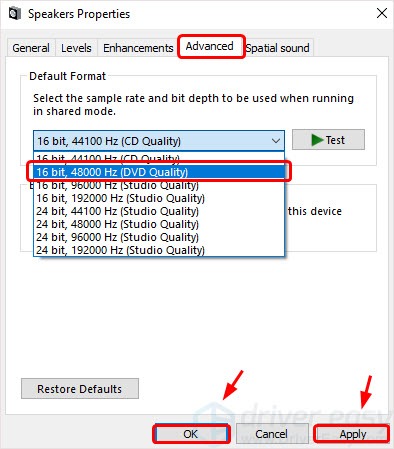
- Test to see if your sound is still stuttering. If yes, go back to step 4 and try some other formats until you find the one that works for you.
If your audio problem remains, don’t worry; you need to update your audio drivers. Move on to method 4 for help.
Fix 5: Restart and reconfigure the Bluetooth Support Service
The Bluetooth Support Service manages local Bluetooth discovery and device streaming. If this service hangs, crashes in the background, or is set to trigger manually, your audio streams will frequently freeze or drop out.
- On your keyboard, press the Windows key and the R key at the same time. Copy and paste services.msc and hit Enter.

- Scroll down to find Bluetooth Support Service, then double-click it.

- In the pop-up window, go to the General tab. Click Stop under Service status. Then click Start next to it.

- Select Automatic in the Startup type drop-down menu. Then click Apply > OK.

Reconnect your Bluetooth device and see if the audio stuttering problem persists. If so, please move on to the next fix.
Fix 6: Disconnect or reset Windows Phone Link
Windows Phone Link keeps a persistent, low-latency Bluetooth background link between your PC and mobile device for syncing calls, messages, and notifications. On PCs with single-channel Bluetooth controllers, this secondary data stream may sometimes eat the available bandwidth, causing audio stuttering on your headphones.
- Type phone link into the Windows search box and open it.
- Click the Settings (gear) icon in the top-right corner.
- Select My Devices.
- Find your paired smartphone, click the three dots (…), and select Remove to unpair it. Alternatively, disable Allow this app to make and receive calls under the Features tab.
Check if your Bluetooth headphone audio stabilizes once Phone Link is disconnected.
Fix 7: Upgrade or replace your USB Bluetooth adapter
If none of the software solutions work, the bottleneck is likely your physical hardware. Older built-in Bluetooth chips (e.g., Bluetooth 4.0 or 4.2) or cheap internal Wi-Fi/Bluetooth combo cards don’t fully support modern Bluetooth versions or Windows updates, which can lead to audio stuttering.
- Change USB Ports: If you are using an external USB Bluetooth dongle, unplug it and move it to a USB 2.0 port on the front or top of your PC. USB 3.0 ports are known to emit 2.4 GHz radio frequency interference that directly degrades nearby Bluetooth dongles.
- Upgrade your Dongle: Replace your adapter with a dedicated Bluetooth 5.0, 5.2, or 5.3 USB adapter from reputable brands (such as TP-Link, ASUS, or UGREEN). Modern Bluetooth versions feature significantly higher data throughput, superior signal range, and stronger anti-interference protocols.
Bluetooth audio stuttering on Windows 10 and 11 is often tied to bandwidth allocation (such as Hands-free Telephony or Phone Link interference) or outdated Bluetooth or audio drivers. Working through these troubleshooting steps systematically should quickly resolve the issue without needing to replace your audio gear.
If you have any questions or suggestions, please feel free to leave a comment below.
